

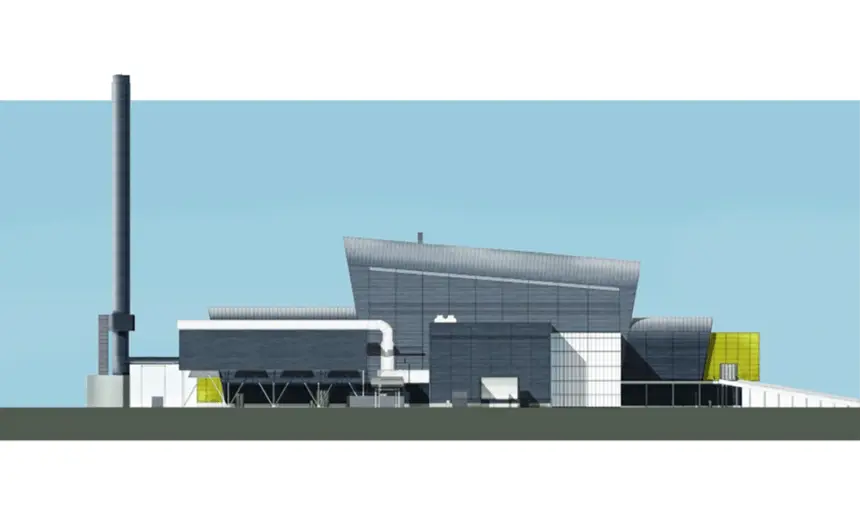
FIVE ENERGY FROM WASTE (EfW) INCINERATORS, the plants already in the planning system when Scotland introduced its 2022 moratorium, are built, under construction or still advancing through planning – a number that runs as high as ten once looser counts of the wider pipeline are included.
Not one carries carbon capture, and no operator is legally required to install it. Scotland’s Climate Change Plan, published in final form in March 2026, still assumes 45 per cent of this sector’s sites, by emissions will have carbon capture in place by 2032.
Yet the government has declined to answer the obvious question: who exactly is going to deliver that target when every facility it has approved was designed without it?
The honest answer is that operators could deliver it, if the Acorn project secures a UK business model and a carbon store, both reserved to Westminster and flagged as high risk by the Climate Change Committee. That’s a genuine coordination gap, not proof of bad faith. Scotland could have made capture readiness a legal condition on all five plants at low cost. It has the powers to do so but it didn’t. South Clyde’s own design leaves scope for a retrofit, nothing obliges it or the other four to do the same. That gap is Holyrood’s, not Westminster’s.
What we have is one sector, two government-engineered exemptions, six years to the deadline and a delivery record that gives no reason for confidence.
A moratorium with a hole in it
The SNP administration has made climate leadership central to its brand. It wrote the Climate Change Act, commissioned independent reviews, accepted their recommendations and announced a 2022 moratorium on new incinerators as decisive green action.
In reality, the moratorium contained a major exemption: every plant already in the planning system could proceed. Five facilities did exactly that, expanding Scotland’s incineration capacity while the government claimed it was drawing a line. None carries any legal obligation to fit carbon capture, despite the Climate Change Plan setting a 2032 sector target.
New SEPA-based figures published in October 2025 show what that’s cost so far: CO₂ emissions from Scotland’s major waste incinerators have nearly doubled since 2019, from 570,000 tonnes to 1,074,000 tonnes in 2024. That’s the trajectory a government committed to net zero by 2045 has signed off on, plant by plant, exemption by exemption.
This is not accidental. Targets were set for the headlines; exemptions were quietly written into the planning system. The consequences have been left for a future administration to deal with.
Those with short memories will recall the MV Glen Sannox, the over-complicated dual-fuel ferry promised at £97 million for 2018 delivery. It finally arrived in 2024 at more than triple the cost. The shipyard was nationalised, the quay at Ardrossan proved too small, and Scottish taxpayers footed the bill. Ferguson Marine tells the same story twice. It isn’t finished. As Glen Rosa its second ferry nears completion, the yard is cutting a quarter of its workforce because the government’s promised follow-on contracts are still stuck in “due diligence” five months after being announced. The waste sector is following the same accountability gap.
A commercial disaster by design
Scotland needs new residual waste capacity. The landfill ban is government policy, and methane from rotting biodegradable waste is a greater near-term climate risk than controlled combustion. Doing nothing was never viable.
But the choice was never between five competing subscale plants and nothing. Plants built at the scale England operates at, in the 400,000 to 725,000 tonne range, run by experienced operators and backed by long-term council contracts would have delivered the same capacity for less, with carbon capture designed in from the start rather than bolted on twenty years later and without locking Scotland into two decades of infrastructure that can’t cover its own costs let alone meet its legal targets. Only one of Scotland’s five, South Clyde at roughly 350,000 tonnes, even comes close. The rest are subscale operations fighting for the same Central Belt waste stream.
Scotland already knows what happens when the business model is wrong. The Levenseat gasification plant entered administration in 2025 after losing £28 million in a single year.
Cobalt Energy took over the wreckage, renamed it the Gladsmuir Resource Recovery Facility and in March 2026 formally abandoned the Phase 2 expansion that would have doubled its capacity.
A Scottish Government-commissioned capacity review published in August 2026 found the country isn’t heading for the kind of overcapacity once forecast, a reversal of the previous 2024 estimate of 10-18 per cent excess capacity by 2027. The flip rests on South Clyde, Oldhall and BinnFarm all coming online on schedule by 2028, an assumption this government’s delivery record gives little reason to bank on. Read past the headline and the same report confirms there’s next to no slack to cover a plant going down, whether for a scheduled maintenance outage or an unplanned failure. Five subscale plants means five points of failure instead of fewer, properly scaled ones.
336,000 tonnes of biodegradable waste still went to Scottish landfill in 2024. The ban was due to take full effect on 31 December 2025. SEPA has instead granted a two-year exemption, pushing enforcement to 2028 because the replacement infrastructure does not exist. That waste produces methane, 84 times more potent than CO₂ over 20 years with landfill methane capture systems often achieving well below 75 per cent efficiency in practice. The government’s case for accepting a near-term EfW rise to kill landfill methane is defensible. What isn’t defensible is exempting the plants that deliver that trade-off from the capture obligation the same plan assumes.
Who pays eventually
Waste incineration was due to join the UK Emissions Trading Scheme (ETS) from 2028. On 26 August 2026, the UK government confirmed that date is dead. No replacement has been set. Councils that had been budgeting against a known number now have an unknown one, on an unknown timeline, which is its own kind of cost.
The bill hasn’t gone away, it’s been deferred. Zero Waste Scotland’s analysis put the cost to Scottish councils at an extra £28.7 million a year once the scheme applied. Carbon capture would still cut that exposure. At South Clyde’s scale, the only Scottish plant that comes close to England’s range, avoiding fossil CO2 charges under any future version of the scheme would be worth a meaningful sum every year the other four plants don’t have. Nobody voted for that bill either, and pushing the start date back doesn’t remove it, it just moves the argument about who pays onto ground where nobody has to defend a number yet.
That’s the pattern here in miniature. A ferry delayed until the delay is the news. A landfill ban delayed until the ban is toothless. Now a carbon price delayed until nobody can be held to a figure. Kicking the can down the road isn’t a failure of this policy, it’s how this government governs.
What success actually looks like
England processed 16.82 million tonnes of waste through EfW plants in 2024, generating over 10,000 GWh of electricity. Take Protos in Cheshire, now adding the UK’s first full-scale carbon capture plant to its operating EfW site, due online in 2029, or Ferrybridge in West Yorkshire, retrofitting at a cost of up to £800 million. Both operate as proper infrastructure businesses with four solid revenue streams, gate fees, electricity sales, avoided landfill tax and once carbon capture is running, avoided carbon costs. Scotland is currently replicating the more expensive Ferrybridge retrofit model, five times over, with no obligations and no funded delivery programme.
The fix now isn’t a sixth plant. Scotland cannot unbuild what is already consented, under construction or operating. The fix is making sure nothing else gets built the same way. The Residual Waste Plan, due in 2027, is supposed to set an indicative cap on residual waste treatment capacity and fold it into SEPA’s permitting regime.
That commitment didn’t come from the government’s own initiative. It was extracted by Environmental Standards Scotland, the statutory watchdog, as the price of closing an investigation into whether Scotland was managing incineration capacity properly. The investigation closed in December 2025.
The government agreed to three things: set a cap on how much waste capacity Scotland builds; write that cap into SEPA’s permitting rules so nothing over it can be approved; and publish updated capacity figures.
The final Climate Change Plan was published three months later in March 2026. It does not mention any of it, not Environmental Standards Scotland, not the cap, not the change to SEPA’s permitting rules. Every other piece of external pressure on that document, from four parliamentary committees to the Climate Change Committee, gets its own paragraph explaining how the government responded. This doesn’t. The Climate Change Plan is the document that tracks delivery, with its own monitoring built in. Leaving a forced commitment out of it isn’t an oversight. It’s the government avoiding accountability under its own legislation.
The uncomfortable question
Why did Scotland pass carbon-capture requirements into law and then approve five plants that cannot meet them? Who bears the cost when the ETS bill and the coordination gap both land at once?
Those questions will likely stay unanswered, not because nobody’s asking them, but because the pattern by now speaks for itself.
The waste sector is the Glen Sannox pathway, running again.

Comments: 0
Join the debate
Do you agree with this analysis, or is the author wrong? Have your say below.
No comments yet. Be the first to join the discussion.