

THE SPAT THAT HAS CLOSED the Straits of Hormuz has highlighted the UK’s vulnerability to imported oil and (particularly) gas. This is despite the North Sea basin and the possible presence of abundant shale gas. Of course, fossil fuels emit CO2 – generally considered to be a bad thing for the planet – but unless and until the UK has about thirty new nuclear plants the size of Sizewell (or the equivalent in small modular reactors or wind turbines), oil and gas are fundamental to keeping the lights on.
Yet Holyrood obstructs their development, no doubt to the delight of mad Marxist Miliband, the (seemingly unsackable) Energy Secretary. Plastering the Highlands with wind turbines has been discovered to be pointless until the grid connections to the rest of the UK are improved. Work is in hand, but the bulk of it won’t be commissioned until 2030. Until that happens the windmills of Caithness (and elsewhere) will be paid not to generate, driving up electricity prices, dragging down the economy, raising inflation and increasing imports.
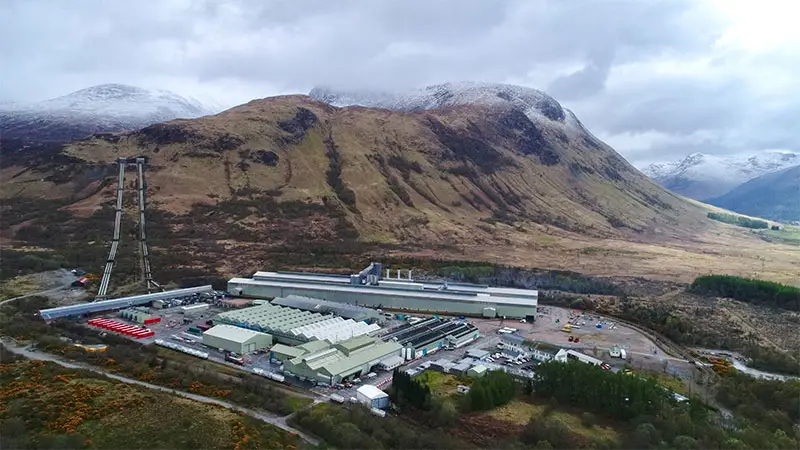
For a case in point, consider the aluminium smelter at Lochaber, near Fort William. It’s the only one in the UK and it was built there to exploit Lochaber’s geography, topography and meteorology. The plant has its own hydroelectric plant (smelting aluminium takes vast amounts of electricity). So far, so good and so green. Their hydroelectric plant powers seventy per cent of the plant’s capacity; to power the rest they buy in electrons from the grid.
That made sense when electricity was abundant and cheap with a nuclear power station just down the road at Dounreay. Today the UK has the most expensive electricity in the world, courtesy of the net zero grid lunacy. Making aluminium like that would not be competitive, so they don’t. The plant only operates at seventy per cent capacity. With that go jobs (including down the supply chain) and much of the company’s profitability and market share.
Lochaber is the only aluminium smelter left in the UK, producing some 50,000 tons of primary aluminium per year. (Primary aluminium is made from ore. This gives high purity but vast electrical consumption. Secondary aluminium recycles used aluminium. This requires about five per cent of the electricity of primary production but can’t match the purity). The UK consumes about 296,000 tons of aluminium per year, of which 167,000 tons are primary aluminium, which is what Lochaber produces. The rest is imported.
Data on secondary production is confused. Lochaber has plans for producing 100,000 tons/year. Other production is largely mixed within the scrap metal industry. One hard number is that the UK exports some 221,000 tons of dirty of scrap aluminium to China to reprocess it there, where of course electricity is cheap (half the price of Europe) and dirty (lots of coal). Once again, that’s exporting profit and employment to satisfy the net zero dogma.
CO2 emissions only count where the factory is, not where the people use the products
The aluminium industry has a deferment on the impact of the UK’s Carbon Border Adjustment Mechanism when it comes into force in 2027, but that’s the direction of travel. Like every other commercial enterprise, the aluminium industry is already paying fifty per cent more for electricity than Europe.
The deranged (and false) calculations of CO2 emissions are done territorially, meaning emissions only count where the factory is, not where the people use the products. The aluminium industry is a classic example of this. Sure, the UK’s emissions are down but global ones are increased; shipping 220,000 tons of scrap aluminium to China creates some 30,000 additional tons of CO2, plus another 30,000 tons to ship it back. This only makes sense to the bureaucrats of the Climate Change Committee and other net zero fanatics.
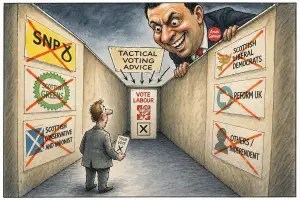
Net zero has infected Scottish politics. The SNP aims to achieve the 2045 target, albeit without using nuclear power. Scottish Labour are also committed to the target but with nuclear power. They have a vision of Scotland being a “green energy superpower” (a phrase I think stolen from Boris Johnson, who was an eco-nut).
Predictably, the Greens want a “turbo-charged” version, funded by a £28 billion fund to be created by taxing the rich and polluting industries. They believe this is achievable without nuclear power. The Lib Dems mimic the Labour line and the Conservatives are committed to the target but seek to achieve it pragmatically – whatever that means. Reform UK would scrap the target and focus on maximising oil and gas production from the North Sea. Reform are also pro-nuclear, particularly modular reactors.
Weak politicians have long mangled the English language in attempting to build bridges between their political dogmas and the real world. The net zero debate has them attempting to do the same with physics and thermodynamics. Sadly, these subjects are not as malleable. Either there is enough electricity or there isn’t, in which case there will be a blackout. Either power is affordable or it isn’t, in which case industry will close or relocate, taking jobs and tax revenues with them. Either infrastructure exists to deliver power or it doesn’t, in which case windfarms in Caithness are a burden on the exchequer (read taxpayer) as well as a blot on the landscape.
No party that has net zero as an objective can claim to be coherent, rational or wealth-creating
It’s almost seven years since the hapless, hopeless and helpless Theresa May imposed net zero by statutory order in her final act of spite. Boris “Bozo” Johnson, eco-nut son of an eco-nut, then ramped it up despite the already obvious problems.
While he was announcing that at his first conference in Manchester, across the road I was at the Reform conference, where we committed to scrap net zero on the grounds that it was impossibly expensive, would destroy manufacturing and the economy and quite probably lead to blackouts, fuel poverty and deaths (cold kills). History has already proven Reform correct. No party that has net zero as an objective can claim to be coherent, rational or capable of implementing policies that will improve the quality of life and wealth of the UK. That’s true for Holyrood too.
All of which means that the choice in this election is simple. Vote for deluded idiots and suck up the consequences, or vote Reform.


Comments: 0
Join the debate
Do you agree with this analysis, or is the author wrong? Have your say below.
No comments yet. Be the first to join the discussion.