


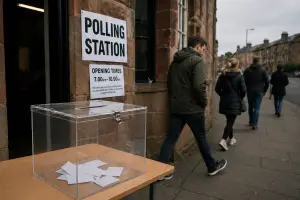
EASTER HERALDS campaigning season in Scotland. I always associate daffodils with the strange tension and excitement of elections. This one feels a bit different, alongside the familiar sounds and sights. A lot of Scots are considering changing their voting habits, and the main beneficiaries appear to be Reform and the Greens.
Much ink has been spilt on the reasons why voters are turning to these two parties at opposite ends of the ideological spectrum. I’m not going to join the psychoanalysis of the Scottish electorate, except to observe that this shift is part of a wider voter discontent across the West.
There is a peculiarly Scottish twist to this, however, which is that the SNP pioneered anti-establishment populism and so Scotland can be seen as a harbinger of this wider phenomenon now being experienced in most Western democracies.
The SNP funnelled anti-establishment discontent into the constitutional question. Their revolution was to break up the UK, and it nearly worked. But now they are the establishment, peddling the same tired policies of economic stagnation and social fragmentation. They seem to be the victims of the very disillusionment that they once harnessed. Nationalism, it turns out, has been a huge distraction from meaningful reform.
Very broadly, the polls suggest the SNP vote has fallen by about ten per cent since the last election. The Tories have fallen by a similar amount, and Labour has fallen a bit too.
Meanwhile, Reform has gained fifteen per cent or more, and the Greens have gone up by five per cent (the Lib Dems have gained a touch to match Labour’s fall).
Reform is benefitting from the fall in the SNP vote
There have been lots of swings up and down since 2021, and there will no doubt be lots more in the next month.
But whatever happens, it’s worth pointing out an obvious psephological fact: Scottish voters are at least considering a big swing away from parties that want Scottish independence. Or, to put it another way, Reform is benefitting from the fall in the SNP vote, and quite a bit of that must be because SNP voters are switching – or considering a switch – directly to Reform.
I hasten to add that this does not necessarily mean voters have changed their minds about the constitutional question. Polls show that the electorate is split much as before on that crucial issue, with nearly half of them still saying they want to break up the Union.
How then do we read this riddle?
Well, this needn’t surprise us given what I said earlier – both the SNP and Reform have their origins in disillusionment with the established way of doing things in modern Britain. And some voters may be deciding to put the constitutional debate in their back pocket while focussing on the much more urgent issues raised by Reform – mass migration, for instance, or the general incompetence and stale smell of the Scottish Government
Something similar may be happening incidentally, albeit to a lesser degree, with the Greens. They seem to be benefitting from Labour’s unpopularity, just as their cousins are in England, cross (as well they might be) at the performance of Starmer’s shambolic administration. That doesn’t necessarily mean they’d switch their vote on independence, though – just that it’s not the issue foremost in mind any more.
Scotland has been blighted since the Scottish Parliament was first set up thirty years ago by the constitutional question. Proper consideration of the main business of the devolved administration – education, healthcare, economic growth, social cohesion – has been set aside by the vicious and barren argument about Scotland’s place in the UK. Schools, hospitals – all of us, in fact – have suffered as a consequence.
So any shift away from the constitutional treadmill is to be welcomed.
The peculiar voting system of the Scottish Parliament will probably (on these figures) still deliver an SNP victory. But for John Swinney or anyone else to claim that as a mandate for more axe-grinding on independence would be a major error. The constitutional question is decided by real votes, not seats in Holyrood. And the voters are shifting their priorities. About time too.


Comments: 0
Join the debate
Do you agree with this analysis, or is the author wrong? Have your say below.
No comments yet. Be the first to join the discussion.