

MOST SEASONED OBSERVERS of political campaigning realise an individual poll is only ever a snapshot of a particular moment. Care must be taken not to place too much faith for the future in what a poll reveals about one time-limited episode in the past. It is only when there have been a number of polls, preferably from the same pollster using the same template, that comparisons can begin to be made and any trends in a particular direction identified.
When different pollsters show a consistent congruence of outcomes over time – such as Reform UK leading for 347 consecutive days across 243 consecutive UK-wide polls, or the SNP leading in Scotland with the Conservatives regularly in fourth place – it is reasonable to conclude that the polls are capturing the current reality and such outcomes are likely to be realised. The actual percentages might be different, but the parties’ placings begin to take on a degree of certainty.
Coming first, even in a first past-the-post election, does not, however, mean a party will definitely form a government. That much depends on how other parties poll relative to one another and the numbers of elected politicians achieved.
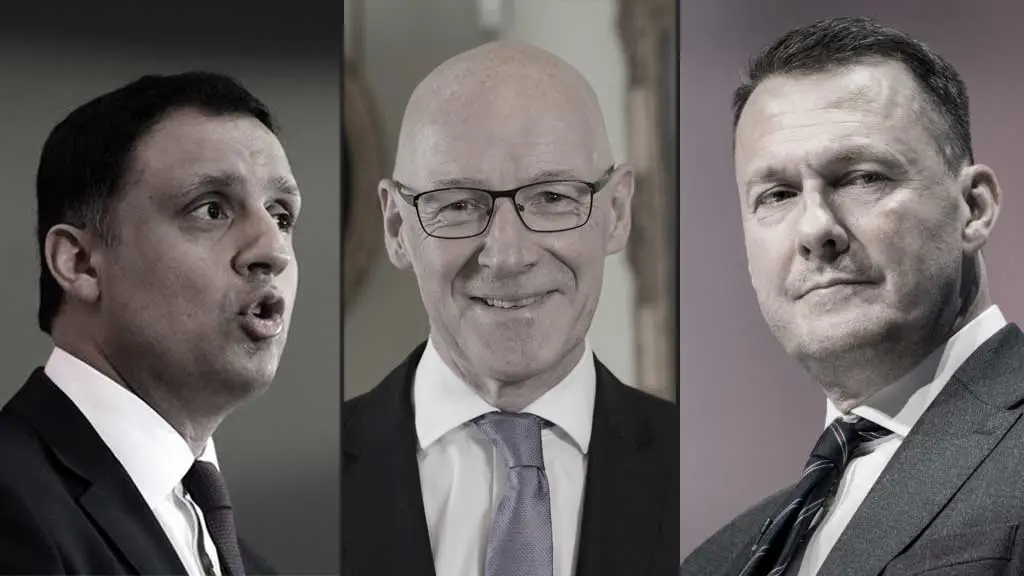
What the Scottish polling does tell us is that the two real battles now firming up are whether the SNP’s opponents can prevent John Swinney from obtaining an overall majority of 65 MSPs – and, secondly, who will come second to become the official opposition.
I am not aware of any Scottish Conservatives claiming their number will continue to form the largest opposition party; instead, their focus appears to be trying to shore up the vote as best as possible, particularly by attacking Reform UK. The loss of vote share to Reform, the loss of Malcolm Offord to Reform and the likely carnage among established Tory MSPs appear to have the group rattled.
Using the Ballot Box Scotland seat projections as an independent comparison, the latest YouGov MRP poll (23 March – 8 April) puts the number of Conservatives elected at just seven. The previous YouGov Scottish Opinion Monitor poll (11-18 March) also put the number of Conservative MSPs at seven. Seven does not look an especially lucky number for Russell Findlay and his group.
The one advantage it does offer is that managing to reach double figures – maybe even a dozen (the highest number any single survey has given them in the Ballot Box Scotland seat calculations) – could be considered a relatively good performance, even though it would in fact be their worst since the dawn of devolution.
each time an election came, they wanted to talk about the threat of a referendum – and even now they are still doing it.
A new JL Partners MRP poll published in the Telegraph yesterday (15 April) puts the Conservatives at ten. Again, the common theme here is the numbers may be seven, ten or twelve – but it is still fourth place.
It was in 2011, under Annabel Goldie, that the Scottish Conservatives managed a paltry fifteen seats on a constituency vote of 13.9 per cent and a regional list vote of only 12.4 per cent. Ironically, this nadir came after Goldie had struck a deal in 2007 with Alex Salmond to give him a confidence-and-supply arrangement that would let SNP budgets pass so he could form his first administration.
Playing a role in assuring the keys to Bute House went eventually to Salmond is not something you hear today’s noisier MSPs mention.
The Conservatives’ worst result was reversed in 2016 and 2021, when first Ruth Davdson and then Douglas Ross both managed to win 31 seats across the constituency and regional lists. I have made the argument many times that this was primarily achieved on the back of a strategy that positioned the Conservatives as the most unionist of the anti-nationalist parties – and that they had to use the time it bought them to develop a policy platform offering an attractive alternative to the SNP if they were to go further. Yet each time an election came, they wanted to talk about the threat of a referendum – and even now they are still doing it.
What we are seeing now is, I believe, the likely reckoning of the Scottish Conservative hierarchy for leaving it far too late to build support based on such a positive pitch. This helps explain why so much of the carping from the Conservatives is aimed not at the SNP – whose failure, waste and cronyism over nineteen years offers the prospect of shooting big political fish in a small barrel – but at Reform UK and its candidates.
Now the Conservatives’ voting spread is 8-12 per cent for constituencies and 8-13 per cent for the regional lists – but with more parties in with a real chance of being elected the Tory vote share will likely produce a smaller return.
Given the pamphleteering of Malcolm Offord in 2010, 2014, 2021 and last year, it might well have been better had the Tory leadership ranked him high enough to be elected last time round. Now his generally positive approach is helping Reform remain ahead of the Conservatives and take the fight to Labour.
The fear for the Tories must be that the pollsters’ surveys and Ballot Box Scotland’s calculations are on the money. What if only SEVEN Tories are elected? With eight regions, it would mean one would have no Conservatives, most likely Glasgow. Farewell then, Annie Wells and Sandesh Gulhane.
It would also likely mean only one representative in the remaining seven regions, so those candidates ranked second, third or below would not go to Holyrood. That includes “sitting MSPs” Craig Hoy, Finlay Carson, Sharon Dowey and Brian Whittle in the South of Scotland; Sue Webber in Edinburgh & Lothians East; Jackson Carlaw and Pam Gosal in West of Scotland; Douglas Lumsden and Alexander Burnett in the North East; Stephen Kerr, Roz McCall and Alexander Stewart in Mid Scotland & Fife; and Jamie Halcrow Johnson in Highlands & Islands.
That’s quite a clear-out, with some of the party’s biggest beasts falling prey to the electorate’s cull.
Only two Tory women would be in Russell Findlay’s not-so-magnificent seven, whereas looking at Reform UK – which the most recent surveys suggests will be anything from 14 to 20 MSPs – there will be between a third and a half (5-11) of its number being women.
If the worst Conservative vote is indeed the outcome (worse even than the 11.6 per cent “achieved” in the 2019 European Elections), Russel Findlay – whom I believe has made a brave fist of selling a poisoned chalice – will surely struggle to retain the leadership. The Tories will then be faced with choosing a leader from Tim Eagle, Liam Kerr, Murdo Fraser, Meghan Gallacher, Miles Briggs, Rachel Hamilton – and possibly Annie Wells in Glasgow, alongside any other candidate who limps home second on the list.
Swinney’s distraction strategy worked: Sarwar took the bait
While the unionist parties focus on attacking each other – but especially Reform – the SNP’s record has been relegated and John Swinney has hardly had a glove laid on him. That’s exactly how Swinney planned it when, last year, he convened his summit on keeping “far-right” extremists out of Holyrood. Reform UK was intentionally not invited. Unlike the Tories, Labour attended the event and has adopted the anti-far-right approach ever since. Swinney’s distraction strategy worked: Sarwar took the bait, and Labour is now likely to suffer as a consequence.
For the unionist parties, there was surely far more votes to be won by offering positive visions of Scotland and the hope that the SNP nightmare might end. Instead they presented Reform as the biggest “threat to democracy” – when the SNP should have faced real democratic accountability for policies that have broken Scotland and failed its people.


Comments: 0
Join the debate
Do you agree with this analysis, or is the author wrong? Have your say below.
No comments yet. Be the first to join the discussion.