

IMAGINE THE HEADLINE: “Reform UK pledges to reduce the NHS Scotland budget by 20%”.
NHS expenditure in Scotland is about twice as high per head, in real terms, as it was twenty-five years ago. The number of doctors and nurses at all levels has steadily increased. Yet waiting lists grow and productivity has dropped. Inefficiency must be addressed, but there is another problem which has so far eluded health professionals.
Chronic disease blights the last decades of our lives and costs a fortune to treat. The rate of strokes in Scotland has risen from 398 per 100,000 of the population in 2014 to 479 in 2023. The incidence of heart disease (the biggest killer), high blood pressure, Type 2 diabetes, and some cancers have also risen, driven by our sugar and refined carbohydrate dependency. If we ate more healthily, a twenty per cent cut in NHS costs would be possible.
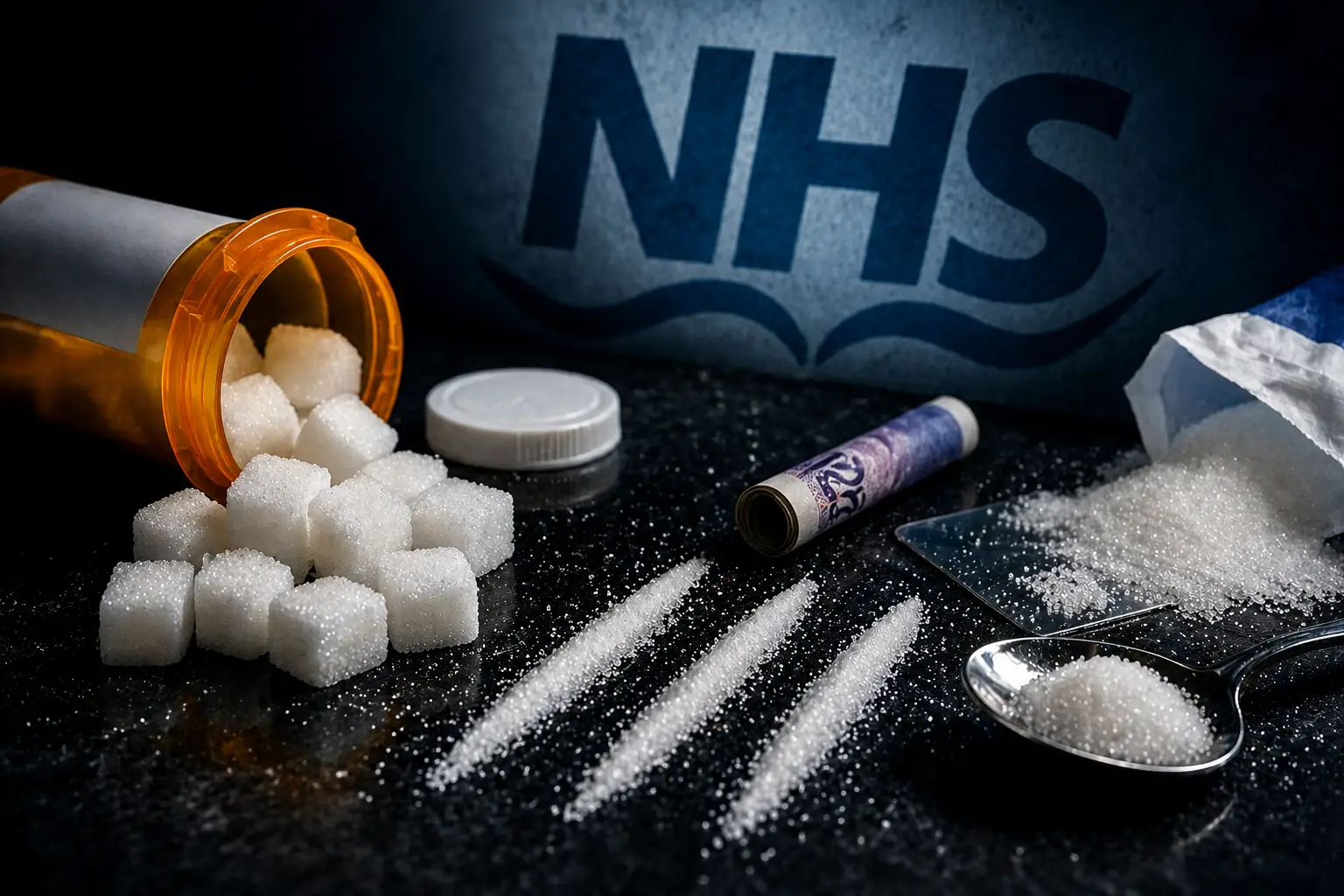
The culprit is drug abuse – the drug being sucrose – with excess sugar in our bloodstream contributing to life-threatening conditions. Ultra-processed food (UPF) adds to our modern malnutrition. Sugar kills many more people than alcohol, tobacco and heroin combined.
It upsets me when I see a mother feed her pale and podgy kids with Monster Munch as a snack or a neighbour’s daughter goes to school sustained only by a Wagon Wheel. My practice nurse complains of schoolchildren only learning how to make buns at cookery classes.
Social attitudes must change. Many seem to regard it as patriotic to drink Irn Bru (the “diet” version is no better), eat sausage rolls and pastries from Greggs, gorge on Scottish fudge, and consume teacakes and caramel wafers from Tunnock’s. Many products have tartan packaging. What should be occasional “treats” are now treated as staples.
There are charities which campaign for measures to counter obesity, but I was disappointed by those we consulted. There was an air of despondency after many years of failing to solve the problem, and it does no good to demonise the “nasty” supermarkets for capitalising on our addiction, or the “greedy” drugs companies which rake it in with medicines for chronic disease. Left-wing virtue signaling offers no solution.
Let’s discuss possible remedies.
In the 1950s, as rationing ended, my mother would buy the family a Fry’s Creme, and each person would be given a segment. Nowadays, we consume whole chocolate bars, with deals for multiple purchases. How about if the maximum size of any packaged amount of confectionery were capped at 400 kcal, a fifth of the recommended daily consumption of calories for someone over thirty? A person could still purchase multiple chocolate bars, but would be more conscious of sensible portion size.
if we can have minimum pricing for alcohol, why not sugar?
Manufacturers of items like Easter eggs might want larger products, but items over 400 kcal could attract a 40% VAT rating. And we should rationalise VAT which is imposed on biscuits but not cakes. Let’s have VAT on all food, except “essentials” which might be defined as fresh and frozen fruit, vegetables, meat, fish and dairy products, along with certain other basics.
Alternatively, if we can have minimum pricing for alcohol, why not sugar? Supermarkets might be persuaded to subsidise the healthy foods with the extra money gained from compulsory high prices for sugary products. Some floor space could be wholly devoted to “essentials”, which might be the only destination for staple, weekly purchases.
It is difficult to define how many and what type of artificial ingredients define a product as UPF, but let’s have a go. The main thing is to provide the consumer with information which is difficult just now with microscopic ingredient lists and vague terms like “contains four portions”. The swift economic progress of many South American countries at the end of last century – and the associated deterioration in dietary health – led to large, black octagonal symbols on products, clearly signalling “toxicity”, or levels of risk.
Nutritional education starts in school. Let’s have kids come home moaning at their parents when they dish out junk. Some schools are good at teaching the cooking of simple, cheap meals, but let’s make it the norm. Keep kids on the premises at lunchtime so they can’t go to the local chippy or sweet shop. Until “Thatcher the milk snatcher” stopped the practice, a small bottle of full cream milk was given to each primary school child every morning. Breakfast clubs are expensive and can excuse poor parenting, but may still have a place.
When I worked for the South African health service in the 2010s, people in employment supplemented their health insurance privately and one company handed out free Apple watches to monitor lifestyle. Those who exercised regularly had lower premiums. Is it unreasonable for those who reach a pre-diabetic blood sugar level (an HbA1C count between 42 and 47) to pay a higher national insurance rate because, given that failure to reverse the condition will impose significant costs on the taxpayer?
solutions must come from both Holyrood and Westminster
I am sceptical about relying too much on weight as a measure of fitness as muscle is heavy (or so I tell myself). The NHS definition of obesity via BMI is probably meant to shock but I was once diagnosed with this when I was only half a stone more than the weight which got me about a rugby pitch as quickly as young men when I refereed. Fat shaming is not a good idea. Weight and blood sugar awareness is.
Self-awareness and self-diagnosis are now more possible with new technology and AI. NHS England introduced an app seven years ago which contains records of tests and health conditions, but NHS Scotland is still developing its version, wishing to be seen as “independent” of England. I have to demand an annual HbA1C test from my practice nurse.
A small, finger-fitting device can measure blood sugar levels with non-invasive infra-red technology. A quarterly glucose tolerance test might detect the effects sugar hits have on metabolism.
A weight loss charity spokesperson we met said that a self-awareness approach would benefit the better-off more and lead to inequality, but we should not let equity concerns paralyse action.
Many high street pharmacies offer a range of medical tests, although I am suspicious about recommending the new generation of Glucagon-Like Peptide-1 (GLP-1) drugs too readily for weight loss. They are expensive, have side effects and their long-term safety is unknown. It is better to control what you put in your mouth.
This sugar addiction is not uniquely Scottish, and the solutions must come from both Holyrood and Westminster. It should also not be party political – but, as a new party with a fresh perspective, Reform can lead the debate on how to deal with this killer in our midst.
There is, however, a danger with a self-awareness approach. We may become over-aware and exaggerate problems or perceive ones that don’t exist, – especially when labels are applied, such as being “on the spectrum”. The nocebo effect – the opposite of placebo – takes over, where physical and mental symptoms arise from the expectation of being “damaged”. This phenomenon causes unnecessary costs for the NHS. It is the subject of the next article.




Comments: 0
Join the debate
Do you agree with this analysis, or is the author wrong? Have your say below.
No comments yet. Be the first to join the discussion.