

POLITICIANS CAN’T BE experts on medical matters, but they must be sufficiently informed to ask the correct questions. They will find that experts often disagree, and they must hold their coats accordingly.
Suzanne O’Sullivan (The Age of Diagnosis):
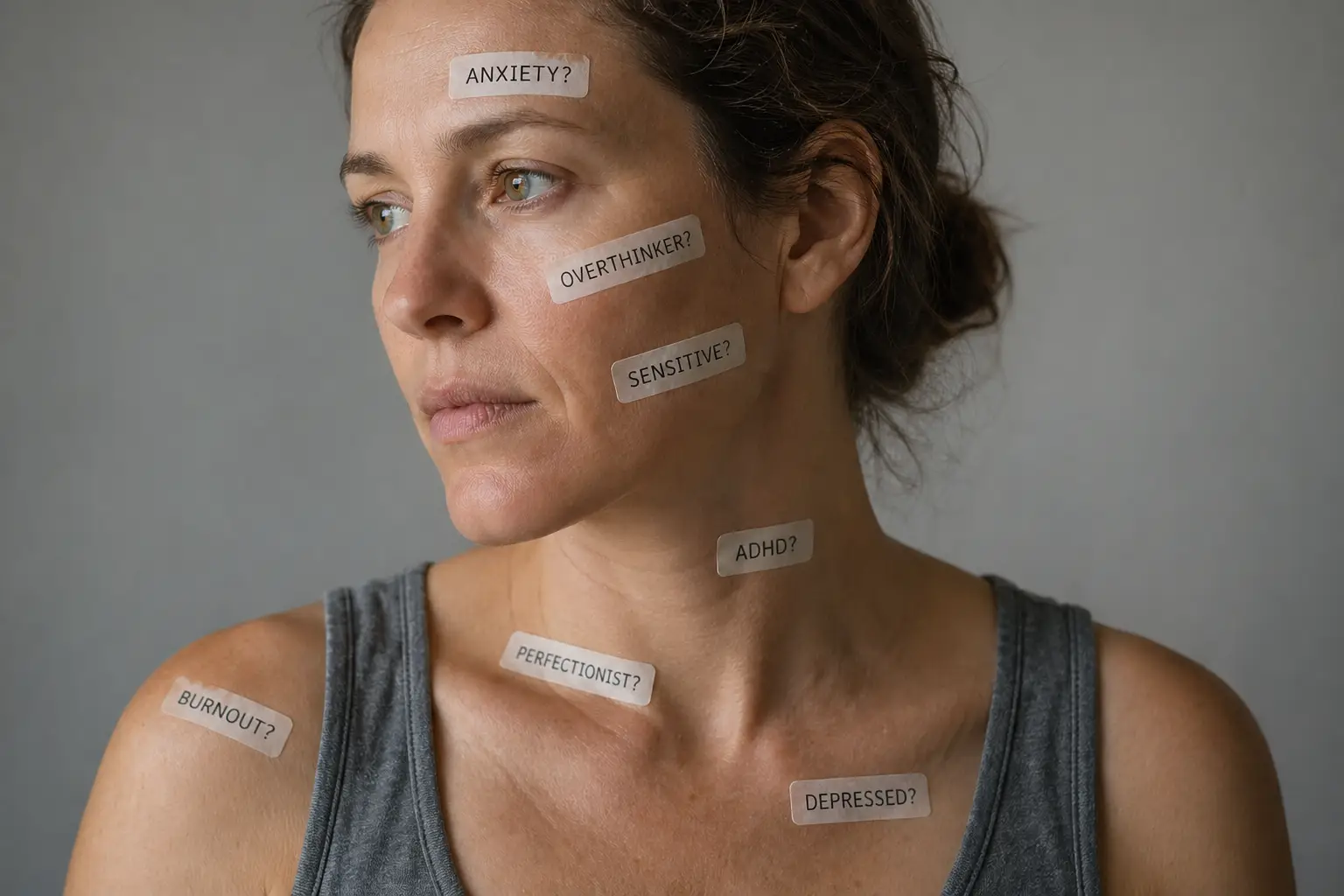
“It could be that borderline medical problems are becoming ironclad diagnoses and that normal differences are becoming pathologised… we are not getting sicker; we are attributing more to sickness… [with] the trend to detect health issues in milder and earlier forms… This is called diagnosis creep… ADHD is a business as well as a medical disorder.
Worry and uncertainty create fertile ground for the misinterpretation of every normal illness and bodily change. A medical label is not an inert thing. It has the power to make people ill even when the body is otherwise healthy … The tenet of medicine is to do no harm. The psychological and practical consequences that go along with predictive diagnosis do not always fit well with that tenet.”
In 2019, UK Health Secretary Matt Hancock announced he had a fifteen per cent risk of developing prostate cancer, based on a genetic test. But the average for a man of his age is twelve per cent, and the statistical risk of onset in the following ten years was effectively zero. His new knowledge was worthless.
We can assess our own genetic risk factors, purchasing a kit online for £130. BRCA genes on chromosomes 13 and 17 were discovered in 1994, allowing us to identify percentage risks of future cancer in breast, ovarian, fallopian tube and peritoneal cancers, and, to a lesser extent, prostate and pancreatic cancer, and melanoma.
If there is high risk, there are two choices: preventative surgery, for example mastectomy or oophorectomy, or regular monitoring to catch the cancer early. In the USA and the UK there are surgical uptakes of fifty per cent and forty per cent respectively, while in France and Poland it can be little as five per cent. One might surmise that the US system profits from surgery, but why is it so high in the UK? This can lead to complications and may be a poor use of public money.
there was no evidence that finding early cancers extended life
One might question the whole basis of testing and screening for risk factors. A study of more than two million people in 2023 found that, in the case of large bowel cancer, screening extended total lifespan by an average of four months, while for all other cancers there was no evidence that finding early cancers extended life. “Experts” continue to disagree.
O’Sullivan:
“Behaviour and environment can change the way our genes are expressed … The genetic code itself doesn’t change, but how the body reads the code does … Smoking, obesity, alcohol, diet and sun exposure are all factors that increase the likelihood of getting cancer more than genetic risk.”
Perhaps it is better not to know if one has dodgy BRCA genes. Cancer may not develop at all.
We must avoid over-simplifying a subject with premature conclusions. There is currently an apparent epidemic in mental health problems, the sedentary equivalent of the “bad back” 1970s excuse to be off manual work. Diagnosis of autism and similar conditions is mushrooming, costing the health service significant sums.
I attended a lecture by an East Renfrewshire Education Department neurodiversity specialist in September 2025. She was one of five such experts in the council, but reckoned there should be fifteen. But perhaps, if more people were assessing children and justifying their jobs, there might be over-diagnosis. Do more than forty per cent of kids actually have special educational needs?
there are many people on the spectrum who cope with not being “normal”, whatever that means
She used the term Autism Spectrum Disorder (ASD), but there are many people on the spectrum who cope with not being “normal”, whatever that means. Elon Musk and Anthony Hopkins are autistic. Calling it a “disorder” can make many people with less severe problems feel damaged or handicapped in some way. The UK National Autistic Society has replaced “disorder” with “condition”.
O’Sullivan: “When a medical problem is part of a person’s identity, it becomes inescapable.” The East Ren lady referred to a fascination with train spotting and building model railways as a sign of obsessive disorder. How problematic is that? She agreed that “labelling” sometimes does more harm than good.
She agreed with me that forcing children to take an academic curriculum for which they were unsuited was wrong, either because of attention deficiency or sheer disinterest, and that a vocational route would often be more appropriate. She rejected my suggestion that poor diet might be a significant factor in physical and mental health – too much sugar and junk food – but her contention that microplastics in the environment was a factor led me to question her credibility. Environmental dogma reared its ugly head again.
Is diagnosis of adults for autism worthwhile? They have learned to cope and even “normal” people struggle with things at times. Perhaps, if the 1.2 million adults on the NHS waiting list want the consolation of a diagnosis, they should pay for it. But diagnosis of children, at nursery or early primary stage, is essential, so we can identify those who need extra help. Youngsters with autism have higher rates of anorexia and self-harm, and are more likely to be bullied. Forewarned is forearmed.
Symptoms can be: lack of eye contact, intolerance of noise and certain textures or shapes, few hand gestures, preference for being alone, obsessional interests, rocking or bouncing repeatedly, making monotonous noises, little sense of risk and danger, etc. There was under-diagnosis previously, but we should be wary of going too far down the spectrum if more than about one in thirty-five children is diagnosed.
Only the most severe autism receives drug treatment, such as risperidone for aggressive behaviour, and methylphenidate as a stimulant. Yet there is debate as to how efficacious drugs are, how much is just a placebo effect, and how problematic side effects are.
Psychosomatic conditions are difficult and expensive to diagnose because the brain is inventing physical symptoms which are very real for the patient. It is not malingering. Only 15.9 per cent of the 1.9 million Brits with the indications of long COVID have had the disease, so are the rest wrongly identifying, or was the vaccine faulty, because post-viral fatigue syndrome is more prevalent in younger, otherwise healthy people?
Our social environment has an enormous impact on our wellbeing, and politicians play a big part. The million Scottish households in fuel poverty are stressed due to net zero. People are homeless because of poor legislation that penalises landlords and makes construction unnecessarily expensive. In politically correct times, we cannot relieve tension with a joke in case we offend someone. There are no moments of solitude to reflect on things and count our blessings, because we are slaves to social media. We are torturing our young people with eco-anxiety.
Ben Delo was diagnosed as being on the autism spectrum at age eleven, but a sympathetic teacher helped him towards a double first in maths and computer science at Oxford. He became Britain’s youngest self-made billionaire. Instead of thinking of himself as handicapped he believes he is “wired for truth-seeking”. He admires Nigel Farage’s plain speaking and that of Rupert Lowe who doesn’t care “what so-called respectable opinion thinks of him”, and “keeps Reform on its toes (a good thing) … Even Reform’s strongest supporters would concede that they are not yet the finished article”. In the meantime, he has donated £4m to the party.

Comments: 0
Join the debate
Do you agree with this analysis, or is the author wrong? Have your say below.
No comments yet. Be the first to join the discussion.