

LAST OCTOBER the SNP conference raised the idea of a wealth tax. We now believe the Scottish Government has appointed a market research company to assess ‘the opportunities, challenges and practical considerations’ associated with introducing a wealth tax in Scotland.
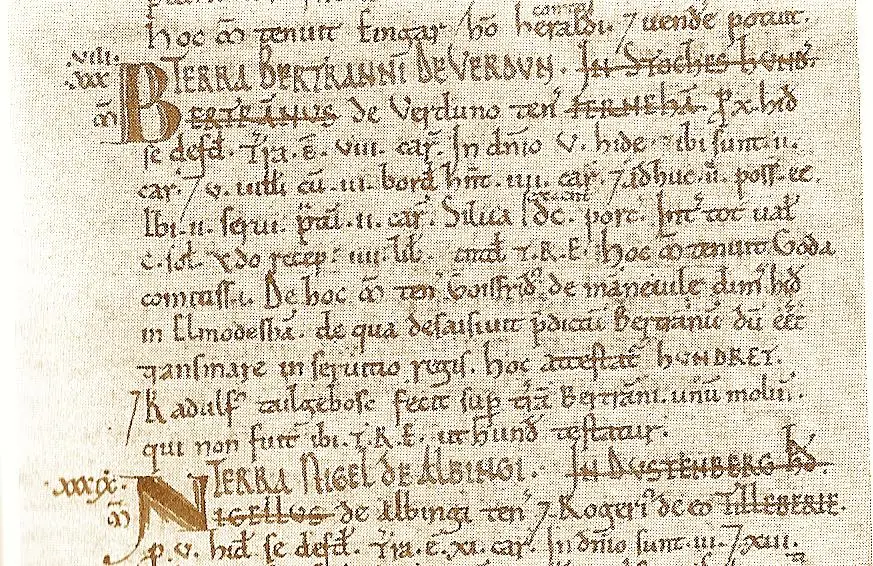
The mere fact that the current Scottish Government is considering drawing up a Domesday Book of your property, pensions, savings, and even paintings and jewellery demonstrates that nothing is off limits in the mind of John Swinney and his ministers.
Regardless of whether they set the initial threshold at £250k, £500k or £5m, be assured that once the principle is established, we will all be under threat. It may start large, but in no time they will need more, and guess what – the threshold will be reduced over time. This is of concern to us all, regardless of whether one is initially affected. They do not believe in your chance to build for your future; they believe what is yours could be theirs.
Scotland has a Soviet-style state in terms of the scale of public spending
Aside from the legality of such a proposal, and whether the Scottish Government actually has that legal power – and in the case of assets like pensions, ISAs, or even bank deposits that is debatable, given that regulation is UK-wide – while the value of jewels and paintings is normally highly subjective, this is perhaps one of the most counter-productive taxes ever considered.
There are lots of serious objections.
Firstly, there is double dipping. Assets are acquired from already taxed income. Everything is taxed: income taxes, Scottish land tax, council tax, VAT, inheritance tax, corporate taxes and a plethora of other duties. To tax so called wealth again is simply reaping the already heavily ploughed field twice.
Second, those with substantial assets will simply avoid a wealth tax through corporate structures, trust funds and the like. Those that will be clobbered will simply be the affluent middle. Try to expand the tax to corporate assets, or trusts and you will soon find corporates leave. That would be suicide.
Third, and perhaps most importantly, it would be totally counter-productive. It will raise less than it leaks. Counter-productive because while it may superficially raise what I would guess to be a few hundred million pounds, the impact on the so-called rich heading south will mean income tax, VAT and other receipts dry up. I’ll wager it will raise less than it loses out the back door. That’s not smart.
The Scottish Government already taxes absurdly. The public sector is over half the entire economy – 54 per cent to be precise – making the Scottish state one of the biggest in the world. To put this in context, that is some five points higher than the EU average, 10 points more than the UK as a whole and a whopping 20 per cent more than the rather more prosperous economy of the US. Even the notionally communist China state is only around 36 per cent of GDP.
It is a well-established economic rule that developed countries with large states underperform developed countries with smaller states. Simply put, big-state France, Italy, Greece and Scotland do much worse than small-state countries such as the US, Australia, Ireland, and Switzerland.
Scotland has a Soviet-style state in terms of the scale of public spending. Spending is already much higher than the rest of the UK for manifestly worse results, especially in health and education. The result is that Scotland’s growth record is the worst, since 2015, of any major nation bar none. Coincidence? I think not.
The reality is that the Scottish public sector dominates the Scottish economy in a way almost no other country on earth does and the results speak for themselves. The SNP Government needs to get its spending in order and provide a half-decent bang for the buck. It should be looking at ways to make Scotland as attractive a place to invest as the Republic of Ireland, by not scaring off those who have created something. Even if there is a legal right to proceed – and that will likely be tested – this is a mad, illiberal and bad tax and one that will prove to be totally counterproductive. More will leak than it will raise.


Comments: 0
Join the debate
Do you agree with this analysis, or is the author wrong? Have your say below.
No comments yet. Be the first to join the discussion.