

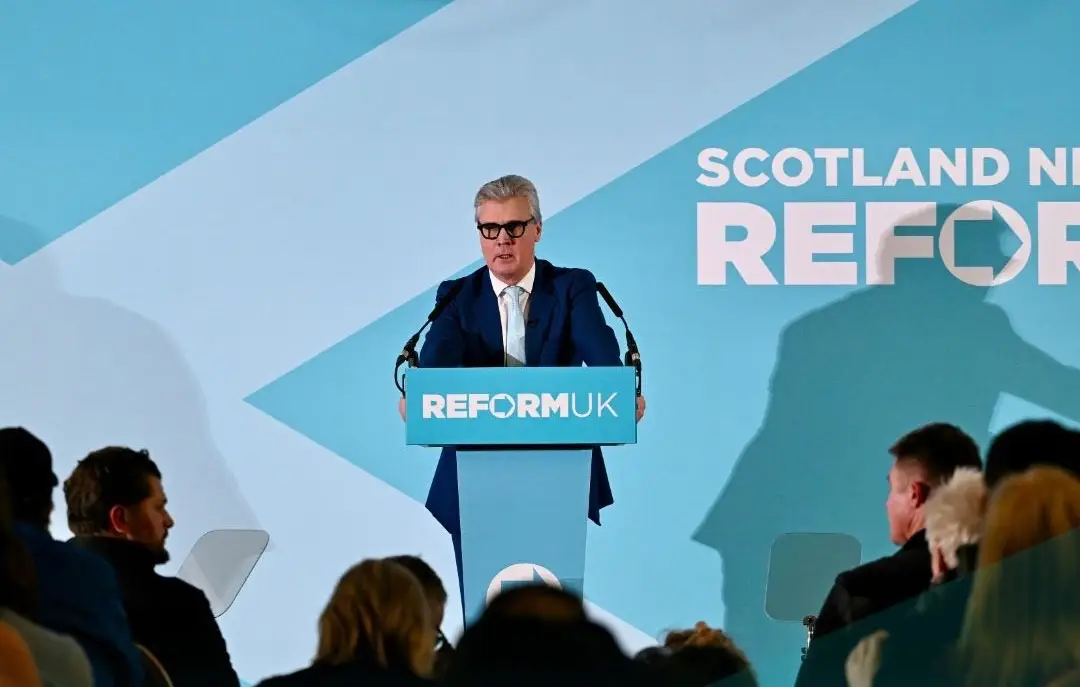
FOR FAR TOO LONG, Scotland has been drifting in the wrong direction. As I’ve been going around the country, speaking to communities, this sense of drift is palpable. With ten weeks to go until polling day, people are crying out for new vision instead of the vacuum of the last nineteen years.
Under the SNP, hard graft hasn’t been rewarded, it has been actively penalised. Income taxes have risen. Business rates have risen. Land and Buildings Transaction Tax has risen. Councils have been saddled with unfunded obligations and left with no option but to jack up council tax. Public services continue to strain under pressure. And now we are told more of the same is coming.
There is a growing sense across Scotland that something is not working. People pay more, yet do not see better results. They were promised fairness, yet the system increasingly punishes those who work hardest and condemns those out of work to an aimless life on benefits.
The ambition is simple: to make Scotland the most attractive place in the UK to live and work.
Reform is offering a fundamentally different approach. We know that society is underpinned by solid economic growth. That’s why, in our first budget, we’ll realign Scotland’s income tax bands with the rest of the UK and then cut each band by 1p below that of rUK. The ambition is simple: to make Scotland the most attractive place in the UK to live and work. Politically and economically, this is common sense. A Reform Government with me as First Minister would have no issue in harnessing that old fashioned Anglo-Scots rivalry, by undercutting our neighbours south of the border on tax and attracting the best talent to Scotland.
How do you pay for it? Not by slashing and burning public services. Under our plan, frontline services in health and education will be untouched. This major tax cut (the first of its kind in the history of Holyrood) can be achieved by trimming just 3% from Holyrood’s annual budget of £72bn. The savings will come from cutting massive duplication and complication from Scotland’s 131 quangos. Then taking an axe to the purely ideological Net Zero spending habits of the SNP. Both of these costs £7.5bn a year, we need to lift £2bn out of that. Analysis from the respected Fraser of Allander Institute supports this aim.
But beyond the political sparring over line items, there is a deeper issue at stake: incentives. Scotland does not lack skilled professionals. In many areas, it has more doctors, nurses and teachers per head than England. Yet hospitals struggle to fill shifts. GP practices close their lists. Dentists reduce NHS work. Senior consultants retire early. Why? Because the structure of taxation and benefits increasingly makes extra work irrational.
Highly trained professionals face steep marginal rates once income tax, National Insurance, and student loan repayments are combined. Analysis by tax expert Dan Neidle of Tax Policy Associates — who sits on the Scottish Government’s own Tax Advisory Group — highlights cases where individuals can keep only a small fraction of each additional pound earned. Add in pension contributions, and the incentive shrinks further.
For some, an extra shift can mean thousands lost in withdrawn benefits. The carer support payment, for example, is withdrawn entirely once earnings exceed £10,192. A pay rise of just £1 beyond that point can trigger a loss of nearly £4,000. That is not a system designed to reward effort. It is one that traps people. These “cliff edges” range over all earning levels. Cross certain thresholds — such as £60,000 and families begin to lose Child Benefit – or £100,000 and families can lose valuable childcare support, leaving them worse off despite earning more.
This is the crux of the argument. When people are penalised for working more, the entire economy suffers. Public services suffer too — because staffing shortages are not only about recruitment, but retention and motivation.
We will use our first two budgets not only to cut tax rates but to smooth these cliff edges, replacing them with gradual tapers so that work always pays.
This election is about more than competing manifestos. It is about the kind of Scotland we want to be: one where ambition is quietly discouraged, or one where effort is rewarded.
If the current model were delivering stronger growth and resilient public services, the case for change would be weaker. But voters feel that they are paying more and receiving less.
That’s why Reform is betting that Scots are ready for a different approach — one that prioritises growth, restores incentives and rethinks how public money is spent for the good of families and communities.
In seventy short days, on May 7th, the choice will be theirs.


Comments: 0
Join the debate
Do you agree with this analysis, or is the author wrong? Have your say below.
No comments yet. Be the first to join the discussion.