

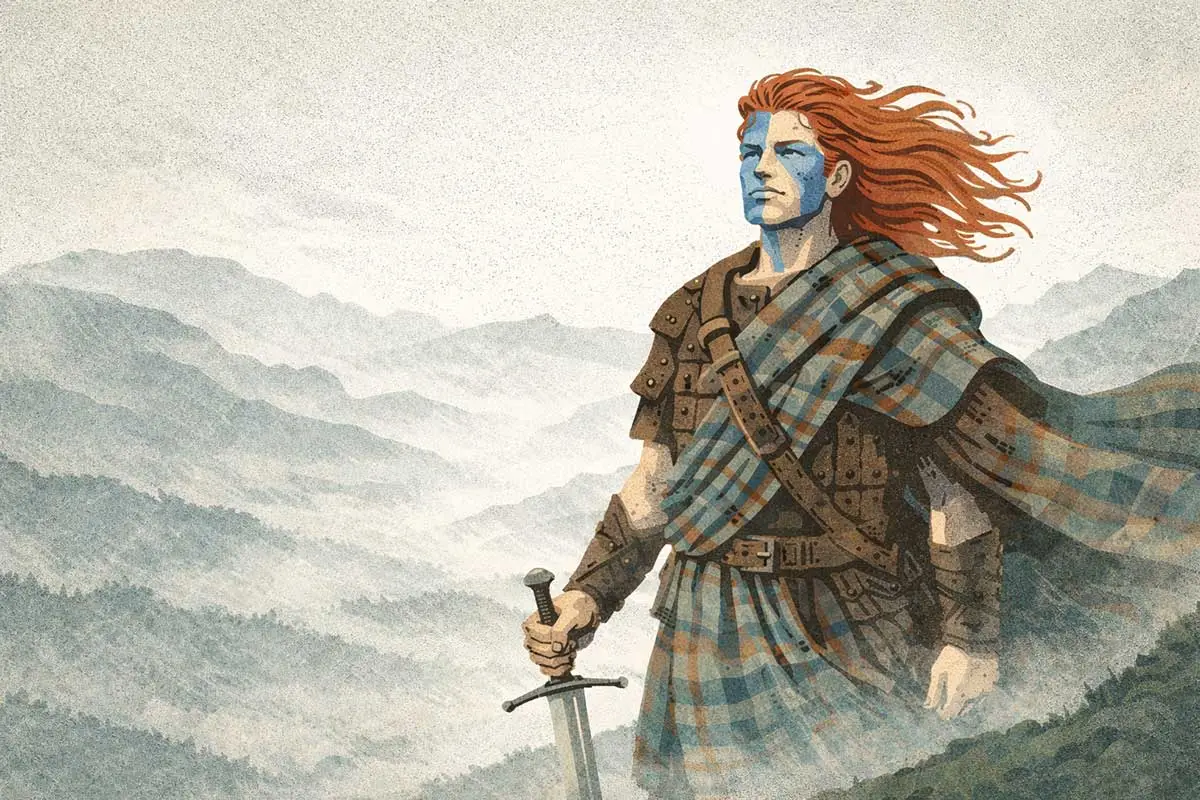
FREEDOM means many different things to different people.
To some, freedom is a sort of Mel Gibson-style Braveheart freedom: putting “the other” to the sword and living as “one” in a state of freedom. This was the freedom perhaps best represented by the philosophy of the Irish Taoiseach, Éamon de Valera. For him, it was to take a people, wrap it in a mythology of mist, mountain and faith, and create a vision of a national idyll. Regardless of whether this vision led to a period of economic poverty and migration outward, it remained a vision of freedom and undoubtedly created a sense of national solidarity.
To others, freedom is wrapped in an EU flag: free to roam across a continent, part of a larger entity and connected to European civilisation. This freedom may ignore a loss of democratic accountability, or the plethora of rules the bureaucracy may dictate, but to adherents it places value on a European, or possibly global, universalism, believing that rights like freedom of movement create a concept of liberty that transcends other costs.
Both are states of mind. Both are valid visions of freedom, and both are clearly shared by many.
The classical liberal view of freedom is somewhat different. It puts greater emphasis on personal liberty: property rights, small government, minimal interference and the like. Within this very broad definition there are generally two primary schools. To paraphrase David Goodhart: “somewheres” or “anywheres”.
These classical liberal “anywheres” are a derivative of the European view outlined above, although I would argue, given its economic illiberalism, that this does not include the subset of current European nationalists draped in the EU flag.
Today the state in Scotland comprises a staggering 54% of the economy
The classical liberal “somewheres” take a more Burkean view, focussed on Burke’s “little platoons”, the small, local institutions and associations that shape social life. They are supportive of minimal government philosophically but understand that society needs to be built on shared values: family, faith, community and ultimately national borders.
This Burkean view is what built Scotland. It is the legacy we enjoy today, albeit one now in severe retreat.
Scotland, until the post-war period, was decentralised, had a very small state and was largely local in character. Values varied between regions, which shaped different architectures, customs and norms. Education was largely universal and superior to what was on offer in most of the UK, but it was also mainly local and decentralised. Education was compulsory from 1872 and even before that was almost universal. There is a reason that films of a certain vintage often portray the doctor or engineer with a Scottish accent.
Scottish civil society flourished. Friendly societies were born as local mutual aid, libraries were built – often funded by private subscription – churches flourished across denominations, and many of today’s clubs and societies were born in an age when the state was small. As an example, many of the great football, rugby, tennis, cricket and golf clubs all date from this golden age. They were, and largely remain, private institutions.
Before the First World War the state in Scotland perhaps accounted for a biblical tithe of the economy, and much of that was spent on the Royal Navy. War changed that, with state spending increasing to around a fifth of the economy in the inter-war years.
Since 1945 it has grown steadily further. By 2000 the Scottish state had grown to 44% of the economy. In 2007 a watershed was reached, when the half-the-economy threshold was breached. Today the state in Scotland comprises a staggering 54% of the economy.
In other words, the state is now the overwhelming actor in Scottish society, and its tentacles are spreading into areas which a generation ago would have been unthinkable. Areas of ethics, morality and culture, which were firmly in the family or private realm, are being increasingly regulated and nudged by government.
The frog may have been boiled slowly, making the transition seem seamless, but make no mistake: this state of affairs is not normal. Scotland is a global outlier in the freedom stakes – or lack thereof – as few countries on earth are as centralised as we are.
The Scottish state today is every bit as large as that of Poland’s during the communist era, with similarly stifling effects. With the exception of France, I can find not a single significant nation on earth where the state operates at the scale seen in Scotland. The Scottish state, at 54 per cent of the entire economy, is some five per centage points higher than the EU average, ten per centage points greater than the rest of the UK and around fifteen per centage points higher than the US. Even Communist China’s state is approximately 35 per cent of the economy – almost twenty per centage points lower.
Scotland has economically stagnated with one of the worst growth records in Europe over the last twenty years
Thus Scotland’s big-state model is the global outlier. It is an extreme position of centralisation and control. Given the State has largely become the Scottish economy, either through redistributive spending or regulation, it is little wonder that Scotland has abjectly struggled to grow.
The state’s cotton wool has come at a terrible price: stagnation and decline. Each individual action of state control may in itself be justified in some terms, but taken as a whole it has slowly strangled the life out of Scotland. It impacts not just personal freedom of opportunity – as the state dictates what is on offer – but also the national mood, whether through surveillance, managerialism and its bureaucratic bedfellow, or through a decision-making paralysis that often results in consensual groupthink.
The competition of ideas and ways of doing things that prospered in Scotland have been replaced with a bland grey, at the manager’s discretion. Not yours.
The results of this well-intentioned policy have been disastrous. They have drained hope from communities by taking agency away from personal decision-making and replacing it with groupthink universalism, which is often remote and suboptimal.
It has also been disastrous for prosperity. Scotland has economically stagnated with one of the worst growth records in Europe over the last twenty years, with only Greece and Italy performing worse. This is the managerialism of decline. Initially it could be hidden, but not any longer. Poland will be richer than Scotland in a decade or so.
So, in the personal freedom stakes, Scotland is close to the bottom of the pack: a virtually unparalleled level of centralised state control, a steady erosion of personal liberty in ethics and morality, and a managerialism that is creating a controlling groupthink. To my mind the ideal Burkean liberalism – based on personal action, “little platoons” and locality – has given way to centralisation and control.
That is not my definition of a free country.


Comments: 6
Join the debate
Do you agree with this analysis, or is the author wrong? Have your say below.
A very thoughtful piece which captures an important truth that a healthy society grows from strong local communities and voluntary institutions, not from ever expanding central government. I’m all for rebuilding those “little platoons”!
Correct
Excellent article from Ewen, thank you.
Great article but lots of generalities but no specifics? In the field we need examples to put Reform to the electorate
The ever growing state, a threat to all of us.
Take the cry beloved by politicians of all parties “the cost of living crisis”.I see this as a cost of government crisis for taxation is surely the largest cost most of those who contribute face these days.
Impressive expose of totalitarian Scotland.