
I WAS REMINDED this week of the children’s nursery rhyme, There was an old lady who swallowed a fly. Certainly, an old favourite of mine and my kids, at least when they were younger.
The story is also a metaphor for how an initial mistake or lie can spiral out of control. Every elaborate attempt to fix it makes things worse if you leave the underlying problem untouched.
I’m going to stretch the metaphor, because I think it is an apt way to explain the many failings of how governments work. Take energy policy.
Across Scotland and the UK – and indeed much of Europe – our energy system is simply not working. British industry has the highest energy costs in the world and household bills are also among the highest.
Conflict in Iran and the Russian invasion of Ukraine have caused a price spike. But we are far more exposed than other nations. Decades of delusional policymaking have left Scotland, Britain and most of Europe badly exposed to energy reality.
We put net zero above all else, pushing intermittent renewables too far and too fast without understanding what it would cost to rebuild the system around them or what vulnerabilities that would create.
Net zero was wishful thinking then – it’s a big fat lie now.
When it comes to our energy policy, like the lady who swallowed a fly, our government swallowed net zero and set off a chain of policy mistakes it couldn’t digest.
We swallowed net zero. Almost without thinking. We’d had the lowest emissions in Europe due to our move to gas. The rest, we thought, would be easy. Why worry about the costs or the difficulties? Net Zero will be simple, it will be cheap and it will add jobs. It was wishful thinking then. It’s a big fat lie now.
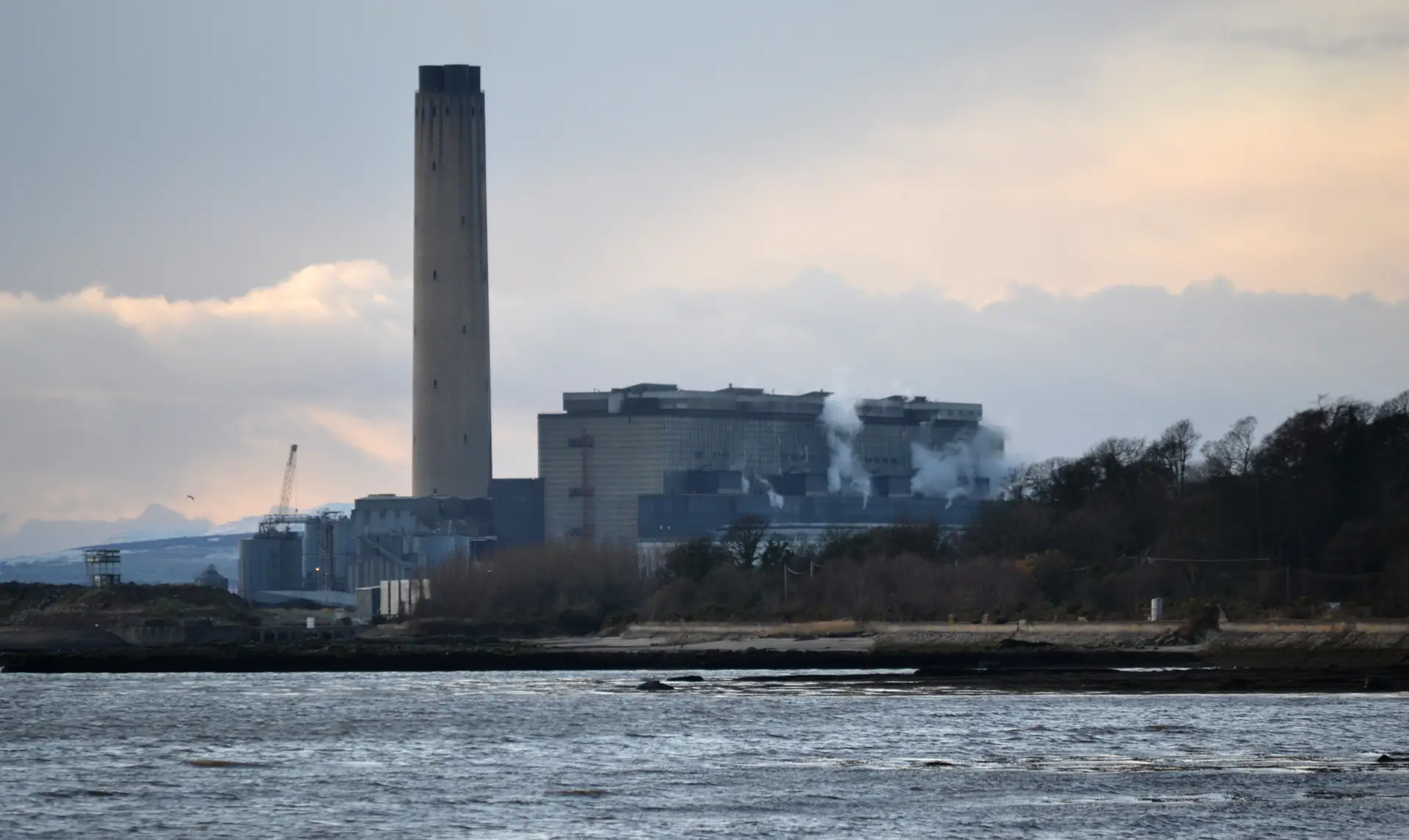
We then swallowed getting rid of our remaining coal plants – actually the Tory and SNP governments took pride in blowing a few of them up. Nicola Sturgeon personally pushed the button that set off the explosives at Longannet in Fife. We still feel the repercussions today in our current energy crisis.
We then swallowed adding in carbon taxes for industry, piling on costs that competitors in other countries and most imports don’t face.
We swallowed making wind the priority for our net zero push. We swallowed its high upfront costs too, on the promise that a new industry needed support and time. Well, we’ve now been paying subsidies for more than thirty years and the costs are still not coming down. Wind projects still need high subsidies and guarantees to go ahead.
We then swallowed intermittency. The lie was peddled that it would be easy to manage or that some miracle grid-scale storage would come along. It’s not happened: storage is minute and extremely expensive, and intermittency is also extremely expensive.
In low-wind conditions we’re now dependent on France for its nuclear power. Or we have to beg older gas plants to start up by offering them record prices. It’s driving an increasing risk of failure. Torness nuclear power station is the absolute backbone of Scotland’s grid when the wind drops. But it is forecast to close in 2032. What will we do when it shuts? How can we replace the dependable baseload of a nuclear power station in six years?
Grid investment in Scotland alone is forecast to reach £44 billion over the next five years
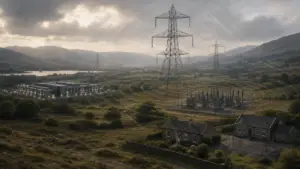
We then swallowed the realisation that our existing grid is not suited to renewables. So we embarked on a grid-building spree. But costs keep going up and up – and we get giant pylons imposed on half the countryside. Grid investment in Scotland alone is forecast to reach £44 billion over the next five years. The cost goes straight onto people’s bills, along with a generous, risk-free return for the utility companies involved.
We swallowed the fact that the bulk of the supply chain comes from China, even though we could be making our own equipment and steel.
Then we swallowed incredulous governments thinking that it was sensible and virtuous to shut down our own oil and gas industry – surely, we won’t actually need all that homegrown oil and gas or and the jobs that came with it.
What we’re left with is a failing energy system and ever more expensive attempts to prop it up. We have some of the highest energy prices in the developed world and precious little leverage over global emissions. The UK accounts for roughly 0.8 per cent of global emissions and Scotland for about 0.08 per cent. Other nations focus on pragmatic energy policies, whilst we deindustrialise and impoverish ourselves.
we have now got to an estimated price cap forecast of beyond £2,000 for the average family
Industry can move abroad to escape high costs. Households have no such choice. They pay the price as bills skyrocket. This is how we have now got to an estimated price cap forecast of beyond £2,000 for the average family. This is an absolute disaster for real people already struggling to pay their bills.
And what does the government do to try to fix it? Exactly the same approach: it ignores the root of the problem – our failing energy system – and piles on more elaborate schemes that will offer little relief before they fail or run out of your money.
Right now the measures to keep bills from going up even further include:
• The price cap itself
• A proposed £100 payment for eligible households in England, with equivalent funding for Scotland, Wales and Northern Ireland
• A temporary cut in VAT on electricity from five per cent to zero
• Moving the cost of older renewable subsidies, such as the Renewables Obligation, from bills to general taxation
• Removing gas standing charges and shifting the cost into unit rates
To mix my metaphors: these measures are mere fingers in a collapsing dyke.
The nub of it is that as per the old lady that swallowed the fly, we are not fixing the underlying issue.
We need to fix our energy system. That means owning up to two decades of mistakes and putting cheap, abundant and reliable energy first. That’s what will support growth, protect jobs and give us energy security.
Because until our energy system is fixed, we can argue around all the policy mitigations and interventions we like.
We will just need more and more attempts at mitigating measures until eventually the whole thing falls apart.
Because the old lady who swallowed a fly is dead of course!
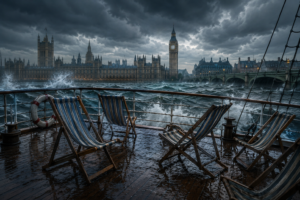
Image by John – Own work, CC BY-SA 4.0

Comments: 0
Join the debate
Do you agree with this analysis, or is the author wrong? Have your say below.
No comments yet. Be the first to join the discussion.