

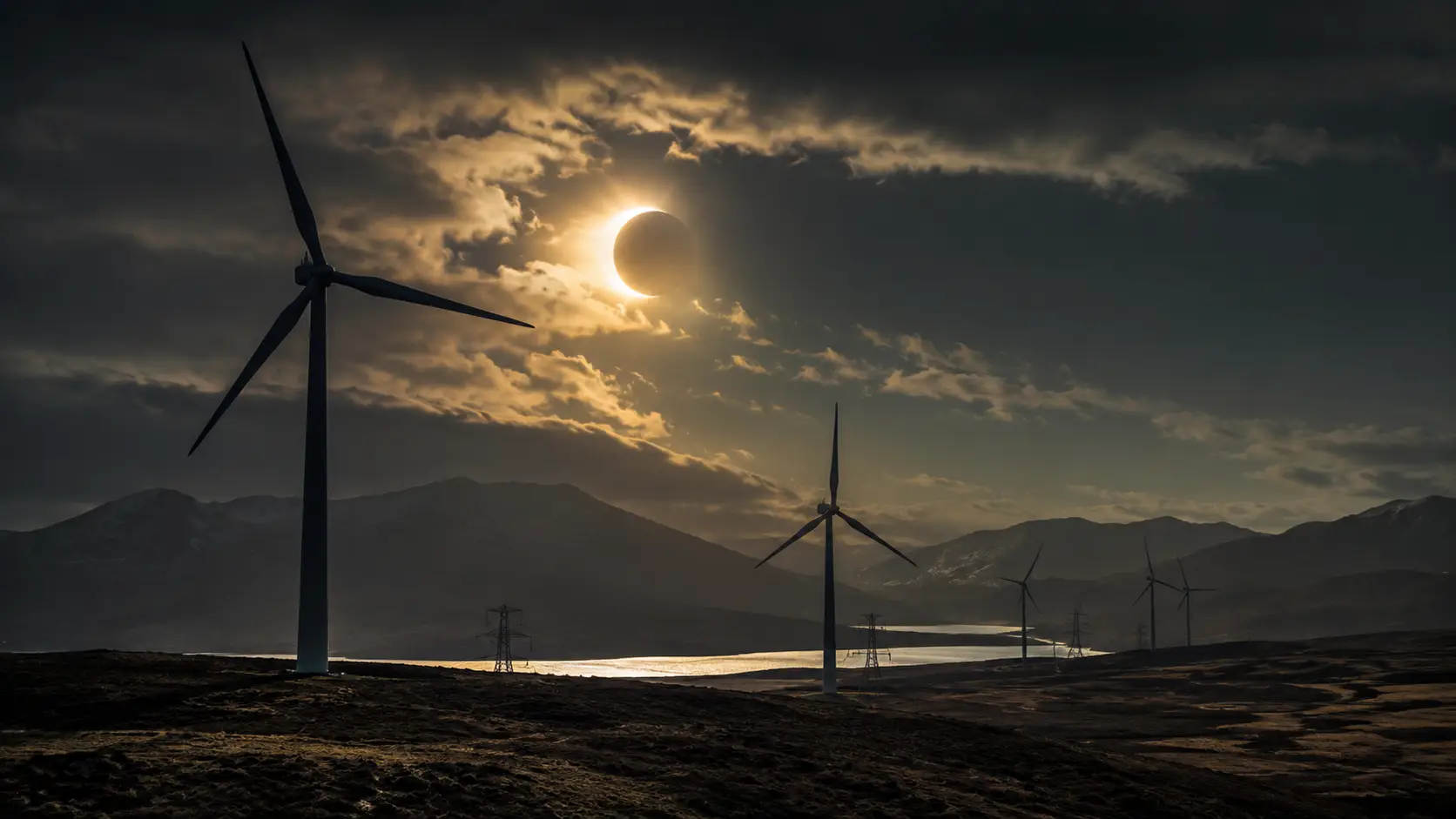
THE FOLLOWING ANALYSIS demonstrates that current energy policy contravenes Scottish climate change and emissions legislation on almost every criterion. The Scottish Government has the power to stop all further net zero developments with a reformed National Planning Framework and should immediately do so.
Given developments in scientific knowledge since the UN IPCC Assessment Report 6 was issued in 2021, and with the next one not due until 2029, it is worth reviewing these criteria under the headings set out in the legislation.
1.0 Policy must consider current scientific knowledge on climate change
1.1 UN IPCC predictions of future global warming are based on model assumptions, set out in the 1990s. The most concerning of these in terms of global warming was scenario RCP 8.5 which has recently been dropped because it is fatally flawed. It assumed that oil and gas would start to run out by the mid-2020s, but this didn’t happen.
1.2 This leaves the RCP 4.5 and RCP 6.0 scenarios which predict a temperature rise by the year 2100 from a pre-industrial baseline of between 2.5°C and 3.5°C. We are currently just over one degree centigrade above this baseline, so that leaves between 1.5°C and 2.5°C to go.
1.3 We have only been able to measure global temperatures with any degree of accuracy for the last half century since satellites started measuring infra-red radiation rising from the planet’s surface. But we do know it was a lot colder in the Little Ice Age. The River Thames sometimes froze over in the seventeenth century. With a baseline in pre-industrial times, the UN starts from a very low level and underestimates natural warming and cooling cycles.
There is no climate emergency and currently no need for a net zero policy
1.4 Since 2021, our increased knowledge of natural temperature variations allows us to question the relative contribution of man-made (anthropogenic) and natural factors. In the First Minister’s constituency, archaeologists at the Crannog Centre identified seeds preserved in the cold mud of Loch Tay from Bronze and Iron Age crops that required temperatures around 3°C higher than today. This is corroborated by other evidence, for example, historic shellfish remains in the Arctic Svalbard Islands of species currently restricted to warmer waters 1,000km further south.
1.5 If a 3°C warmer temperature than today is within natural limits and was satisfactory for our ancestors to prosper with basic technologies, a 1.5°C to 2.5°C increase by the end of the century should not be problematic. There is no climate emergency and currently no need for a net zero policy.
1.6 Indeed, the current level of warming has been beneficial, increasing growing seasons by about three weeks in the last century and reducing the number of cold winters which are deadly for vulnerable humans and wild creatures. The amount of vegetation on the planet (the Leaf Index) has increased by about ten per cent in the last half century largely due to more carbon dioxide – plant food – in the atmosphere. This is a good news story for humans and wildlife.
1.7 We should not ignore the long-term potential threat of anthropogenic warming, but there is no urgency to address it. More appropriate technologies will probably emerge. For example, molten salt thorium nuclear reactors could produce electricity at half the cost of the current cheapest electricity source, coal-powered generation, giving every country in the world access to cheap, low carbon and reliable energy.
2.0 Policy must promote appropriate technologies.
we have not significantly reduced global emissions, merely exported them from the UK
2.1 The current technologies being applied to tackle climate change are poor at reducing emissions. They have contributed to the highest energy prices in the developed world, with the result that we export manufacturing to countries which use cheap, high emissions coal power and then import goods in diesel-powered ships. Consequently, we have not significantly reduced global emissions, merely exported them from the UK.
2.2 While wind and solar are “renewable”, they are intermittent and require fossil fuel back-up to provide a reliable and controllable electricity supply, so their ability to reduce emissions is poor.
2.3 While biofuels are “renewable”, cutting down 27 million North American trees every year and burning them in the UK is a high-emissions activity. We subsidise biofuels to harm the environment.
2.4 Around 75 per cent of our energy requirements come from gas and oil and are likely to remain so because few people will be forced to buy electric vehicles and install heat pumps and, even if they did, the local electricity grid could not cope with demand. Yet, instead of maximising our own reserves, we import gas from places like Qatar, resulting in higher emissions at greater cost.
2.5 Tackling climate change was meant to be an environmentally beneficial activity, but the current technologies do the opposite because of:
• damage to landscapes caused by the production of biofuels;
• damage to landscapes due to the mining of rare minerals for lithium batteries;
• the effects that wind farms and associated infrastructure have on our beautiful Scottish landscape and seascape, and the wildlife inhabiting them;
• the inability to recycle wind turbines, solar panels and lithium batteries satisfactorily.
2.6 As paragraph 1.7 above concludes, we have been impatient to address a perceived issue and have employed ineffective and expensive technologies when better ones are likely to emerge.
3.0 Policy must not harm the competitiveness of the Scottish economy
3.1 The loss of Grangemouth, Mossmorran, Alexander Dennis buses, and North East oil and gas services is testament to the harm done by high energy prices and an inappropriate energy strategy. Few renewables jobs are created in Scotland, with much of the investment going abroad to places like China.
3.2 Consumers are affected by carbon taxes on services and goods, and high personal taxation to subsidise inefficient energy technologies. Consumer spending is drastically reduced, affecting all areas of the economy.
3.3 Energy Performance Certificate requirements threaten the viability of care homes, rental accommodation and tourist facilities.
3.4 Developers and the building industry are hampered by planning and building regulations with “green” elements which make new projects more expensive and more difficult to initiate.
3.5 The reduction in high inertia fossil fuel and nuclear generation plants, and increased reliance on low inertia renewables will inevitably lead to power cuts that will further damage the economy.
4.0 Policy must consider the impact on taxation, public spending and public borrowing
4.1 Taxation is at the highest level since the 1940s, partly to pay – mostly to foreign companies – subsidies for inefficient renewables and to apply an energy cap which hides the true cost of a flawed energy strategy. This means there is less money available to improve public services.
4.2 There are enormous social and healthcare costs arising from a million Scottish households being in fuel poverty, and 270,000 Scottish houses suffering from damp and mould because people cannot afford to heat their homes properly.
4.3 The increase in housing costs is largely due to net zero factors in legislation and the cost of living. Rents rose by 9.2 per cent to March 2024 and the affordability ratio of average wage to average house price rose from 4.92 in 2002 to 8.28 in 2022. Renting or owning a home is beyond the reach of many.
4.4 The national debt continues to increase. Public spending on an “energy transition” is a significant factor in the government failing to balance its books.

Comments: 3
Join the debate
Do you agree with this analysis, or is the author wrong? Have your say below.
Excellent Article David. Much food for thought but will SNP & LAB and the Greens take note? I fear not!
Good evening David! Your article hits the nail on the head but there are a lot of people who are making plenty of money out of the net zero scam and it is they that need to be exposed and disposed of! However, I see precious little activity in that regard!
Kind regards,
Steve Partridge
Excellent expose of net zero insanity. More and more Scots are not accepting the net zero agenda as i read here in this excellent article about the recent public consultation.
https://biologyphenom.substack.com/p/scotlands-climate-change-plan-2026?utm_source=publication-search