

IN A RARE HARMATTAN-LIKE HEATWAVE THIS WEEK, I ended up in a Wetherspoons pub with a pint of squash, idly browsing a shelf of old, donated books. Among them was an unexpected copy of Memory Hold-the-Door. It felt less like chance than timing – an encounter with an older way of thinking about politics, duty, and decline.
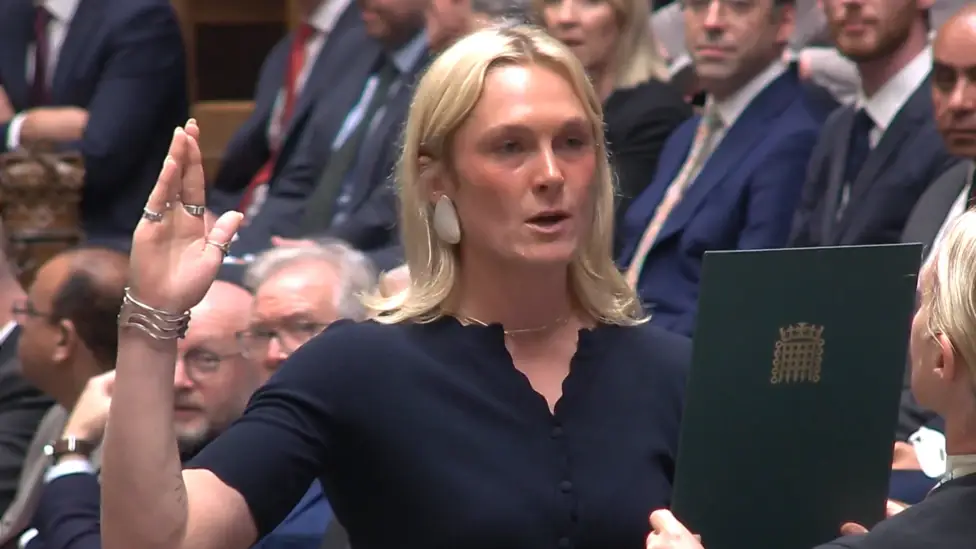
In recent years, there has been recurring controversy around the parliamentary oath and the manner in which some newly elected representatives choose to approach it. At times, gestures of irony or political signalling have been introduced into what is, at its core, an act of entry into the British democratic tradition of parliamentary government. Supporters may see this as harmless expression or legitimate dissent. Others see something more troubling: a weakening of the instinct to treat constitutional ceremony as part of a shared civic inheritance, rather than a procedural formality.
The issue is not whether British democratic traditions should be beyond criticism – they should not – but whether participation in them carries a basic respect for the institutional continuity they represent. Without that respect, constitutional practices risk being hollowed out, treated as optional gestures rather than shared commitments. When that happens, civic life begins to thin.
A civic order no longer understood from within becomes vulnerable not to attack, but to neglect
In Memory Hold-the-Door, John Buchan reflects on modern life with a mixture of anxiety and optimism. Writing in an age shaped by technological triumph and spiritual uncertainty, he warns that the gravest danger is not opposition, but indifference. “Rust will crumble a metal when hammer blows will only harden it,” he writes. The image is simple but exact: force may strengthen; neglect corrodes.
Buchan’s concern is collective as much as personal. Traditions, beliefs, and institutions must be lived to remain alive. A civic order no longer understood from within becomes vulnerable not to attack, but to neglect. His fear is decay through comfort rather than destruction through conflict.
That distinction feels increasingly relevant to modern Scottish politics.
For much of the twentieth century, the Union in Scotland was largely taken for granted. It formed part of the background architecture of public life. People might disagree about governments or policy, but the constitutional framework itself was rarely the central question. In Buchan’s terms, the metal was left largely unworked.
Yet what is not tested is not always strengthened. When a settlement ceases to be consciously understood, it drifts into assumption. Belief hardens into habit; habit weakens into indifference.
The rise of modern Scottish nationalism has changed this. Over the past decade and more, Scotland’s constitutional future has moved from the margins of politics to its centre. The 2014 referendum, subsequent elections and continuing debate have ensured the Union is no longer an inherited backdrop but a subject of active dispute.
At times, constitutional nationalism appeared to embody inevitability. For a period, the growth of the SNP was widely interpreted as inexorable. Like a tree in high summer, it produced fresh leaves year after year, each electoral cycle read as confirmation of expansion. Independence seemed less a political objective than an approaching certainty.
But on stalled nationalism, the tone has shifted. What once felt like momentum has settled into a doldrum of vision and policy. Discussion is now less about how independence might be achieved, and more about an assumption that it will arrive as a matter of course.
Polling over a sustained period also suggests a gradual erosion of the once-solid “Yes” coalition. Together, these trends create a political atmosphere in which certainty has outpaced articulation.
unionism faces a different but equally demanding challenge: renewal without complacency
It is, however, worth noting that such interpretations risk smoothing over a more uneven reality. Political movements rarely move in straight lines. What looks like stagnation may appear, from another angle, as consolidation or adjustment. The temptation in uncertain periods is to mistake fluctuation for pattern.
In such moments, political narratives change character. The language of expansion gives way to consolidation and fatigue. What was once renewal begins to resemble repetition.
If nationalism now faces stalled momentum, unionism faces a different but equally demanding challenge: renewal without complacency. Buchan’s warning returns with force. The greatest danger is not opposition, but the slow erosion of conviction through indifference.
For much of recent history, support for the Union required relatively little articulation. It was part of the constitutional air people breathed. But what is no longer explained can easily be misunderstood. When belief is inherited rather than consciously held, it becomes vulnerable not to argument, but to forgetfulness.
The question is not simply one of political competition. It is whether a tradition still contains the capacity to explain itself clearly, repeatedly and without assumption.
A tradition constantly challenged may rediscover strength. One merely assumed fades, not through defeat, but through drift.



Comments: 0
Join the debate
Do you agree with this analysis, or is the author wrong? Have your say below.
No comments yet. Be the first to join the discussion.