

WHEN THE SCOTTISH SUN revealed that pupils as young as thirteen were being assigned work promoting SNP talking points from a textbook co-authored by Jenny Gilruth, Scotland’s Education Secretary, the reaction was outrage: opposition politicians condemned it, parents expressed alarm, and educational activists called for Ms Gilruth’s resignation for profiteering.
Outrage, perhaps justified outrage, but also somewhat predictable outrage. Of course, the SNP insisted that there was nothing to apologise for. The inescapable lesson that I’ve drawn from yet another scandal of ideological indoctrination is simple: whoever holds the monopoly uses it.
In this and a follow-up piece I will argue that focussing on each particular case misses the deeper problem, which is that state control of education makes ideological capture inevitable, irrespective of which party holds power.
Political interference isn’t a new phenomenon, nor is it unique to the SNP. When Labour controlled Scottish education, schools emphasized certain political narratives. (I remember in the 1980s at school in the east-end of Glasgow studying the Tolpuddle Martyrs and the rise of Trades Unions). When the Conservatives held sway in England, different orthodoxies prevailed. And, if Reform UK were to gain power tomorrow, our patriotic curriculum would similarly be condemned as promoting our own ideological worldview.
The problem isn’t which party or ideology dominates. The problem is that any monopolistic state system will be captured by whoever controls it.
We must be careful not to legitimise what we consider morally reprehensible: the political indoctrination of children at school.
You cannot achieve genuine neutrality in education through regulation or good intentions
Consider Scotland’s Curriculum for Excellence. On paper, it’s politically neutral, designed to produce “responsible citizens”. Who wouldn’t want school to produce young men and women capable of being responsible citizens?
But our idea of a responsible citizen – someone capable of living up to our cultural inheritance – is antithetical to a progressivist’s idea – someone capable of repudiating our cultural inheritance.
So in practice, this vague aspiration, this empty signifier, becomes the vehicle for whatever the educational establishment believes, and in turn that authority’s worldview permeates the entire system.
It’s not a conspiracy. It’s simply how the system works.
The usual response to cases like the Gilruth textbook scandal is to demand more neutrality or stricter guidelines for MSPs. But this misunderstands the nature of the problem.
You cannot achieve genuine neutrality in education through regulation or good intentions. As long as a political authority controls schools, those schools will reflect that authority’s values. Guidelines can be rewritten. Ministers can be replaced. The mechanism of capture remains.
Some will argue that education must transmit some values and that pure neutrality is impossible or even undesirable. This is true, and I have set out my own version of a core-knowledge curriculum with its own explicit set of values. In a free society, that decision shouldn’t rest with politicians in Holyrood or bureaucrats in local authorities but should rest with parents, teachers, and communities. And the way to make that happen is to take power away from the educational experts and bureaucrats in their unelected quangos and embed freedom into the very structure of the system.
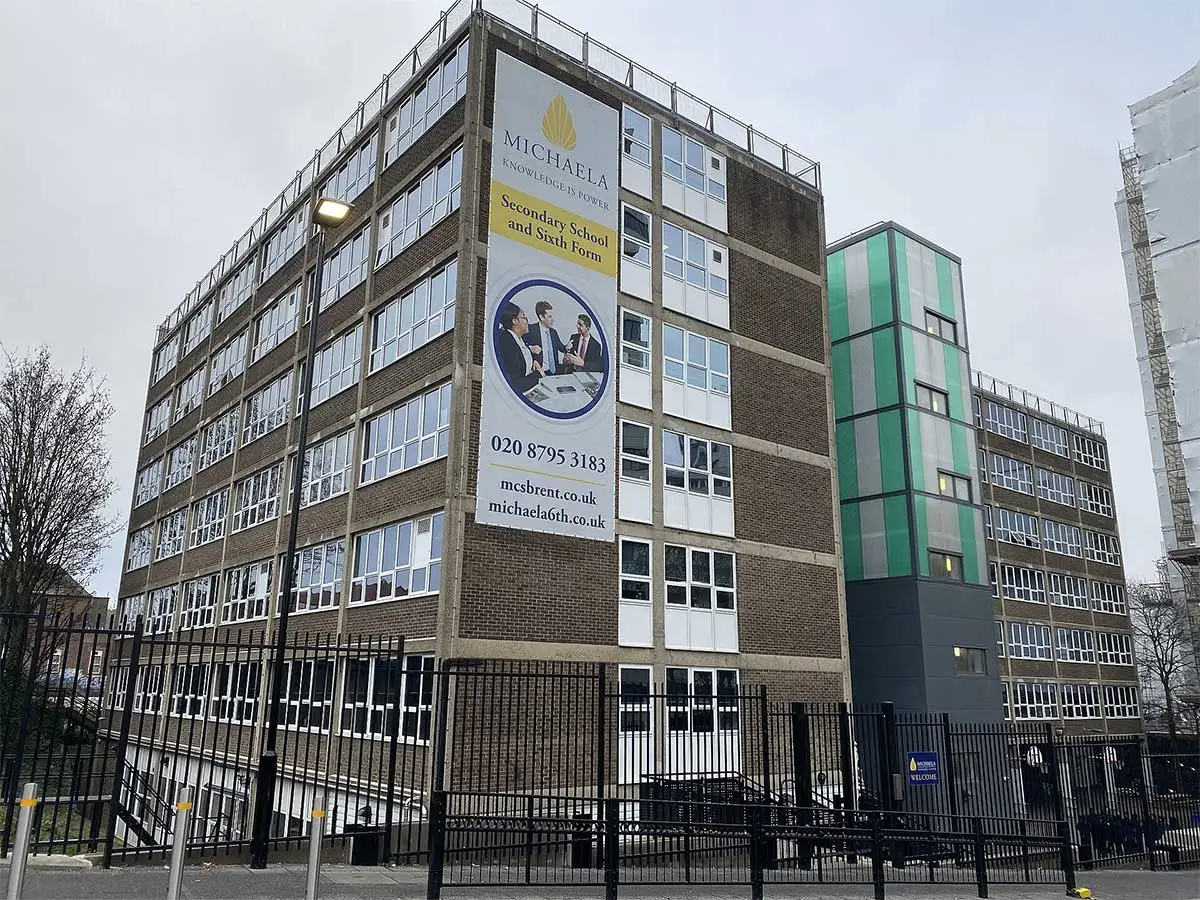
This is where England’s free schools programme offers a compelling alternative. Since 2010, groups of parents, teachers, and community organizations have been able to establish new state-funded schools largely independent of local authority control. These schools follow national standards, face rigorous inspection, and must be free to attend. The most well-known of the English Free Schools is Michaela Community School headed by the indomitable Katharine Birbalsingh.
My argument isn’t that all schools must follow the Michaela model but that all schools should be free to follow the Michaela model. Free schools enjoy substantial freedom over curriculum, teaching methods, and ethos, and because of those freedoms they have unleashed innovation and dynamism in pedagogy, teacher training, discipline and leadership.
the real power of free schools is that they break the monopoly
Not only that but their results speak for themselves. And their results speak for themselves. Centre for Policy Studies analysis shows that free schools are fifty per cent more likely to be rated outstanding by Ofsted than other state schools. They achieve better progress scores across the board. Disadvantaged pupils perform better in free schools than in any other type of state school. And crucially, they’re popular: both primary and secondary free schools have the highest ratio of parental first-choice applications to available places of all school types.
But the real power of free schools isn’t just that they perform well; it’s that they break the monopoly. In a system with genuine institutional pluralism, no single ideology can dominate. Conservative schools can exist alongside progressive ones. Faith schools can operate next to secular schools. Traditional knowledge-based approaches can coexist with more experimental methods. Parents choose according to their values; schools compete to attract them. As Suella Braverman succinctly puts it: from the community, for the community.
The Gilruth textbook scandal has already faded from the news cycle. And in a few months, there will be another scandal if the structure that enables ideological capture remains intact.
This, then, isn’t about replacing SNP indoctrination with Conservative indoctrination, progressive orthodoxy with traditionalist orthodoxy or secessionism with unionism. It’s about recognizing that monopoly itself is the problem. When only one type of institution can exist – the Scottish state-controlled, politically-governed school – that institution will inevitably serve political ends.
Scotland faces a choice. We can continue the futile cycle of demanding neutrality from institutions structurally incapable of providing it. Or we can embrace institutional pluralism and give parents, teachers, and communities the power to establish schools that reflect their values while maintaining rigorous standards and accountability. The case for free schools isn’t partisan. It’s structural. And until Scotland grasps this, we’ll keep having the same argument about indoctrination albeit with different political parties in the dock.
Free schools on their own, however, won’t solve Scotland’s deepest educational failure: our systematic abandonment of the skilled trades and technical education. For that, we need a specific kind of institutional innovation – one that breaks not just the political monopoly, but the degree monopoly as well.



Comments: 0
Join the debate
Do you agree with this analysis, or is the author wrong? Have your say below.
No comments yet. Be the first to join the discussion.