

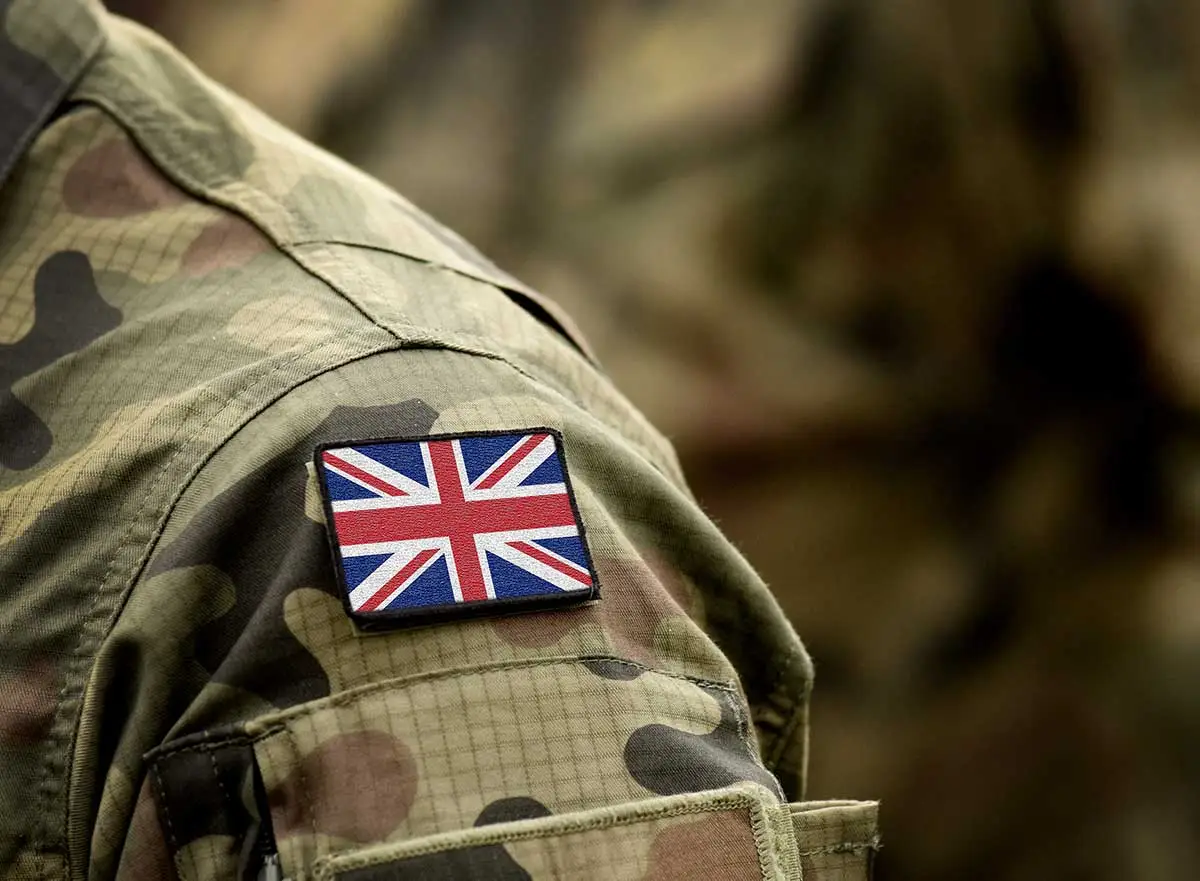
HAVING OUTLINED in Part 3 of this series what I see as the major issues that Reform UK should address when it forms the next Westminster government, there are a number of other matters which, while not in my opinion quite as fundamental, still require urgent attention. I have listed these here in no particular order.
First up is the current rank structure across all three services. To put it simply, there are too many Chiefs and too few Indians. It makes no sense when the Royal Navy has around 40 Admirals versus roughly 25-30 major warships. Or when the Army has roughly 50-60 Major Generals and above but only (nominally) two deployable divisions and only possibly 10-12 deployable brigades (including those in the armoured divisions). And the RAF boasts over 120 one star officers and above but only fields approximately 170 combat aircraft.
This is clearly untenable. Yes, I have heard the arguments about maintaining a career path for advancement, or the need to fill senior staff posts, but these numbers of senior staff versus utilisable combat elements are wholly disproportionate. The career pyramid is overpopulated at the top and under-populated at the bottom.
What is to be done here? Two solutions suggest themselves. The first is to dramatically reduce the number of senior officer posts by devolving their responsibilities to more junior ranks, and the second is to lower the age thresholds for all ranks throughout all three services.
We should let the Young(er) Turks take over
It makes no sense nowadays, if it ever did, to allow the sixty-year-old geriatrics occupying senior posts to make decisions affecting the future of the armed services. At that age they are yesterday’s men and women, with attitudes and experience rooted in the past. We should let the Young(er) Turks take over.
The standard retiral rate for all ranks in the services should be reduced to fifty, and promotion ages should be reduced to conform. In the Army this might mean officer promotion to Major in the mid to late twenties, to Lt Col by the early thirties, to Brigadier before forty and so on. This might also encourage the brightest and best to stay on rather than leave early.
I think we also have to consider whether the overall officer-to-other-ranks ratio is appropriate. Is it really necessary to have five officers in a British infantry company, for example, when other European NATO allies might have only two? Do all RAF pilots have to be commissioned officers, or could we look at a return to NCO pilots? They seem to have done all right in the Battle of Britain, and the Army Air Corps already follows this practice. I’m sure there will be an equivalent argument for RN ranks but I’m not sufficiently informed here to comment further.
Finally on this topic, I suggest there are simply too many ranks overall. Does the Army really need to have 2nd Lieutenants and Lance Corporals, for example, Staff/Colour Sergeants – or even Lt Cols? It might be better having majors commanding battalions and Brigadiers divisions perhaps? The equivalents in the RN and RAF might also apply.
Staying with the Army for the moment, other questions need to be asked. Does it make sense for regular units of the Field Army to be regularly deployed on ceremonial duties? This would seem to be a waste of training and resources in a tight budget, and could be better allocated to reserve units. Or possibly go the whole hog and let such duties be carried out by specialised organisations with no operational focus whatsoever, similar to American-style ceremonial units or “marching bands”.
Are the Red Arrows value for money? Absolutely brilliant for PR purposes, of course, and a joy to behold – but at a time when the RAF appears to be having difficulties finding enough pilots for front-line squadrons might this be a luxury we can no longer afford?
And finally for my purposes here, let’s talk about the UK’s Special Forces (SF). Few will be unaware of the controversy surrounding recent UKSF operations, particularly in Afghanistan in the early 2000s where allegations of extra-judicial killings of civilian Afghans of fighting age have been deeply concerning.
UKSF are allowed to mark their own homework
This not only applies to the UK. Other nations – notably Australia – most have seen individuals prosecuted and convicted. The UK’s Afghanistan Inquiry, investigating alleged unlawful killings by UKSF (mid-2010-2013), remains ongoing. Recent updates from late 2025 indicate delays to key hearings due to new information, ongoing forensic reviews, and upcoming closed hearings for sensitive evidence. The House of Commons Defence Committee separately launched inquiries into the Afghan data breach and resettlement schemes, seeking evidence into the risks posed by leaked personal data.
Something is obviously not right here, and part of the problem is that the Director of UK Special Forces (DSF) answers solely to the Defence Secretary and the Prime Minister, bypassing the normal military chains of command. To put it bluntly, UKSF are allowed to mark their own homework.
This, I contend, is unacceptable in a liberal democracy such as ours, and UKSF should be brought under Parliamentary scrutiny as quickly as possible. This will ensure both that they are accountable to the electorate through Parliament and also help protect personnel from vexatious claims relating to past operations. There will be howls of protest, of course, but they have to be brought to heel. The UK can no longer condone its forces “going rogue” due to lack of oversight.
We should perhaps note that the Independent Inquiry in relation to Afghanistan is yet to report.

Comments: 0
Join the debate
Do you agree with this analysis, or is the author wrong? Have your say below.
No comments yet. Be the first to join the discussion.