

SCOTLAND CONTROLS its own health system. Holyrood determines how services are structured, how clinicians are trained, and how governance operates. That autonomy brings responsibility – and opportunity. If Scotland wants meaningful reform, it does not need another reorganisation. It needs structural clarity: redesigning pathways around patients rather than departments.
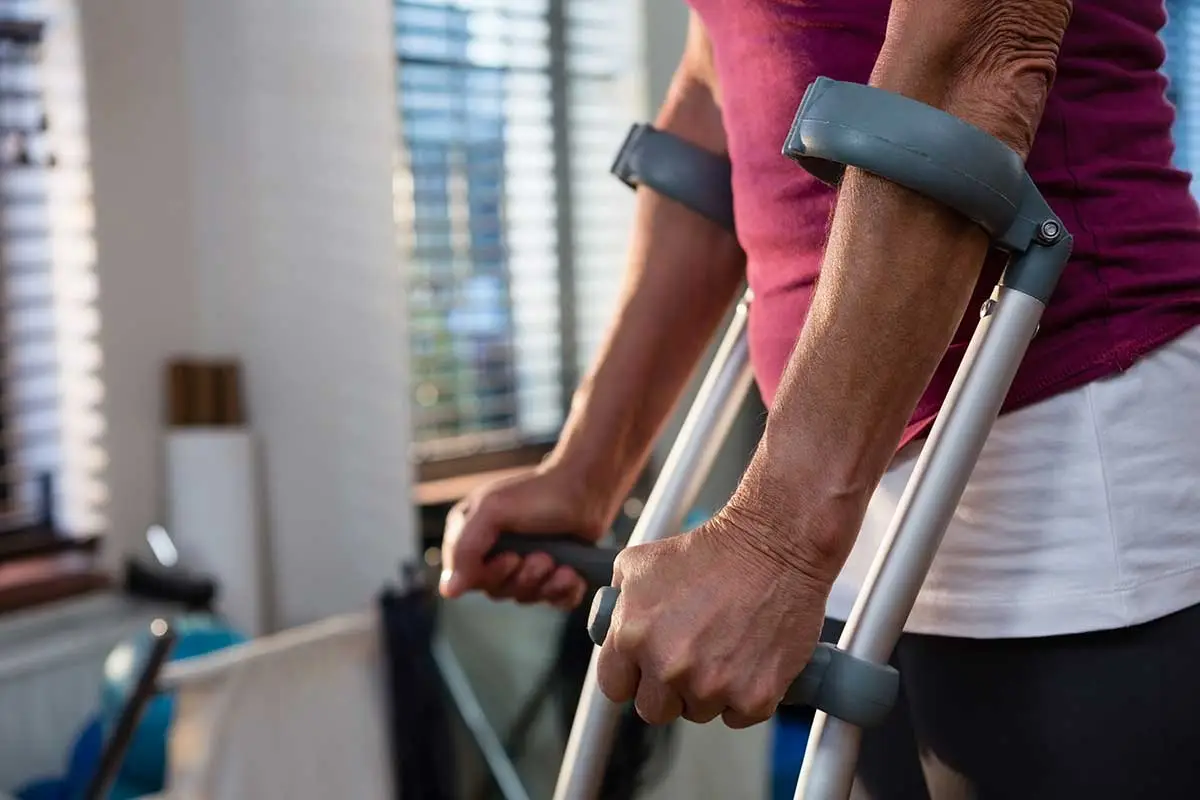
Musculoskeletal (MSK) disease is the ideal place to start. Scots’ mobility matters – not just for comfort, but for independence and contribution. A badly set wrist, a hip left too long, arthritis that cripples the hands, a back worn down by years of work: these injuries and conditions stop people from working, dressing, and caring for themselves. They drive long-term underemployment, reliance on disability benefits, and premature admission to care homes. Early intervention and effective rehabilitation are not just compassionate – they are an investment in Scotland’s workforce, its families, and its economy.
MSK conditions are among the largest drivers of GP consultations, outpatient referrals, elective surgery, disability and lost productivity. They underpin winter bed pressures through fragility fractures and immobility. Demand for joint replacements, spinal procedures and biologic therapies continues to rise. Yet the system delivering this care remains fragmented.
Patients enter through primary care. Some are referred to physiotherapy. Others move directly to orthopaedics. Rheumatology operates parallel inflammatory pathways. Pain services and geriatrics are often involved late. Major decisions – surgery, biologics, invasive interventions – are frequently made within single-specialty frameworks. Long-term functional outcomes are rarely tracked systematically.
The result is variation. Some patients escalate too quickly; others wait passively with little optimisation; many are never systematically prepared for major intervention. Almost none are followed long enough to determine whether that intervention genuinely improved their life five years later. The visible consequence is striking: forty-year-olds reliant on mobility scooters and long-term pregabalin prescriptions are a glaring sign we have failed to rehabilitate people effectively.
What I call NHS Joint Care proposes a structural shift.
It is not a merger of departments. Orthopaedics remains orthopaedics. Rheumatology retains its autonomy. Rehabilitation, perioperative medicine and geriatrics remain distinct. What changes is governance. Oversight attaches to the patient journey rather than institutional silos.
Instead of passive delay waiting time becomes active preparation
Every patient entering an MSK pathway would receive an optimisation plan before major escalation is considered. Physiotherapy and occupational therapy become standard, not optional. Frailty and functional screening occur early. Weight management, pain education and psychosocial assessment are embedded from the outset.
Escalation to surgery or biologic therapy triggers a focused, time-limited multidisciplinary review. Orthopaedics, rheumatology, rehabilitation and perioperative medicine contribute proportionally. Only complex or high-risk cases require extended discussion. This is structured oversight without bureaucratic paralysis.
Crucially, waiting time is redefined. Instead of passive delay, it becomes active preparation. Strength improves, comorbidities are optimised and expectations are clarified. Some patients improve sufficiently to defer or avoid invasive intervention altogether. Others proceed fitter and better prepared, reducing complications, cancellations and readmissions. Theatre capacity is then reserved for those most likely to benefit.
For policymakers, this reframes waiting lists from static backlogs into active therapeutic intervals that enhance safety and efficiency.
For patients, decisions feel collective rather than unilateral
Accountability extends beyond the episode of care. NHS Joint Care embeds mandatory one- and five-year functional outcome tracking for major MSK interventions. Mobility, independence, work participation, sustained pain control and quality of life become measures of success. Counting procedures and waiting times is insufficient; the system must understand durability.
Reform of this scale requires cultural change. Training is therefore integral. A proposed twelve-month Integrated MSK Fellowship would embed cross-specialty literacy early in consultant development. Orthopaedic fellows would rotate through inflammatory and complex MSK rheumatology clinics; rheumatology fellows would work within elective and trauma orthopaedics. Exposure would extend to prehabilitation services, perioperative medicine, rehabilitation planning, implant survivorship and biologic stewardship.
During winter pressure months, fellows would spend time at the acute interface – not as generic cover, but focused on trauma triage, frailty assessment and admission avoidance. The final phase would involve service redesign or governance projects, from theatre efficiency modelling to outcome registry development. Graduates would emerge not only as specialists, but as system-literate clinical leaders.
For health boards, the benefits are tangible. High-cost interventions are more precisely targeted; avoidable surgery falls; complication and readmission rates decline. Waiting times then become more predictable because prioritisation is based on readiness and need rather than queue position alone. Long-term data allows iterative improvement without punitive league tables.
For patients, decisions feel collective rather than unilateral. Rehabilitation is foundational rather than peripheral. Independence is protected.
Yet one structural constraint cannot be ignored: physiotherapy capacity.
Scotland, like the wider UK, has historically underinvested in rehabilitation compared with comparable European systems. Scotland employs roughly 3,000 whole-time equivalent physiotherapists for a population of 5.5 million — around 0.5 physiotherapists per 1,000 people. In contrast, Sweden operates closer to 1.35–1.4 per 1,000; the Netherlands approaches 1.9; Norway exceeds 2.
Matching Sweden would require roughly tripling Scotland’s physiotherapy capacity. Practically, this means creating an additional 2,000 physiotherapist posts, funded and guaranteed by the NHS, but phased through training over a five-year period. Even approaching mid-range Western European density would demand substantial expansion.
This gap matters. Higher physiotherapy density supports earlier intervention, stronger community rehabilitation and reduced downstream surgical escalation. In systems where rehabilitation is embedded early, surgery becomes a carefully selected endpoint rather than an early reflex.
NHS Joint Care cannot function without strengthening this foundation. Optimisation plans require therapists. Prehabilitation requires therapists. Durable recovery depends on therapists.
Expansion is not implausible. Training pipelines already exist in Scottish universities. There are qualified physiotherapists working part-time involuntarily or outside the NHS due to limited posts. Embedding rehabilitation within pathway design would create structural demand rather than discretionary referral.
An initial policy target of increasing physiotherapy capacity by fifty per cent over five years would materially shift care upstream. A longer-term ambition to double capacity over a decade would move Scotland significantly closer to European comparators and make integrated MSK governance scalable.
Investment in physiotherapy is not simply additional spending. It is strategic reallocation toward prevention and durability. Avoiding even a fraction of unnecessary joint replacements offsets years of community rehabilitation costs. Fewer complications protect theatre budgets. Sustained independence reduces pressure on social care and supports economic participation.
rehabilitation is not peripheral – it is structural
Debates about NHS reform often focus on fears of privatisation. Yet the current escalation-driven model already directs substantial public funding toward high-cost corporate supply chains – implants, devices and pharmaceuticals. A rehabilitation-led pathway is not a retreat from modern medicine. It is an investment in public workforce capacity. Physiotherapy, weight management and optimisation programmes are labour-intensive, job-creating and anchored within the NHS itself. If we want to strengthen public healthcare, we should invest in people before products.
Scotland faces an ageing population, rising obesity, growing elective demand and persistent winter strain. Fragmented escalation pathways will not absorb this pressure sustainably. Reactive care inflates cost and capacity strain.
NHS Joint Care offers a coherent alternative. It integrates governance without dismantling institutions, reforms training alongside oversight and converts waiting time into preparation. It measures long-term function rather than short-term throughput. And it recognises that rehabilitation is not peripheral – it is structural.
If Scotland wants Scandinavian-level outcomes in musculoskeletal care, it must be willing to build Scandinavian-level rehabilitation capacity. The tools are devolved. The question is whether Scotland will use them to reorganise purpose around each patient journey – and invest in the workforce that makes durable recovery possible.


Comments: 0
Join the debate
Do you agree with this analysis, or is the author wrong? Have your say below.
No comments yet. Be the first to join the discussion.