

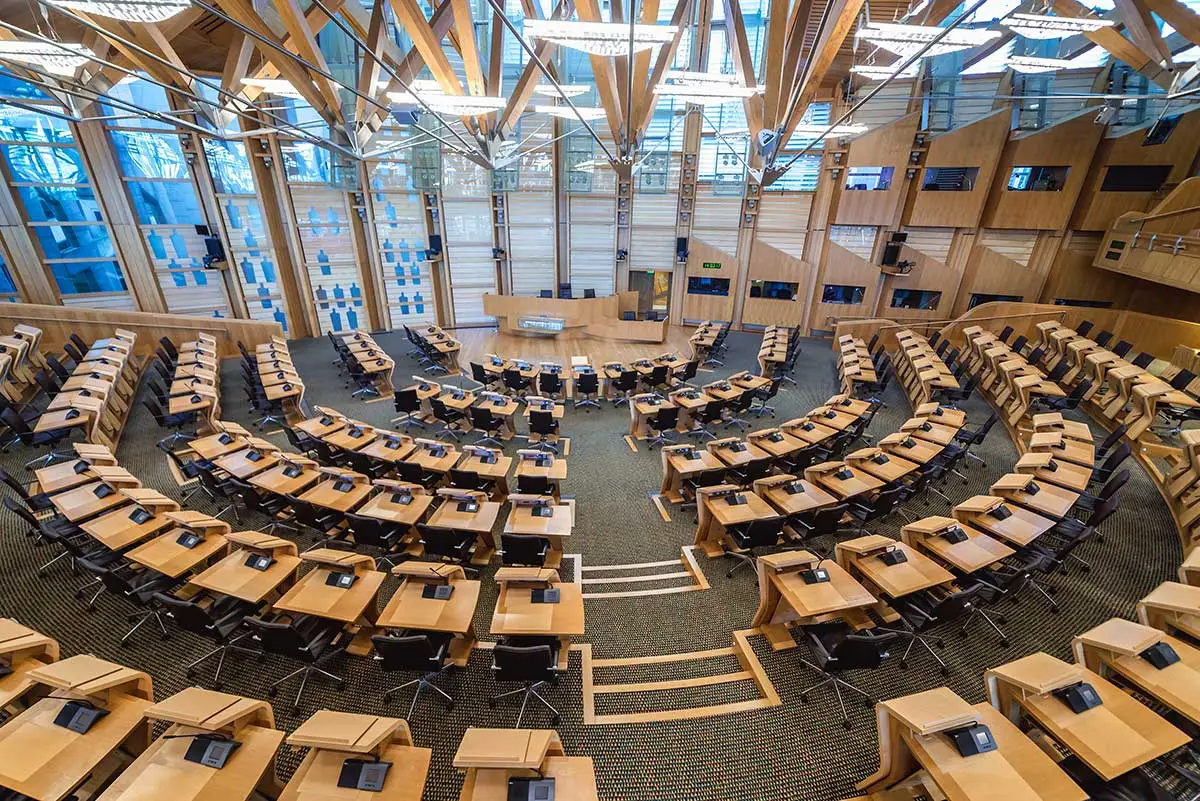
THE SCOTLAND ACT 1998 gave extensive powers to Holyrood to allow it to control most of the levers required to improve daily life in Scotland. Yet Holyrood has not fully implemented these powers because it has been dominated by divisive SNP politics which continually seek grievance with Westminster instead of focusing on the day job of improving the lives of people in Scotland.
This SNP obsession with breaking up the UK has not allowed Scotland to prosper inside the UK. Reform UK believes Scotland’s prosperity lies in maximising the benefits of devolution, making better use of existing powers and working closely with the UK to get the best deal for Scotland.
Therefore, in government, Reform UK will repeal bad SNP laws including Hate Crime and Land Reform. It will maximise the benefits of devolution by working within the Scotland Act 1998 and in partnership with the UK Government.
Reform will also implement a formal ten-yearly review of Schedule Five (ie. devolved) powers, undertaken by a joint Holyrood/Westminster committee.
It will form a department of government efficiency to cut waste and duplication and the endless funding of lobbyist charities by taxpayers, shutting down quangos and returning their powers to democratically elected ministers supported by the civil service.
Moreover, Reform will reboot the civil service by ending automatic work-from-home, reviewing employment numbers and policies, and recruiting department heads from the private sector.
Other government reforms include ending lengthy public inquiries which transfer taxpayers’ money to lawyers and creating a fast-track planning regime around our ten business clusters.
Within Holyrood itself, Reform UK will focus parliamentary time on devolved rather than reserved matters. It will also strengthen the legitimacy and effectiveness of committees by ensuring that conveners are elected by parliament, not appointed by parties, and reducing committee sizes to seven maximum.
Reform will allow the chamber to be more interactive and less performative by permitting interventions and ad hoc questions and imposing compulsory physical attendance and voting. It will also propose a reduction of MSPs by aligning constituency boundaries between Holyrood and Westminster, thereby going from 73 to 57 seats.
Finally, Reform will enact a Recall Bill whereby voters would be able to remove an MSP from office before the next scheduled election under defined conditions.



Comments: 0
Join the debate
Do you agree with this analysis, or is the author wrong? Have your say below.
No comments yet. Be the first to join the discussion.