

FOR TWENTY YEARS, we have been told that Scotland could be like Denmark, Norway, or Finland –if only we were independent. The promise is always the same: constitutional change would unlock better health, better education, and a society structured around prevention.
The uncomfortable truth is that the levers of preventive health have been in Scottish hands since 1999. Health policy, public health, licensing, education, and much of food regulation are devolved. If a government in Edinburgh had applied a Nordic vision twenty years ago, we could already have built systems that cut cardiovascular risk, reduced strokes, and saved thousands of lives.
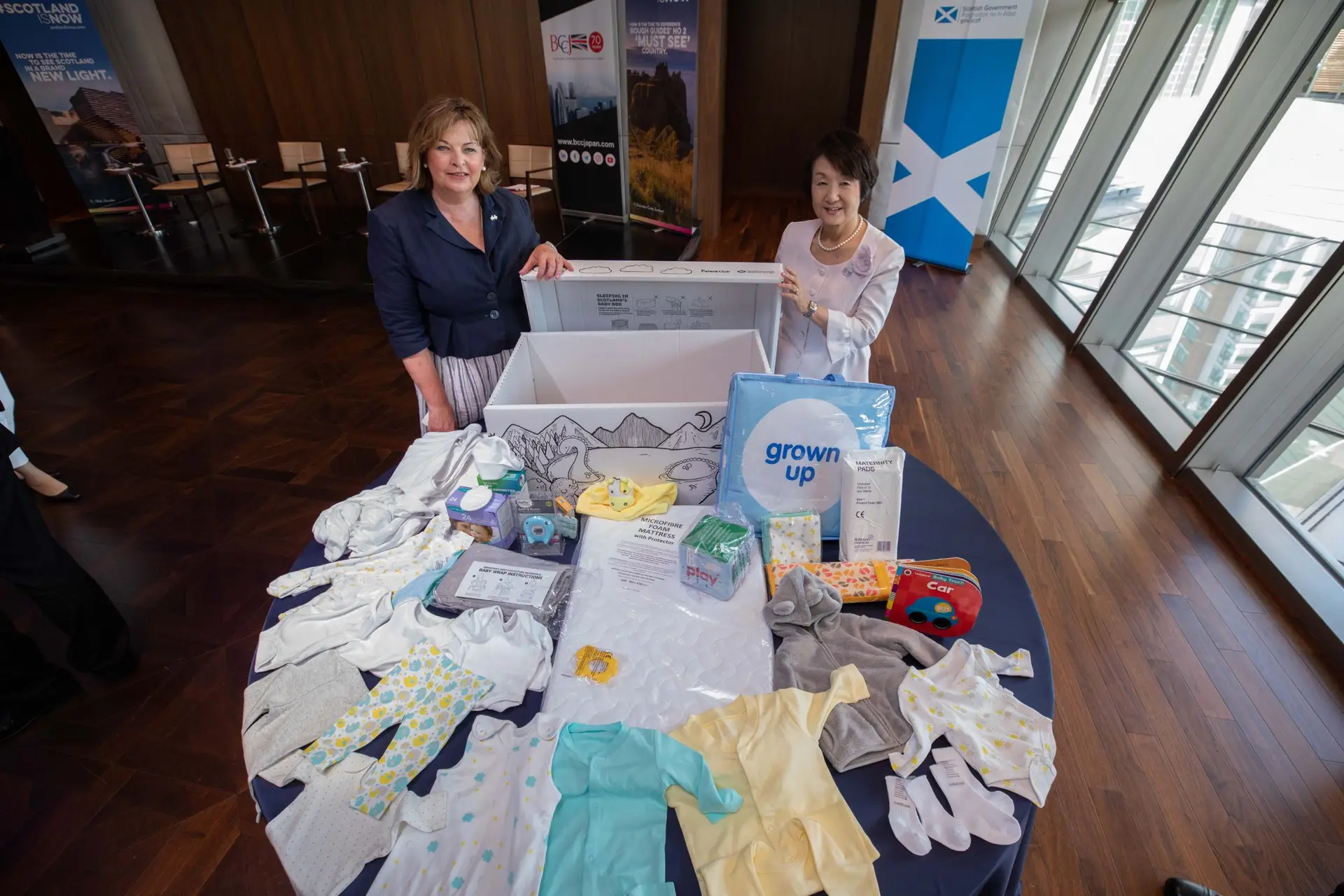
Instead, we got optics. Waiting lists were “doctored,” infrastructure projects stalled, and bottle recycling became a perpetual fiasco – while Denmark ran a smooth deposit-return system for a quarter of a century. And yes, we were given a baby box. It photographs well. But it does not prevent strokes. It does not lower blood pressure or cholesterol. It does not tackle the structural risks that leave Glasgow men dying before their time.
Finland faced one of Europe’s worst cardiovascular mortality rates in the early 1970s. Their response –the North Karelia Project – was a relentless, cross-sector campaign tackling smoking, dietary fat, blood pressure, and community engagement simultaneously. Cardiovascular deaths fell dramatically over a generation. It was not flashy. It did not photograph well. But it worked. Finland did not wait for constitutional change; it applied what was already known, rigorously and consistently.
Scotland, by contrast, has perfected the politics of gesture. The NHS remains a moral triumph: care according to need, not ability to pay. But it faces a structural challenge. The system is financially optimized for treating disease, not preventing it. Hospitals are funded when patients arrive sick. Clinicians are rewarded for activity. Pharmaceutical companies are reimbursed when drugs are prescribed. Prevention – the intervention that actually reduces death, disability, and long-term cost – sits across multiple institutions and belongs fully to no one.
Stroke exemplifies this failure. Unlike rare diseases, stroke is largely predictable. High blood pressure, atrial fibrillation, diabetes, smoking, poor diet, and alcohol misuse account for the majority of cases. Most of these risk factors are detectable, measurable, and modifiable. Yet Scotland lags behind comparable European nations on nearly every metric. One in four Scottish adults has raised blood pressure, but detection and control are inconsistent, particularly in deprived communities. Atrial fibrillation remains underdiagnosed, and anticoagulation rates are suboptimal. Diabetes control is patchy. Smoking and alcohol-related stroke risk remain concentrated in the most deprived quintiles.
Nothing stops Edinburgh from running a Scottish North Karelia – except political will
These are not mysteries. They are failures of implementation. Denmark, Finland, and Norway did not discover new knowledge over the past two decades. They applied what was already known. Scotland could have done the same.
One of the most frustrating aspects of this debate is that constitutional hand-wringing is largely irrelevant to preventive health. Public health is devolved. Licensing is devolved. Education is devolved. Much of food policy is devolved. Primary care is devolved. Nothing stops Edinburgh from running a Scottish North Karelia – except political will.
Prevention must be structural, cross-sectoral, and measurable. Symbolic gestures, however well-intentioned, do not suffice. The Nordics did not get healthier by distributing symbols of care; they got healthier by building systems that changed behaviour at scale, across decades. Scotland does not need a new constitution to do the same. It needs leadership that treats prevention as seriously as intervention.
A blueprint for Scotland does not require radical constitutional change, but Nordic-style governance and accountability. Key components might include:
Primary Care Anchoring: Metabolic clinics run by clusters of health experts, health economists and healthcare manufacturers funded to run preventive clinics, manage chronic disease, and deliver structured lifestyle interventions. Reward metrics would be linked to population-level blood pressure, cholesterol, and anticoagulation targets. Clinics identify risk early, intervene systematically, and follow patients over years, combining cardiology, stroke medicine, metabolic care, rehabilitation, psychology, and social support.
Food Environment Reform: Healthy food options in deprived areas, regulation of ultra-processed food density, and school and hospital procurement reform, with incentives for the agricultural sector to align with public health goals. We spend 40% of farm subsidies on green policies, and 40% of direct payments on beef. We forget vegetables are often green. Scotland could take its green subsidies and provide Veggie Vouchers for schools so children could eat more healthily. Likewise, healthy cooking could be taught in schools.
Licensing and Alcohol Policy: Licensing boards could be used to reduce high-risk alcohol availability. Local density restrictions in high-deprivation areas should be enforced and those with drinking problems should be identified early in their illness.
Community Mobilisation: Local champions, faith groups, media campaigns, and schools could be engaged to change cultural norms around diet, exercise, and smoking. Prevention is social as well as medical.
Outcome Tracking and Accountability: Transparent, postcode-level reporting of cardiovascular and cerebrovascular risk factors is essential. Funding should be tied to measurable reductions in stroke incidence. Prevention should be outcome-driven and measurable at scale, with underperformance resting with partnerships, not the NHS.
This is not privatisation. The NHS retains oversight, sets protocols, caps drug prices, and adjudicates endpoints. Providers cannot redefine success: they either improve population health or they are not paid. Multiple partnerships could operate in parallel in matched populations under identical NHS rules, with transparent measurement and independent auditing. They would compete on prevention outcomes, not marketing or branding.
A competent Scottish government does not need independence to prevent strokes. It needs courage, competence, and clarity. It needs to stop hiding behind constitutional slogans and start using the powers it already has. Yes, independence could open new avenues. Yes, greater revenue autonomy could help fund health programmes. But the absence of constitutional change did not prevent Denmark or Finland from reducing stroke incidence. The absence of a Scottish North Karelia is a straightforward political choice.
Two decades of Scottish politics have prioritised optics: the baby box, slogans about “becoming Nordic,” and minor reforms that travel well in speeches. Meanwhile, the preventable human toll of stroke grows. Glasgow, once the beating heart of Scottish industry, has become a city of preventable heart attacks. Cardiovascular and cerebrovascular mortality remain stubbornly high.
The misalignment of incentives in Scottish healthcare is glaring
A centre-right, pro-UK government could, if serious, create a measurable, long-term, population-wide stroke prevention programme. It could reduce inequalities, cut early mortality, and finally give Glasgow – and the rest of Scotland – a fighting chance at the life expectancy enjoyed by Nordic peers. The distinction is simple: symbolism versus systems.
The misalignment of incentives in Scottish healthcare is glaring. Hospitals are paid for admissions, clinicians for activity, pharmaceutical companies for prescriptions. Outcomes stagnate as prevention sits across multiple institutions without a single balance sheet. Outcome-contingent partnerships would flip this model with funding following results. Prevention then becomes a measurable, accountable endeavour, not a moral exhortation without support.
Political, clinical, and reputational risks exist. Future governments must honour deferred payments, mitigated by statutory contracts and Treasury backing. Public scrutiny is essential: outcomes, failures, and non-payments must be fully transparent. Complex populations mean some interventions will fail; that is why delivery risk rests with the partnerships, not the NHS. What must not happen is softening endpoints. Blood pressure readings cannot substitute for heart attacks prevented. The measure of success is population health outcomes, rigorously defined.
For twenty years, Scotland has been promised Nordic health through constitutional change. What we were not promised – and did not get – was seriousness. We do not lack powers. What we have lacked is ambition, coordination, and the willingness to measure and hold ourselves accountable.
Scotland does not need a new constitution to prevent strokes. It needs a Scottish North Karelia: legislation, cross-sector coordination, funding, measurement, and accountability. It needs leadership that treats prevention as seriously as intervention.
It needs to stop talking flags and start measuring blood pressure.
Until this focus is adopted, stroke prevention in Scotland will remain a promise packed in a baby box – and little more. Nordic health is not about social democracy or social engineering: it is about smart systems that work for a healthy society.



Comments: 0
Join the debate
Do you agree with this analysis, or is the author wrong? Have your say below.
No comments yet. Be the first to join the discussion.