

REFORM’S EMERGENCE has unsettled something in Scottish public life. It has done so largely because it challenges a long-standing and broadly shared consensus within the political class. When that consensus is questioned, the nature of the response matters.
In recent days, much of the focus has been on Malcolm Offord’s past remarks. These were dredged up from ill-advised comments made a number of years ago, for which he apologised at the time. But the scale and intensity of the reaction raise a wider question about what is really being prioritised in public debate.
Because this is not simply about one individual, or one remark. It is about where attention is directed, and where it is not. At a time when Scotland faces a number of persistent and well-documented challenges, the media conversation has a tendency to settle on matters of tone and personality rather than outcomes and performance. It has the unmistakable feel of cronyism and self-preservation — a cosy club that would rather protect itself than confront its own groupthink.
The attacks from the media and politicians on Malcolm Offord’s – and one or two other candidates – over past comments contrast sharply with their attitude to Anas Sarwar’s arguably more pernicious joke making fun of stroke survivors. Given a stroke is often a matter of life and death, Sarwar’s humour is potentially more toxic. Yet his response, post-apology, was to urge the media not to use the footage – in effect, to bury it.
Well, “let him who is without sin among you cast the first stone”.
Undoubtedly, if the biblical advice were heeded, no stones would be thrown. No human is without sin. We have all said things we later regret. But to weaponise minor indiscretion as a means of cancellation says more about our increasingly unhealthy culture than about the original offence.
the media is failing Scotland
Playing the man, not the ball, is one thing. But there has also been what appears to be a co-ordinated attack to mock Malcolm Offord with claims he is unfit to lead. Reform, we are told, has “an Offord problem”.
These attacks are cheap and absurd. They are one-dimensional – part of a broader attempt by the political- media-quango complex to maintain its monopoly on Scottish politics. The media risks being guilty of misrepresentation and uneven application of justice – and in doing so, it is failing Scotland.
No one is perfect. But Malcolm Offord is clearly a substantial figure compared to the vast majority of current MSPs. The Scottish Parliament is full of career politicians, public sector lifers, and NGO or think tank bag-carriers – many with little or no private sector experience, let alone experience at the highest level.
Since devolution in 1997, with the exception of the constitutional debate, there has been a cosy consensus where the only choice was government spending, or yet more government spending.
For the first time since 1997, there is a genuine alternative. A fully costed plan to grow the Scottish economy, hope for taxpayers, a plan to reverse Scotland’s catastrophic educational decline, and some long-overdue sanity in the face of an establishment that, in lockstep, has slowly strangled the life out of the country.
As a reminder, this consensus has undermined personal responsibility while making Scotland one of the most heavily taxed jurisdictions, relative to the size of its economy, in the developed world – all for services that are mediocre at best.
It has seen Scotland’s educational standards plummet. The Orwellian-named “Curriculum for Excellence” has swapped intellectual rigour and knowledge for feelings and relativism – and the results are plain to see.
Despite vastly higher resources – a staggering £2,700 more per head – Scotland lags the UK and most of Europe on almost every measure. Today, the state accounts for over half the entire economy – 54 per cent to be precise. That is deeply unhealthy and obviously so. Yet the consensus insists it is still not enough.
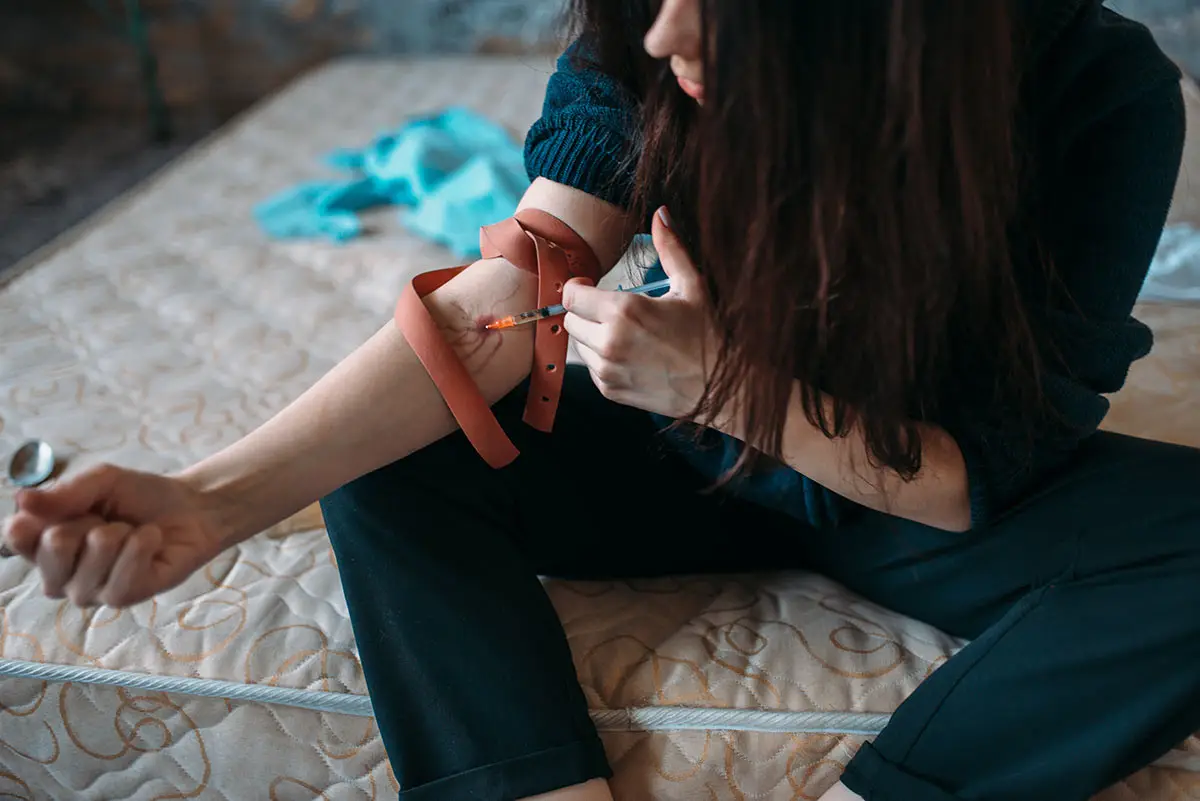
Drug-related deaths have become a metaphor for Scotland’s wider malaise
It is not just economics and education where Scotland is failing. Scotland’s elite have moved in a progressive direction, far from the centre of Scottish society. Perhaps the most tragic apex of this drift is in drugs policy, where Scotland continues to record the highest rate of drug-related deaths in Europe – with recent figures showing a further increase.
The managerial response – consumption rooms, methadone, and a blind eye under the progressive banner – amounts to managed decline. It may be well intentioned but it has compounded the problem. The same failed approach is doubled down upon, despite the evidence. Drug-related deaths have become a metaphor for Scotland’s wider malaise: managerialism and control replacing personal responsibility and community.
It is essential that Scotland is offered an alternative to this cosy – and deeply expensive, (economically, morally and culturally) – consensus. You may like Reform’s analysis, or you may think it flawed, but that is not the point.
The principle is not that standards should be abandoned, but that judgement should be exercised with consistency and humility. Public life inevitably involves scrutiny, but it is strengthened when that scrutiny is applied evenly and proportionately.
Malcolm Offord, like any public figure, should be assessed on the strength of his ideas and his ability to contribute meaningfully to the challenges Scotland faces. That – and only that – is the appropriate test.
More broadly, if new entrants to the political landscape are attracting attention, it is worth asking why. It is unlikely to be because they are flawless. More often, it reflects a sense among voters that existing approaches are not delivering.
A political culture that is more comfortable debating personality than policy risks distorting the very debate Scotland urgently needs. This country is not short of serious problems – it is short of an honest confrontation with them that reflects their scale and complexity.
If that debate is to be productive, it must be willing to move beyond the immediate and the personal, and towards a sustained examination of what is working, what is not, and what must now change.



Comments: 4
Join the debate
Do you agree with this analysis, or is the author wrong? Have your say below.
It is very important to vote Reform to give a message to SNP and Labour. The industrial collapse of Central Scotland is shocking and will have grave impacts for generations. Grangemouth has closed its refinery, bus manufacturing has now ended at Camelon. We must send a clear message to Holyrood that their cosy consensus is over.
i think this is very considered and totally agree . It’s time to get out of the gutter , debate policy not the person , this is echoed by many when i’m out canvassing
If this is for us reformers it’s not good enough. This needs to be a narrative that’s presented to the electorate. Can you convince us that it has maximum impact by presenting the arguments and evidence to the masses?
Even Stewart analysis is correct but demanding political opponents and commentators to raise their standard of examination and debate is academically satisfying but little else. Malcolm Offord appointed Reforms first leader in Scotland only 4 months ago has been nothing short of magnificent thus far in crafting an offer to the Scottish Electorate that is succinct ,purposeful and inspires hope . Of course the opposition will want to block it by all means at their disposal. Reform had similar problems outside Scotland until it deployed GB News to deliver and more importantly continuously REPEAT the message. Perhaps it’s shortage of time or money but Reform UK needs to do much more to bypass the failings of the Scottish Media to give Offord’s message of hope and prosperity a FAIR airing with the Scottish People.