

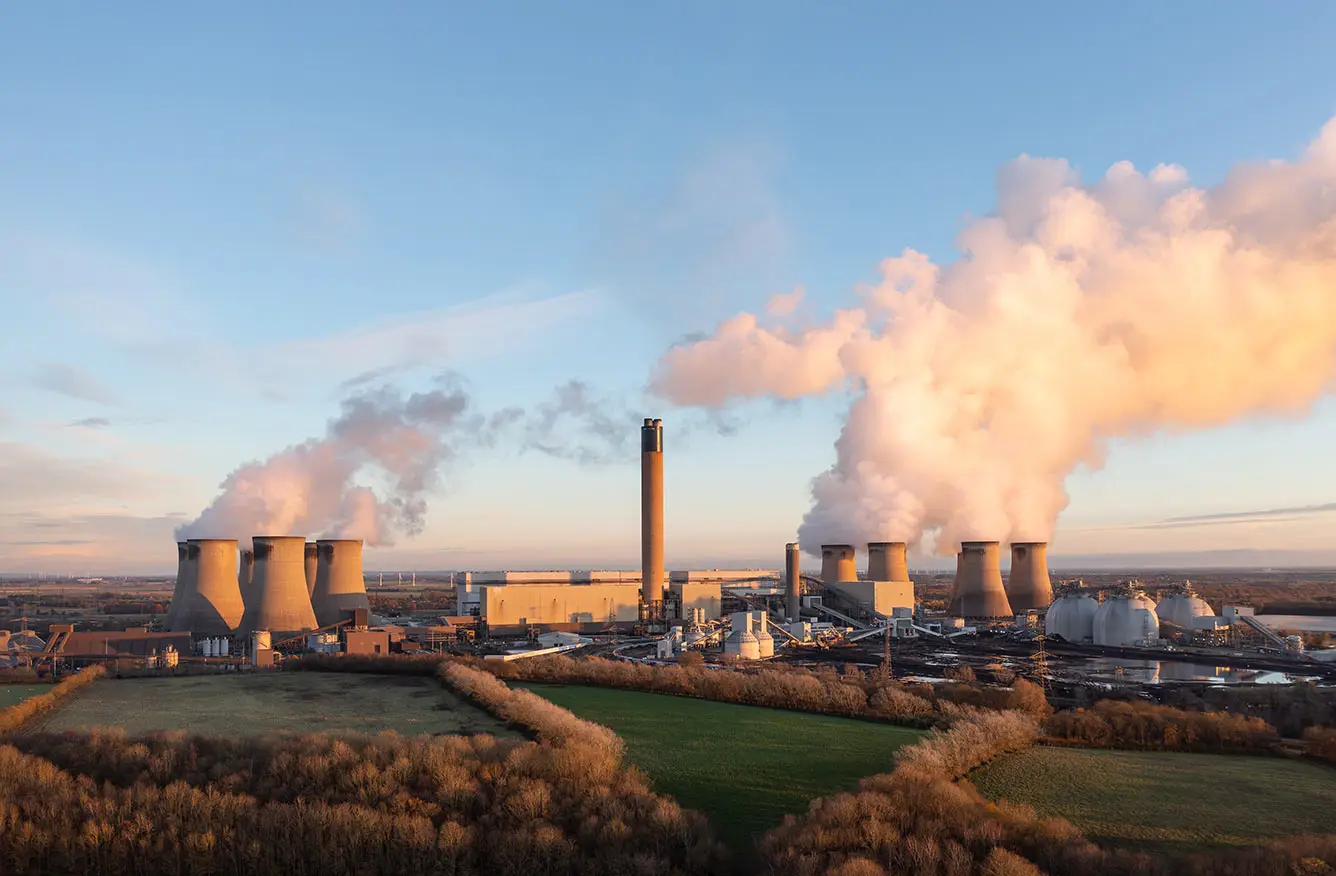
I WAS DELIGHTED recently to hear Kathryn Porter in Edinburgh give a tour-de-force guide to Scotland’s energy position.
Kathryn is an independent energy consultant with experience of physical and financial electricity, gas and oil markets as well assignificant experience in financial services spanning both risk management and financing. She has a Master’s in Physics and an MBA, so she has a uniquely broad understanding of not only the energy markets but also the physical difficulties of the shift to a renewable energy supply.
The evening was hosted by Net Zero Watch, who are well worth following online. Malcolm Offord for Reform and Andrew Bowie MP for the Conservatives also contributed to the discussion. Other political parties had been invited but none took up the offer. Many in the audience were retired engineers, and quite a few were from Reform.
Kathryn primarily focused on the electricity supply, and she started with a reference to the fragility of the Scottish grid. She explained that, whilst the rhetoric of politicians is that Scotland is an electricity superpower, this is not true and the Scottish grid is actually extremely vulnerable, being held together by just two power stations: Peterhead and Torness. She noted that this dependence is so critical that the National Energy System Operator, NESO, will not allow both to go on maintenance at the same time. Yet within the next five to six years both could close.
the Iberian blackout last year cost eleven lives and resulted in an estimated 165 excess deaths
She then discussed in detail the key point about the potential instability of the grid which is brought about by the lack of inertia. I’m not going to try and explain it, but the key point is that conventional power plants have inertia which helps maintain the national grid at a steady 50 Hz. Renewable sources do not have this property and so it is much trickier for the grid to be managed. You can find the details in Kathryn’s speech here.
The upshot of this is that many grid engineers have been predicting for some time that there is an increasing possibility of power outages, which could include an extensive blackout. Readers will recall the Iberian blackout in April last year which, Kathryn reported, cost eleven lives and resulted in an estimated 165 excess deaths over the two days affected by the outage. Kathryn’s view was that it was not the original fault which mattered but the various decisions and automatic actions which followed, causing the widespread failure.
If it seems far-fetched to readers to think this is a real risk in Scotland, then note that Scottish Power sent a leaflet to their customers telling them how to deal with “Emergency power cuts due to demand shortages”. So it doesn’t seem far-fetched to Scottish Power.
Kathryn discussed expensive measures which are being taken in Britain to try and mitigate the risks in our own system, as it becomes more and more reliant on renewable supply. Kathryn noted that both Peterhead’s gas-fired power station and Torness, Scotland’s last nuclear plant, are due to close within a few years. NESO does not allow both Peterhead and Torness to have simultaneous maintenance outages, and Peterhead often runs not for the electricity it produces but for the grid stability it provides.
She also highlighted that Longannet, a coal-powered station, was closed not because it was at the end of its life but for environmental targets. Readers may remember watching Nicola Sturgeon gleefully press the button to demolish the station – part of the SNP government’s “scorched earth” policy to ensure there is no going back.
Perhaps the most sobering part of her assessment was the potential parallel with what happened in Spain – once the cascade began, the grid collapsed within seconds. In a full system blackout the entire grid shuts down. Transmission lines become de-energised. Power stations disconnect. Cities lose electricity simultaneously. This is why critical sites such as hospitals have backup diesel generators on site which are supposed to instantly fire up to take over from the grid in the event of a blackout. Restoring power after a blackout is a complex process known as a “black start” and can take days.
wilful blindness is leading us to a catastrophic situation
As an aside, on several occasions I asked at my Mum’s care home what provision they had made for a power cut. The answer I got was that the energy companies would bring in generators. The idea that, in a city-wide power cut, there would be back-up generator capacity available to cover vulnerable accommodation seems to just be head-in-the-sand thinking.
Kathryn also discussed the wider issue of gas and oil supplies – brought into sharp focus by the Iranian situation. Roughly 80% of homes are heated with gas. And almost all road transport still relies on petroleum fuels. She noted that it wasn’t only wars which were problematic but also Britain’s punitive regime regarding gas.
Kathryn’s opinion is that if we’re serious about energy security, the windfall tax needs to go and the ban on drilling lifted. In addition, the regulatory framework needs to be reset. The oil and gas regulator should have a clear mandate to maximise economic recovery of the remaining resources. Licensing processes should focus on turning acreage into wells as quickly as possible. She finished with her view that the goal should be to keep the lights on, keep the economy running, and keep Scotland at the centre of Europe’s energy future.
I think that this sobering assessment of the energy sector in Scotland left even this informed audience slightly shell-shocked.
Malcolm Offord stated Reform’s position on net zero and oil and gas, which is closely aligned with what Kathryn outlined.
Andrew Bowie spoke passionately about the impacts of the current policies on the people in Aberdeen and the North East. He more or less agreed with Malcolm on the policies which should be adopted. Malcolm agreed that they had worked quite closely together in their time in the Conservative government. That leaves the question of how aligned Andrew’s views are with recent and current Conservative policy.
I have often wondered how politicians and civil servants seem to have no understanding of even the simplest engineering or energy supply facts. Some light was shed on this by Andrew who said that, when he was a Minister with the Energy brief, his civil servants did everything they could to prevent him speaking to Kathryn. Kathryn noted that she had found great difficulty getting access to politicians. She has offered to give any MP an hour’s consultancy time to explain the energy market. Only one has taken up her offer. Clearly, it is a form of wilful blindness on their part which is leading us to a catastrophic situation.
I would summarise the evening as very informative, with an audience who probably mostly agreed with the positions of the three speakers. However, sadly, the people who were not there are the ones who need to hear it the most – the government and representatives of other parties who still chant the mantra of “we need renewables”, whilst turning a blind eye to the facts – brought so starkly into focus by the current oil and gas crisis.
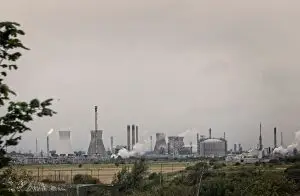
The Norwegians are taking gas out of the North Sea, next to our closed field, and selling it to us. What will it take for the needed U-turn in Britain?
Comments: 0
Join the debate
Do you agree with this analysis, or is the author wrong? Have your say below.
No comments yet. Be the first to join the discussion.