

THE GORTON BY-ELECTION has kept the political world on tenterhooks since it was called. As a result, Hannah Spencer, a former plumber, has been elected as an MP. That’s fabulous news; Westminster badly needs MPs who can tell a hawk from a handsaw, or indeed a monkey wrench from a socket drive. She won as a member of the Green Party; that’s a little confusing.
A quick trawl of their website shows that the Green Party’s agenda has widened from protecting the environment and the planet to include delivering international fairness, especially to Palestinians. That’s a wide range, but it’s neither coherent nor deliverable. It’s also not what the general public, who have better things to do with their lives than slavishly follow politics, would immediately associate with the Green Party.
Slash and burn in Brazil is an odd way to confront the climate emergency
Their commitment to the environment and tackling the “climate emergency” is unswerving, although detail is lacking. A cynic might think that was because net zero was invented by Ed Miliband, implemented by Theresa May and amplified by Boris Johnson. It’s no longer a Green Party idea; it’s mainstream. Worse, particularly for long-suffering householders, businesses and taxpayers, net zero is an unmitigated disaster. UK electricity prices have skyrocketed, and global emissions continue to rise. It’s become obvious that an acre of solar panels on productive farmland in the UK creates demand for more farmland in the Amazon rainforest.
Slash and burn in Brazil is an odd way to confront the climate emergency, but that’s the effect of the UK’s myopic policy, which is driven by emissions from the geographic UK rather than emissions caused by the UK’s demand for energy and products. As we’re a net importer, even of food, the difference is significant and substantial. Such is the idiocy of Miliband and the Climate Change Committee (CCC).
Worse, it turns out that the CCC, following the rules of the Intergovernmental Panel on Climate Change (IPCC), significantly miscalculates the UK’s net CO₂ emissions anyway. The IPCC methodology ignores the substantial amounts of CO₂ absorbed by the UK’s permanent grass pasture. The result is that UK agricultural emissions are overstated by thirty per cent to ninety per cent. Converting pasture to solar farms has a double whammy; the agricultural land needs replacing and the CO₂ is no longer absorbed (as the pasture grows more slowly in the shade of the panels and without the fertiliser of cattle manure).
British solar parks are destroying the planet as well as the UK’s economy. Not that the government will mention this, but then they (and Ed Miliband) are in hock to multi-millionaire eco-loon and wannabe peer Dale Vince, their biggest donor. The Green Party doesn’t do detail, so what do they care? Theirs is a message of hope, peace and love.
Hilariously, their 2024 manifesto states that Green MPs will always “… uphold the rule of law and tackle political corruption”. It turns out that a large part of their winning vote came from (Muslim) family voting, presumably because Hannah campaigned wearing a Palestinian keffiyeh. Analysing why a Manchester suburb flipped from hardcore Labour to Gaza-aligned Green is beyond the scope of this article; these are strange times in politics.
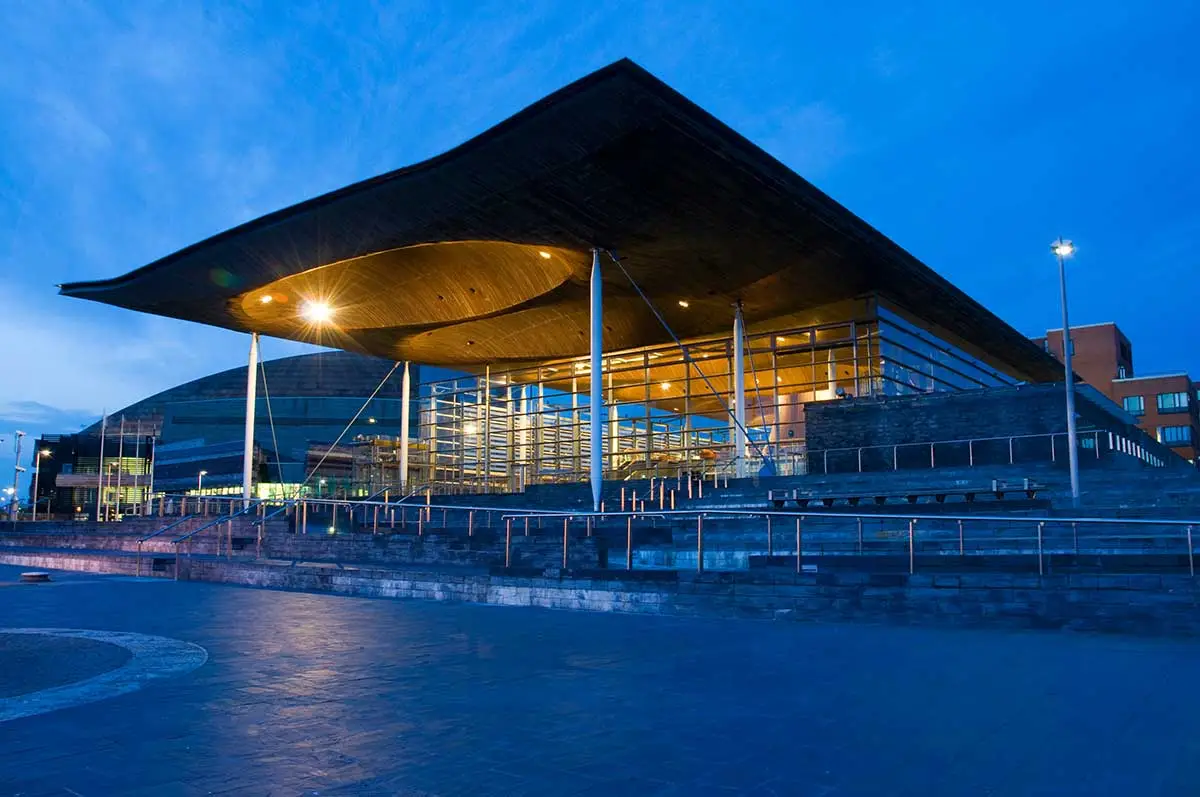
What does the Gorton result mean for May’s elections? I’m involved in the Welsh Senedd elections, which are already complicated.
The Senedd has been run by Labour or a Labour / Plaid Cymru (the Welsh nationalists) coalition since it opened for business in 1999. The outcome is that, despite having more money per head than anywhere else in the UK, Wales has the worst NHS and the worst education by any measure. (The other public services are also poor, at best). Labour has remained in power by doing deals with Plaid (such as expanding the Senedd) and because few in Wales will ever vote Tory for historical reasons or prejudices that need not trouble us.
This sunny outlook for the “progressives” was shattered in 2024 when Reform‘s vote more than trebled, overtaking Plaid’s and reducing Labour’s. In Llanelli, Reform was within a few hundred votes of winning outright. In other seats the Labour vote haemorrhaged, much of it going to Reform. The Tory vote halved, Plaid and the Greens increased, while the Lib Dems remained about the same.
The Caerphilly Senedd by-election in October 2025 was a two-horse race between Plaid (47 per cent) and Reform (36 per cent). Labour collapsed to 11 per cent and no other party got over 2.5 per cent. Note that 16-year-olds had the vote for the first time. Then in early February 2026, Reform won a county council by-election in Anglesey, which is (or was) Plaid’s heartland. Reform had 45 per cent, Plaid 25 per cent, Labour 13 per cent and the Greens 9 per cent.
With contradictory data like that, psephologists are going to struggle to extrapolate from by-elections to Senedd elections. Their task will be further complicated by 16-year-olds now having the vote and the D’Hondt method of proportional representation being used for the first time. The outcome of who controls the Senedd, or more likely who is the largest minority party, is strongly influenced by how well the smaller parties do. A Green surge could really complicate things and quite possibly ensure that Reform doesn’t win a majority.
Overall, the Greens’ surge in Manchester changes little in Wales
Having burnt too much midnight oil with spreadsheets of polls, demographics and the like, I have concluded:
(1) The party that gets its vote out will do well. This translates to being the party that gets its postal vote out, as postal voters are more likely to vote. (Of course, that leads to the problem of Muslim family voting, although Wales is only about three per cent Muslim.)
(2) Getting the vote out requires huge effort from a party’s members. The Greens claim some 160,000 members, and Reform around 275,000. Those are national numbers, and what counts is people pounding the streets, supported by processes and systems. In Wales, Labour is demoralised, Plaid is making a lot of noise, the Tories are pretty silent, and Reform is just starting. As yet there is little from the Greens.
(3) Keeping party members motivated is vital. A Senedd constituency has some 100,000 homes, all of which need leafletting several times. (Two people can do about 100 homes an hour). While by-elections draw on political supporters from across the country, national elections put the burden heavily on the local party members. If they’re inspired by the prospect of their candidates winning, they’ll pound the streets come rain or shine. If not, they stay at home.
It’s easier to lose an election through an ill-considered comment than it is to win one through Churchillian oratory. Well-prepared candidates will do better than the ill-trained or the bitter. (There are many current Labour Senedd members who are not enjoying what the electorate is already telling them).
Overall, the Greens’ surge in Manchester changes little in Wales. It does provide another alternative for progressive voters who dislike the Labour/Plaid track record, a demographic that would otherwise have voted for the Lib Dems. If the progressive vote is split, Reform will benefit, so tactical voting is thought likely, although of course the reason that so many “progressive” parties exist is that they struggle to agree.
There are too many variables, so I have resorted to two mantras in the electoral campaign. The first is from Arnold Palmer – “the harder I work, the luckier I get.” The second derives from Teddy Roosevelt: “Do what you can, when you can, with what you have, wherever you are.”
The only certainty in this election is that a lot of shoe leather is going to be worn through across Wales and Scotland.



Comments: 0
Join the debate
Do you agree with this analysis, or is the author wrong? Have your say below.
No comments yet. Be the first to join the discussion.