

AT THE TURN OF THE CENTURY Scotland seemed full of possibilities. The new Parliament was, for many, an opportunity to recast our society and economy for the better.
In this series of articles I have been discussing ideas commissioned more than twenty years ago from economists around the world to suggest ways in which the newly devolved powers could be used to make Scotland more prosperous.
It’s sad to say that the Scottish Parliament has been a disappointment, certainly in terms of policy outcomes. Economic growth has remained persistently lower than the UK average. Health outcomes are no better, despite much higher spending. Worst of all, educational outcomes have actually fallen behind those in England.
The election this May offers a fresh opportunity for change. Scotland has lots of elections – far too many some would say – but this one feels a bit different. In a way, devolution was a response to a sense of disillusionment with the UK establishment. A few years later, many Scots turned to nationalism for the same reason. Yet the SNP has proved even worse at running the Scottish administration, certainly judging by educational attainment.
Today voters are clearly weighing alternatives. While they seem as evenly split as ever on the constitution, this is not reflected in party preferences, with all the old parties suffering in the polls. Whichever way the election goes, I hope that politicians from across the board will realise things have to change and look again at new ways of thinking.
It was this train of thought that got me re-reading the ideas put forward by those economists all those years ago. And the ones that stayed with me most were those put forward by Edward Glaeser, not least because they fitted closely with the powers that had been devolved in 1999.
So far I’ve written about Glaeser’s insight that, if we are to attract business investment we need to produce, attract and retain the skilled workforce that business depends on. In a world where labour is increasingly mobile that means competing on amenity and quality of life as well as tax policy. This includes great schools not just to produce the skilled workers of the future but to get them to stay. And it means building plenty of affordable homes that match the beautiful architecture and landscape bequeathed to us by our forebears.
it is the poorest who suffer most from failure
Closely related to these is the importance of place. By this I mean the amenity and liveability of our urban (and to a lesser extent rural) surroundings. At the time when Glaeser was asked to write about Scottish devolution, the US was just undergoing a fascinating series of experiments in policing and urban renewal. Most famously, the New York Police Commissioner Bill Bratton popularised “broken window theory”. By focusing on petty crime and disorder we can create a sense of security and cleanliness that reclaims the streets for ordinary citizens and reduces more serious crime too.
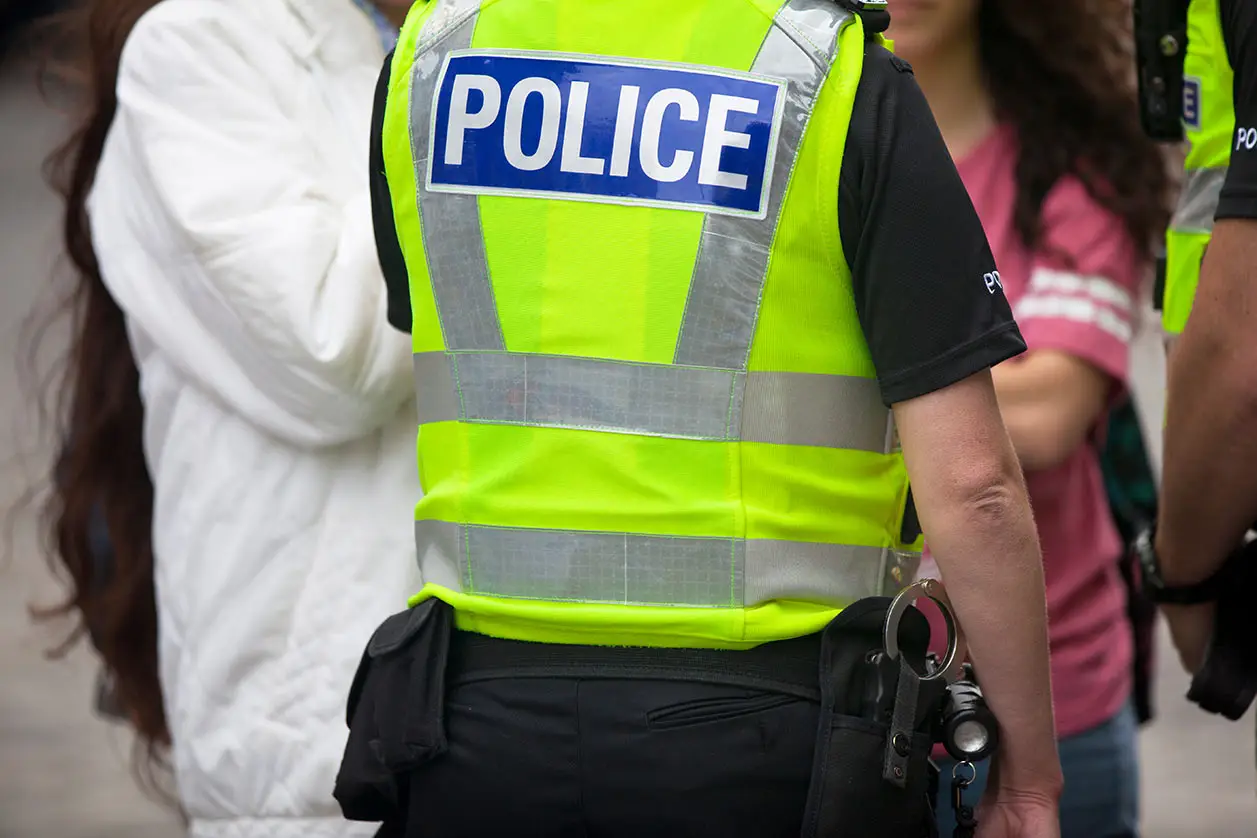
At the time I met another successful practitioner of this style of policing, Ed Davis, who was head of the police department in Lowell, a large industrial town in Massachusetts. He later became Boston Police Commissioner (and was well known for his role in the aftermath of the Boston Marathon bombing). Davis’s approach emphasised community policing. Officers were locally based, patrolled singly (so they don’t just talk to each other) and on foot (rather than in cars), and got to know their patch and the people who lived there. As he pointed out, most crimes are solved because the police are told who committed them, and if the police are known and trusted by local people, such intelligence is much more forthcoming.
Crime fell by seventy per cent on his watch, but it wasn’t just about catching criminals. The police need to work with the local authority so that the low-level disorder on which crime thrives is removed.
Looking round Scottish towns and cities there’s not much sign that “broken windows” theory is being applied today, if it ever was. A stroll round Edinburgh city centre reveals depressing signs of urban decay: graffiti, litter, endless half-finished road works, aggressive begging, and signs of drug misuse. High street shops are repeatedly burgled and need to hire private security.
The situation is worse in inner suburbs, satellite towns and even some rural market towns. In part this is exacerbated by changes in the retail function of shopping streets. Online shopping and out of town retail parks have pulled the rug from under our high streets. They need to reinvent themselves as places where people meet to socialise and do business. Outlets that rely on face-to-face contact – cafes, bars, hairdressers, tattooists – can to an extent replace traditional retail but they need an attractive and safe environment to thrive. People and businesses shun crime and anywhere they feel insecure. That means effective community policing but also a proactive council that is quick to clean up and implement flexible rules to encourage change of use of premises to different kinds of business and also back to housing. It’s better to have people living in a street than empty shops kept in place by inflexible planning rules.
our politicians persist in a schizophrenic attitude towards the motorist
As ever with public policy it is the poorest who suffer most from failure. The wealthy can buy themselves out of crime and disorderly streets. The poor find it harder to move and harder to improve their lives and raise successful families if surrounded by it.
In his essay Glaeser also addressed the issue of transport and it’s interesting to read his ideas after two decades of huge technological change in this area. His central message was that car use is an essential part of a good life for everyone except those in the very centre of our largest cities. Public transport is great (and buses more cost effective than trains), but only in very limited circumstances. He suggested road pricing to deal with congestion, rather than restrictions on car use.
Technological advances since then have rendered the car much less of a pollution concern and road pricing much more feasible. Yet our politicians persist in a schizophrenic attitude towards the motorist that seems to be driven more by perverse moral sentiments (pricing bad, but individuals driving cars bad too). The result is ever greater restrictions on car use – 20mph limits, one-way systems, blocked streets – which reduce mobility and access to towns and cities that badly need more life.
Once again the Scottish Parliament has great powers to improve the lives of Scots and boost the prosperity of the country. It too often does the opposite.



Comments: 0
Join the debate
Do you agree with this analysis, or is the author wrong? Have your say below.
No comments yet. Be the first to join the discussion.