

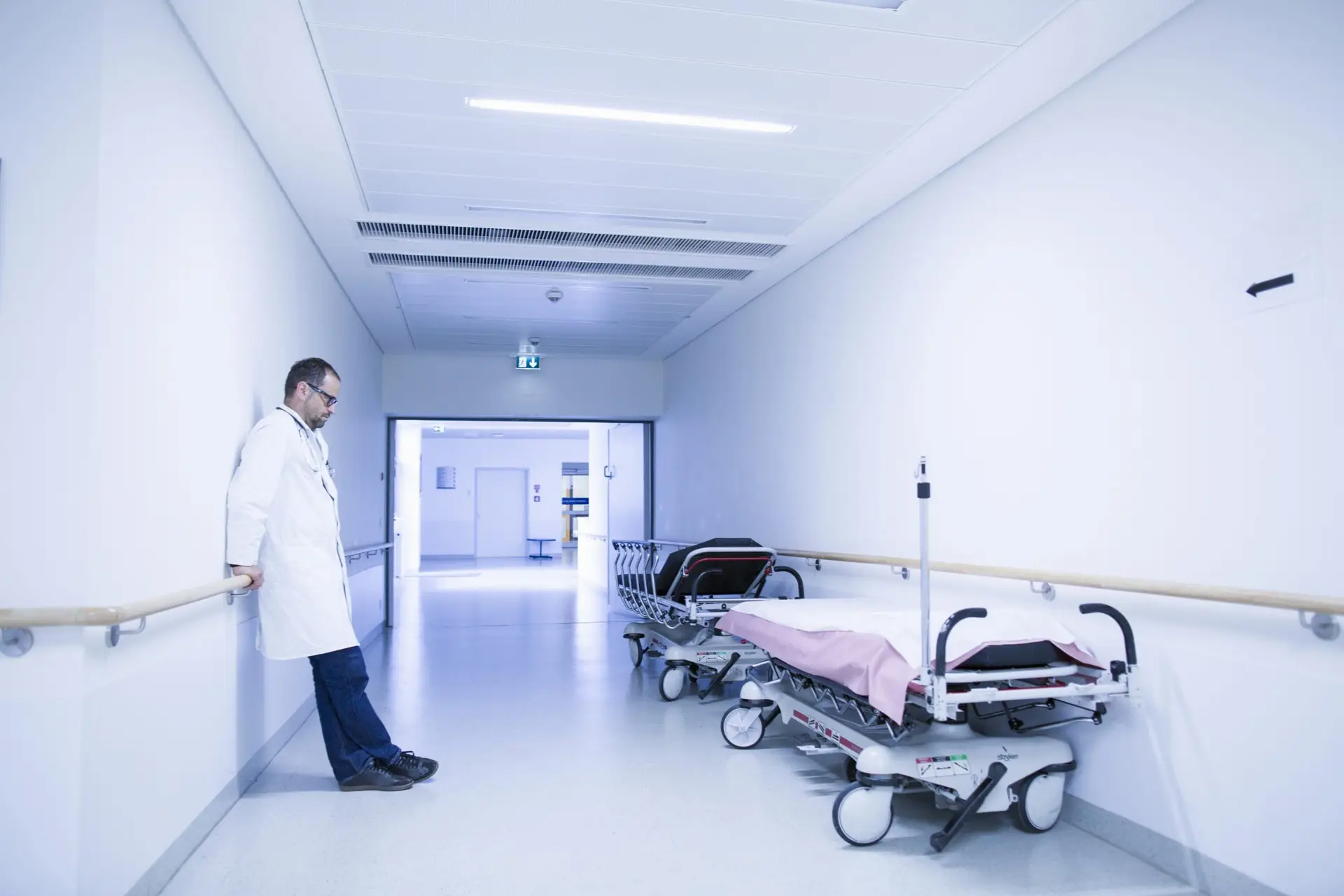
EVERY WINTER CORRIDORS FILL WITH OLDER PATIENTS ON TROLLEYS, headlines decry indignity, and ministers promise action. But corridor care is not a seasonal failure; it is the predictable outcome of a system in which emergency departments have become the default destination whenever community care cannot safely hold risk.
As community services erode and hospital slack disappears, seasonal pressures are no longer temporary — they are the everyday reality. Patients arrive and remain on corridors because there is nowhere else for them to go, and nowhere else to stay.
Corridor care is something out of a fairy tall. It belongs in Narnia, not in Scotland’s modern health system.
A patient who is medically fit to go home but cannot safely get home is effectively admitted by default
Corridors as the symptom, not the cause.
Many patients boarding in corridors are over 80, clinically stable, and discharged within 24 hours. They are not in A&E because they need emergency medicine; they are there because the wider system cannot safely manage uncertainty after hours.
People are far more complex than machines. If a car breaks down on the motorway, no one expects it to be fully fixed in four hours. There is no reason to believe it is easier to “fix” people quickly — yet our system often behaves as if it should be. Rapid assessments, senior oversight, and safe alternatives are required — not shortcuts or assumptions of simplicity.
If corridor care is not an A&E problem but what happens when the rest of the system runs out of options, then it would make sense to introduce a national community silver service. This would provide rapid same-day or next-day assessment for people over 80 in their own homes or care settings.
The after-hours risk gap
After 5pm GP access reduces, community teams thin out, and transport home becomes uncertain. District nurses, care homes, and families face stark choices. The only guaranteed option is A&E. This is not an appropriate use of emergency care; it is forced risk transfer.
If too many older people end up in A&E after 5pm simply because nowhere else can safely hold risk, then an obvious remedy would be to guarantee priority early-morning GP and same-day emergency care slots for older patients. Such slots could resolve problems before they escalate into emergency attendance.
Discharge bottlenecks
Ward rounds after patients have been admitted often structure discharge by ward geography rather than patient acuity or discharge potential. Patients admitted late in the week or overnight may remain in hospital longer than necessary because follow-up assessments, scans, or community support are unavailable.
If ward rounds after patients have been admitted are delaying discharge, then reviewing patients during the admissions process while they are still in Accident & Emergency could free patients safely when appropriate. This could be achieved by integrating real-time discharge planning with community pathways, with senior oversight available 24/7 to ensure that discharge decisions are acted on immediately.
Transport: the hidden admission criterion
A patient who is medically fit to go home but cannot safely get home is effectively admitted by default. Without 24/7 transport, early discharge decisions cannot be executed. This is yet another system failure as opposed to a clinical failure.
Again an obvious remedy presents itself: commission 24/7 transport home from emergency departments, so discharge decisions can be acted on immediately and safely.
Triaging access before patients arrive
Emergency departments are excellent at triaging patients once they arrive. What we do not triage is who needs to arrive in the first place. Anyone can send anyone to A&E at any time, often without senior discussion or viable alternatives. This is not a criticism of clinicians; it is a reflection of how limited the rest of the system has become.
The solution to this problem is making sure access to A&E is based on risk, not convenience so that clinicians and patients are given safer alternatives before they reach crisis. This could be achieved by implementing real-time senior clinical advice lines for community staff and GPs, so patients can be assessed and directed safely without defaulting to emergency departments.
Ending corridor care begins upstream
“Silver Trauma” pathways are structured clinical pathways for older adults with trauma, typically after low-mechanism injuries (e.g., falls from standing height), who do not meet traditional “major trauma” criteria but are at high risk of morbidity and mortality.
Silver trauma pathways improved outcomes by clarifying risk, enabling senior decision-making, and legitimising structured discharge. We have never applied the same discipline to general medical care for older people.
Corridors are where system failures become visible. Focusing only on where patients wait, rather than why they arrive, guarantees winter will never end.
The solution is clear: ending corridor care does not start in A&E. It starts with giving older people somewhere else safe to go, ensuring rapid assessment, guaranteed transport, early clinical review, and senior guidance before crisis hits.
People are not machines, and health problems cannot be solved with a quick fix. Recognising the complexity of older patients is the first step toward designing a system that can manage risk safely — and finally thaw a system trapped in perpetual winter.




Comments: 0
Join the debate
Do you agree with this analysis, or is the author wrong? Have your say below.
No comments yet. Be the first to join the discussion.