

I RESIGNED from the Conservative Party in 2017, frustrated by its incompetent campaign strategy for a local government election. My decision was reinforced soon after by Theresa May’s decision to make her ‘legacy’ parting shot the supercharging of net zero.
A few years later I noticed that a new party called Reform UK was holding its first conference in Manchester. One of the speakers was a crazy guy from Scotland who had abandoned Scottish nationalism. David Kirkwood and I have been political blood brothers ever since.
The speakers expressed the frustrations we all had and each received loud applause, except one. His subject was energy and he said something to the effect that we should be able to find a better way to reduce emissions, at which there were calls from the audience saying, “Why?”
At the first two conferences it was possible to chat at length with Richard Tice. He gave me his email address and phone number, and I sent him draft sections of a book I was writing on the subject. He was the first person in the Reform leadership to conclude that there simply is no climate crisis, so there is no need for net zero.
Scotland is rich in the oil and gas which can fuel the return to wealth and prosperity
The UN climate change narrative has been going since the late 1980s and became ingrained in the nation’s consciousness. It now takes time to make the journey from mild scepticism to outright rejection of this false ideology. After all, ‘the science is settled’ and to question it makes one a ‘climate change denier’. And yet, such statements display disdain for a scientific approach.
Kemi Badenoch realises the harm net zero is doing but she has not fully emerged from its spell, never mind persuaded the rest of her party, especially the ones who are raking it in with their net zero investments. After many consensus-reaching discussions over the last few years, Reformers are suspicious of latter-day Tory defectors. If there were one test they should pass to confirm their conversion, it would be to wholeheartedly sign up to the following.
Net zero is unaffordable, unachievable, unnecessary and very bad for the environment.
Net zero has given us the highest energy prices in the Western world and placed a million Scottish households in fuel poverty. Affordable energy must be at the heart of every part of our economy and personal lives, and Scotland is rich in the oil and gas which can fuel the return to wealth and prosperity for us all.
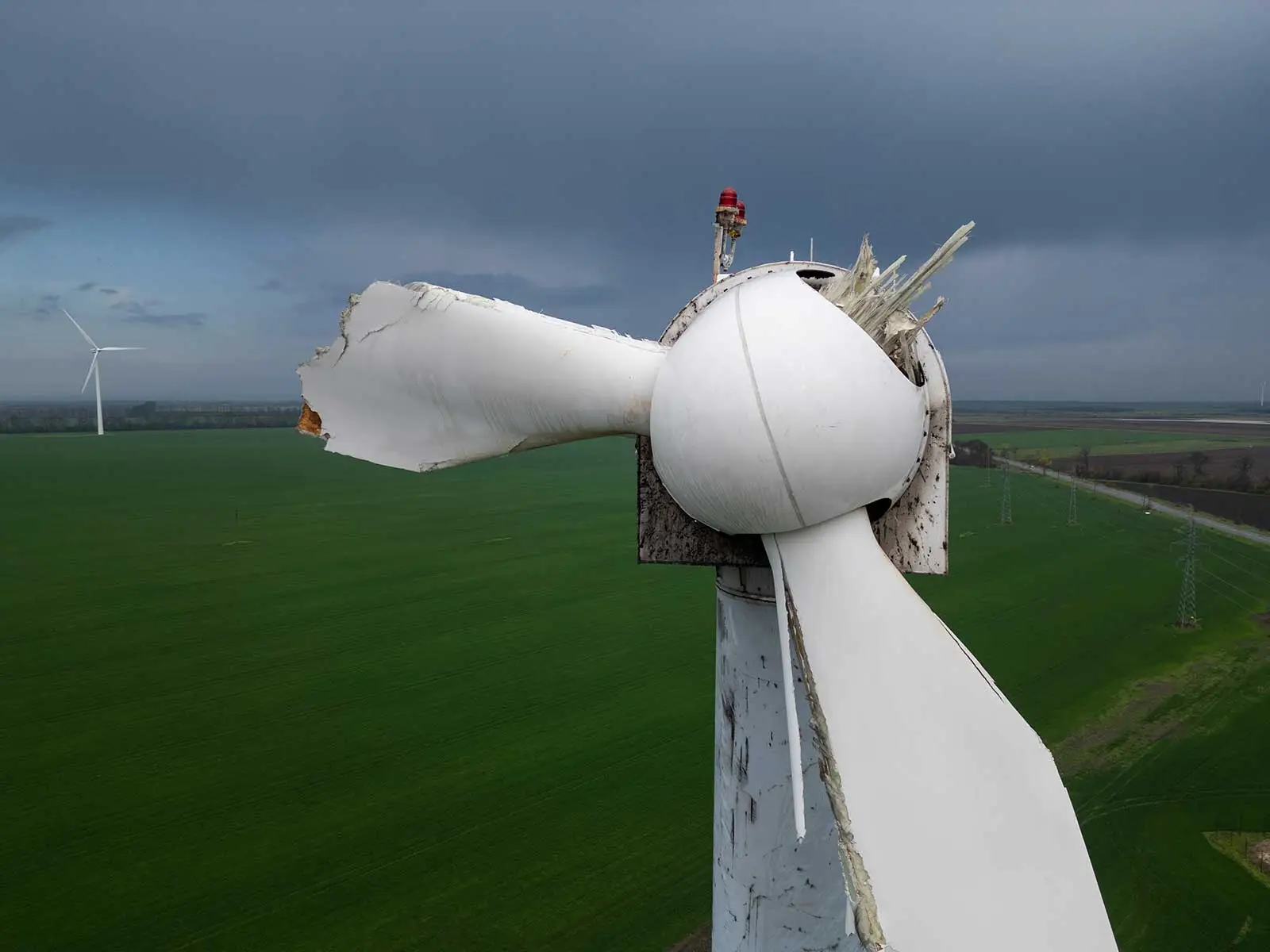
When wind turbines produce too much electricity, we pay energy companies not to produce. On still days, gas stations cut in (inefficiently) and we buy expensive electricity from foreign countries. Renewables (‘unreliables’) must be drastically reduced as quickly as possible. We need to increase gas power so that on calm, overcast days it can cope with demand. We need a constant, reliable and much larger power supply for AI data centres. If there is to be an energy ‘transition’ it will be to some form of nuclear.
Exporting our industry to countries using dirty fuels and reimporting goods on diesel ships actually increases emissions. Even if we electrified everything, and could prove that emissions were reduced, the grid couldn’t cope. All elements of net zero involve inferior technologies at higher costs.
Net zero industrialises our beautiful countryside. Offshore wind farms are a major threat to bird and sea life. Cutting down 27 million American trees every year and burning them at the Drax power station in Yorkshire is terrible for the environment and produces more emissions than burning clean coal there. Digging up large areas of countries to get rare minerals to make electric car batteries is unforgiveable.
Western economies have been stuck for the last thirty years, falling prey to a globalist and socialist ideology that demonises things which lead to prosperity: liberal market forces, consumerism, economic growth, plastics, fossil fuels, nuclear power, the internal combustion engine, intensive agriculture, GM technologies, private property rights, etc. These are still essential. America is leading the way back to common sense.
So, what should we do about climate change? The biggest lie the UN told in promoting their green religion was to say that a 1.5⁰C rise in global temperature from pre-industrial levels would be unprecedented and disastrous, despite there being solid evidence that the world has been significantly warmer in the last 10,000 years.
Species of shellfish lived off the Arctic Svalbard islands that are currently restricted to warmer seas 1,000 Km further south, suggesting that it was once more than 3°C warmer there. It has only been warm enough to grow grapes in England for the last fifty years, but they thrived in the Roman and Medieval Warm Periods. In Scotland, at the Crannog Centre, seeds preserved in the cold mud of Loch Tay show that crops grew in the Bronze and Iron Ages which needed a temperature three degrees warmer than present. White storks nested in Edinburgh in medieval times, but they are only arriving back in southern England now.
Colder periods like the Little Ice Age were much more dangerous to humans and wild creatures, and fifteen times as many people die in cold winters as in hot summers. We can adapt to whatever the climate brings. Even if there are now more extreme weather events (the data says not), the number of people who die each year because of these dropped by over 95 per cent in the last century as we became richer and more resourceful.
There is no emergency in nature, and humanity becomes its custodian as we grow wealthier. For example, since conservation measures were introduced in 1973, polar bear numbers have increased from about 5,000 to 30,000. During this time there was a period of Arctic ice growth (in the 1970s we were told to fear global cooling) and from the 1980s to the 2010s ice decline, proving that polar bears adapt to changes in the environment, just like us.
Our children are taught that we should not eat beef because cows fart greenhouse gases. Yet the methane breaks down into carbon dioxide and water over about a decade, which feeds the grass, which feeds the cows in a wholly cyclical, sustainable fashion. CO2 is not a pollutant but an integral part of photosynthesis, the amount of vegetation on the planet (the Leaf Index) having increased by about 10 per cent in the last fifty years, largely due to more of this gas in the atmosphere. That is truly wonderful.
Persuading those who have swallowed the climate change myth will not be easy, so Reformers must be consistent and forthright. The other parties have it fatally wrong, and their commitment to it leaves them no room to squirm. Showing voters they have been conned and impoverished, for nothing, will be an arrow thrust into the heart of left-wing politics.

Comments: 0
Join the debate
Do you agree with this analysis, or is the author wrong? Have your say below.
No comments yet. Be the first to join the discussion.