

IN 1988, THE POLISH BAND KULT released the protest song “Arahja”, depicting a society divided by walls. Its refrain includes the line: “the left side never wakes up/the right side never falls asleep”.
The wider idea was that people had been living under a communist regime for so long, and had developed ways of coping with the labyrinthine fears and farces of communist living – about which more below – that they could no longer cope with the demands of personal agency and self-reliance.
I was reminded of this as John Swinney proudly unveiled his £15 million plan for enhanced breakfast club provision, coming around a day after his announcement of a £2 cap on bus fares in the West of Scotland. These freebies are now stacked alongside prescriptions, eye tests, university tuition, dentistry, some personal care, school bags, baby boxes, walk-in clinics and food price controls.
Economists criticise “free lunches” on the basis that the costs remain, such that other opportunities are then lost, and that they hide costs in the form of future distortions. Such “mechanical” linkages, however, are of little interest to most Scots – especially, it seems, our politicians. They love spending other people’s money on other people.
In the historical intellectual context of Scotland, this is odd. Adam Smith was clear that the roots of human morality include an innate “sympathy” for the happiness and fortune of others. He also said that we have a “deep social instinct to seek approval and validation from our peers”. So far, this might be seen as justification for supporting constructed measures to create social justice.
However, Smith’s focus was on separate individuals and their actions based on their perceptions of their own interests: the real world of real human behaviour. So, mostly in the Wealth of Nations, he develops the idea of individual self-interest, the value of exchange and trade through his invisible hand, and the virtue of freedom constrained by prudence and driven by what he calls “self-command” – what today we might call self-reliance or even entrepreneurial enterprise.
In this he makes a clear distinction between justice and beneficence. Justice is a framework for a good society built from non-political negatives; don’t harm others, don’t destroy property, don’t lie to others. Beneficence is an individual duty, and it must be offered voluntarily and not extorted by force.
Politicians love spending other people’s money on other people
This, then, is the central confusion of our Scottish politicians who aspire to “social justice” – they extend the societal framework based on negative individually protective axioms into what can only be a personal duty to compassion through state-centred beneficence, believing that their efforts can construct social justice and that free lunches have zero consequences.
Later thinkers such as Friedrich Hayek, Gordon Tullock and James Buchanan have repeatedly worked on this problem, arguing that the attempt to enforce social justice demands unfair coercion on others, in which policymakers are forced to treat people differently in the name of an undefinable chimera called “equality”.
Now, in the context of Scotland’s political action, add in the instinct in human nature to “seek approval and validation from our peers”. Is it likely that beneficence practised by a large state will produce choices that are beneficial to all? Or will it favour those who will respond with approval and validation, usually through votes, and ignore the pained cries of those being asked to pay for their goodness?
This corruption of the passively just social order is becoming all too visible in Scotland. As Malcolm Offord has said in response to the “gimmicks” in the 2026 Programme for Government, those who pay for them are suffering as the daily cost overheads in life and business crush hope for the future.
We’re coming full circle back to mechanical linkages here: the supply side is struggling as the central state scatters freebies hither and thither. But actually it’s more than that: it’s a non-ethical, coercive intrusion into our potential and our hopes for what we as Scots might be.
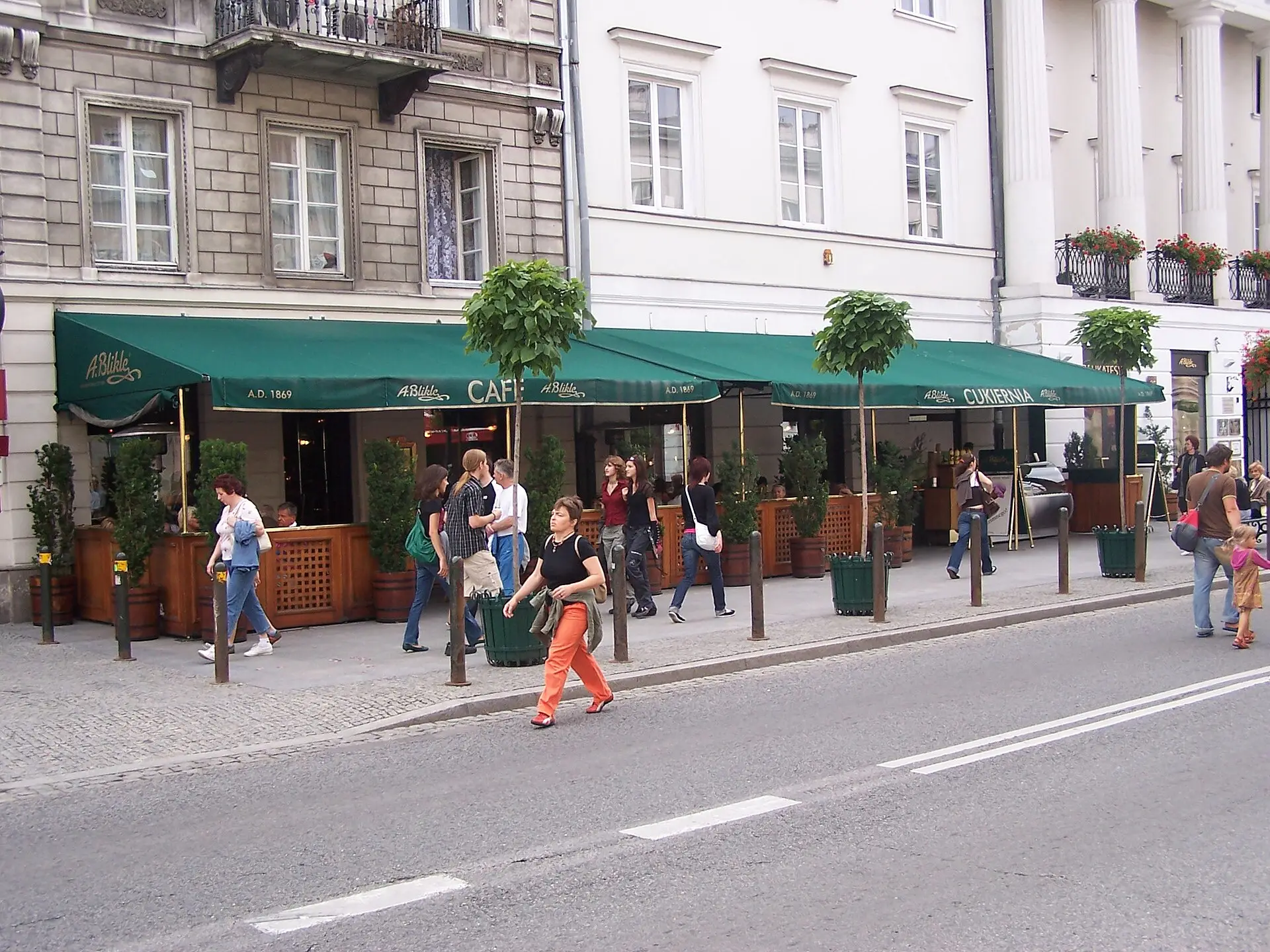
Let me put that intrusion and its consequences into the concrete terms of a story from communist Poland. In Nowy Swiat Street in Warsaw there is an historic pastry shop and café. Founded by Antoni Kazimierz Blikle in 1869 and reopened after the war in 1948, it survived the entire Soviet communist era. Why? Every other private food retailer became a state outlet, serving dull, unappetising basic foods with intermittent shortages.
The owner of the shop described to me how all ingredients were state-supplied, enumerated in their proportions and their use audited, with baking recipes tightly controlled and the finished products weighed and logged. His greatest problem was wastage; should stock losses from preparation or baking mistakes be found, he was in trouble. State officials could accuse him of profiteering or theft, put him and his staff in jail, and close the business. They used to visit often and, yes, it is likely there were a few emoluments given in the form of “free” product samples.
As a consequence, the business stayed small, he used only members of his own family as staff, and survived. Ironically, he had very few customers, the prices that Blikle charged were too high for local low-earning local Warsaw residents. And who were his main customers? The Polish government and foreign embassies, enjoying the fruits of their engagement in controlled trade and sociability at state-sponsored events.
Now, I am not saying that Scotland has (yet) become a communist state, but the adherence to free lunches is creating the conditions for Blikle-like interferences. Here’s how it works.
The proposal to cap some food prices has already seen strong pushback from retailers, pointing out that they will adjust other prices, alter the quality and cost mix of their stocks, and seek to maintain margins any way they can. What is the response of the central state? Hold meetings, discuss options, refine and define the choice of targeted foods, seek assurances on adherence to the regulations, agree mandated outcomes as a partnership. You can see the parallels with the Blikle story. The communalistic aspiration of “helping with the cost of living” has generated new costs, new rules, and consumer-unfriendly outcomes.
Scotland will still have flat-fare bus services, but with fewer buses on fewer routes
And what about buses? Again, the cost of losses in supplying the service has to be allocated somewhere. The bus companies will act as a cabal in dark rooms in Edinburgh, dedicated to persuading civil servants of what funding they need for their routes. Their knowledge of costs will be far better than that of any bureaucrat from Victoria Quay; and remember that both sides are spending other people’s money. Taxpayers’ hard-earned cash will migrate from individuals to bus corporations via the state as newly contracted obligations are worked out.
What is likely to happen to Scotland’s bus services is that, in time, as costs rise and are publicly recognised, politicians will get nervous and demand that action is taken to curb the expense of the price-controlled service. The outcome is predictable: the corporate-state cabal will negotiate rationing of services, Scotland will still have flat-fare bus services, but with fewer buses on fewer routes.
Again, the parallels with Warsaw’s retail market are notable. Poland’s capital had fewer shops, with repeated shortages of heavily rationed food on their shelves. Consumers hunted for food by taking rattling Second World War-era trams to wherever the state had decided to deliver it.
Malcolm Offord has seen this rot underway; his call for optimistic expansive thinking is to be welcomed. To understand this focus, it helps to know what happened to the Blikle bakery business. Blikle is now a chain, with eight outlets in a transformed Warsaw, not only in the city centre, but in new shopping malls and residential areas. They still have a flagship outlet, now at 33 Nowy Street, despite the city government nearly killing that location off through high lease charges.
When self-reliance is taken from us by the state, we lose the ability to grasp opportunity
It has not all been plain sailing. An investment fund took a stake in the business after 2010, planning a rapid expansion across Poland; there was a dispute between the family and the fund management thereafter, and Covid nearly bankrupted the company. But this is what all businesses go through if they try to expand; bad stuff happens alongside the good. What matters is that the individuals who take on the risk of failure are motivated; that they can see that customers are incentivised through a positive attitude to tomorrow, eager to share in the adventure of finding out what tomorrow might bring. And they do it for free, without requiring the taxpayer to carry the risk.
Anyone who has read about or been to modern Poland can see how different it is to the downtrodden, supposedly free-lunch society offered by communism. The go-ahead, self-reliant Polish plumber is no myth; Poles are energetic, enthusiastic creators and traders.
What a long way from the sentiments of that “Arahja”, lamenting the political division of a world where folk pretended to support the state that pretended to support them. There was no way to create anew, to go further with an idea, to innovate and change. The crushing of can-do attitudes divided everyone; the line “the left side never wakes up/the right side never falls asleep” paints the picture. What the song also tells us is that what Poles learned is that division created by state intrusions into social justice was “rakowaty” – cancerous; a creeping death for individual agency, the economic freedom that allows personal freedom to flourish.
And this is where I fear for Scots. When self-reliance is taken from us by the state, we lose the ability to grasp opportunity. State beneficence has created a crushing ennui among many Scots, who expect “the cooncil” to provide They don’t know what freedom means because they cannot bring themselves to find within themselves the ability to be self-reliant.
Instead, we all get to travel together, bouncing along in a charabanc to a communal picnic, enjoying the views while declaring ourselves to be exceptional, but in reality slowly impoverishing ourselves as newness evaporates and progress declines.




Comments: 0
Join the debate
Do you agree with this analysis, or is the author wrong? Have your say below.
No comments yet. Be the first to join the discussion.