

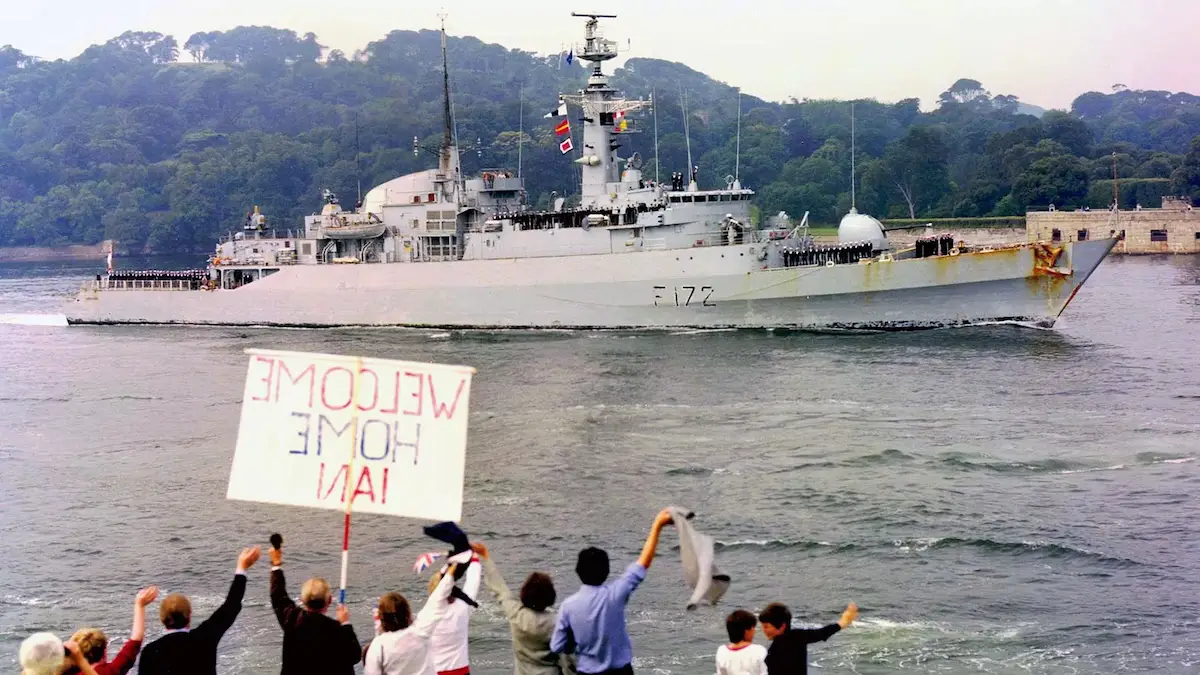
I REMEMBER the Falklands War vividly from my time as a Wharton student in the USA: the surprise Argentine invasion, Thatcher’s firm response with cross-party backing, the loss of HMS Sheffield, the air attacks, the landings, the hard infantry battles, the liberation and the 255 lives lost to free the islands.
Now, with the re-emergence of the Falkland Islands as a major issue following President Trump’s intervention on US support, and President Milei of Argentina calling for a “Hong Kong-style handover” against the clear wishes of the Falkland Islanders and the British Government, the fate of the last survivor of the Falklands War Task Force ships has become ever more relevant.
A former British warship, ex-HMS Ambuscade, a Type 21 frigate built for the Royal Navy, whose sister ships HMS Ardent and HMS Antelope were lost in the Fa;klands War, has been most generously offered for preservation by the Pakistan Navy. It operated the ship subsequently as PNS Tariq (shown below) and shares our affection for this fast class of ship.
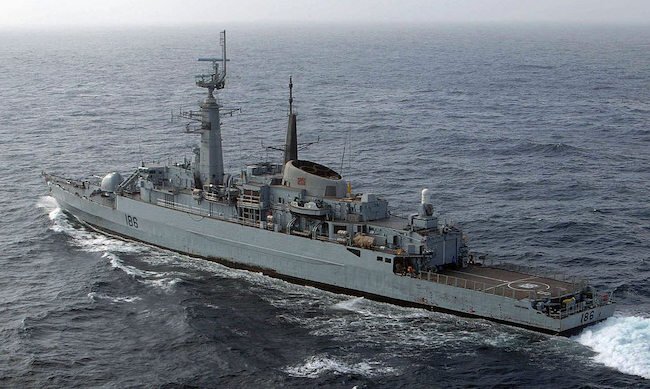
But the cost of recovering the retired ship from Pakistan, amid the continuing instability and wars in the Middle East, is putting the ship at risk. Now a deadline has been issued for the end of September to move the ship or it will be destroyed as a target. This is more relevant still with the 45th anniversary of the Falklands War to be commemorated in 2027.
The River Clyde’s shipbuilding heritage is one of the most significant and influential in the world. For centuries, the Clyde has been a hub of innovation and development in both merchant and naval shipbuilding, producing some of the most significant vessels in history. From the iconic sail and steamships of the 19th century to the world-class warships of the 20th century, the Clyde has played an essential role in shaping maritime history.
As such, it is crucial that this rich legacy is preserved, celebrated and studied to provide an insight into the past and inspire future generations of innovators and designers.
Although a shadow of its former self, shipbuilding on the River Clyde has not disappeared entirely. A few shipyards, such as BAE Systems’ facilities at Govan and Scotstoun, continue to produce advanced naval vessels, including the Type 45 destroyers now in service and the new Type 26 frigates for the Royal Navy.
In 2023, Clyde Naval Heritage was given an exceptionally generous donation from the Pakistan Navy of the historic Type 21 frigate, PNS Tariq, formerly HMS Ambuscade of the Royal Navy, built at Yarrow Shipyard, Scotstoun, and launched on 18th January 1973. It is the shared vision of Clyde Naval Heritage and the Pakistan Navy to return this magnificent ship to her birthplace on the River Clyde in Glasgow, transforming her into a world-class, dual-cultural naval museum and creating a Falklands War Memorial.
She served her country; now it is our turn to bring her home
On arrival on the Clyde, the intention is to preserve her as a static exhibit for public display while creating an archive of the wider commercial shipbuilding heritage of the Clyde – where, at one point, almost one-fifth of the world’s ships were built.
The ship is planned to be a centrepiece of a Falklands War Museum based on the River Clyde, where many of the Task Force ships were built. She will be accompanied by other exhibits from that period, including aircraft such as a Vulcan bomber, Harrier and Sea King helicopter, as well as engine exhibits and other military vehicles. All historically significant artefacts will be displayed in a safe, secure environment.
Through the new Clyde Naval Heritage Trust, a much wider maritime museum centred on the Clyde and its extraordinary world naval and commercial maritime heritage is proposed, connected by a water taxi, and is fast gaining support from local councils, universities, heritage groups and Members of Parliament. Through digital technologies, we will preserve the oral and visual history of the shipyard workers and those who served, as well as the impact of change brought about by this ship when serving with the Royal and Pakistan Navies.
The Trust has now written to the Pakistan Navy requesting an extension of the deadline in order to save the ship. Active fundraising for this aim is taking place now, and more time can ensure the relevant funds for a tow – around £1.5 million – can be raised, with many sponsorship opportunities available.
Allowing the ship to revert to disposal would mean the tragic loss of an irreplaceable piece of global naval history. Hopefully with the understanding and cooperation of the Pakistan Navy, we can preserve this legend for future generations.
For the Clyde Naval Trust’s part, we remain fully committed to completing this historic repatriation the moment it is safe to do so.
HMS Ambuscade survived the Falklands Conflict and is shown above on her arrival home. She survived decades of service. She has survived for more than 50 years.
We now have the opportunity to make sure she survives for generations to come.
Please support the appeal and help Bring Ambuscade Home. Thank you.
She served her country. Now it is our turn to bring her home.
Photos courtesy of the Clyde Naval Heritage website.




Comments: 0
Join the debate
Do you agree with this analysis, or is the author wrong? Have your say below.
No comments yet. Be the first to join the discussion.