


WELL, IT WAS ALL SO PREDICTABLE IN THE END, wasn’t it? A decent England football team makes it through to the semi-finals of the World Cup and then comes face-to-face with its old nemesis, Argentina. And loses 2-1.
No hand of God this time, just a South American side full of talent, inspired by arguably the best footballer the world has seen for some time. England were deflated, Argentina triumphant. You just knew that was the way it was going to go.
What gave the contest a steely edge was what happened after the final whistle. A sign which Argentinian fans in the crowd had been flaunting saying ‘Las Malvinas son Argentinas’ (the Falkland Islands are Argentinian) made its way onto the pitch and into the hands of some of the Argentinian players including, it would appear, Lionel Messi.
This has not gone down well in Britain. The ownership of the Falkland Islands/Las Malvinas archipelago in the South Atlantic Ocean has been a long-running dispute for many decades, if not centuries. Those of us of a certain age will vividly remember the 74-day undeclared conflict of 1982, better known as the Falklands War. Argentinian troops invaded the islands and Britain sent a task force which defeated them and sent them home. A total of 907 people, military personnel and civilians, lost their lives.
historically, the Falklands never belonged to Argentina in the first place
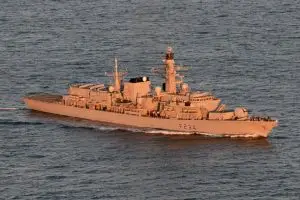
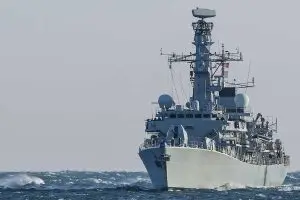
The renewed spate of jingoism prompted by the unfortunate sign on the football pitch has now been exacerbated by a formal protest by Buenos Aires that the Royal Navy ship HMS Medway made an “unauthorised transit” through Argentinian waters shortly after the end of the football match. The UK has responded that it was an innocent passage in support of the British Antarctic Survey’s operations and took place on 8 July, long before the game was played.
All of which has led to speculation as to whether a Falklands War II could possibly be in the offing. The UK’s position on the sovereignty of the islands has long been clear and consistent; historically, they never belonged to Argentina in the first place, and they will remain British for as long as the 3,500 or so Falklanders want them to remain so.
For their part, Argentina’s claims appear half-hearted at best, more of a rallying cry and show of defiance than anything more serious. In any case, quite apart from the political will to embark on such an adventure, it’s doubtful whether Buenos Aires has the military wherewithal to attempt another invasion, recent upgrades to its military hardware notwithstanding.
Whether the UK, on its part, could mount another military operation to retake the islands if Argentina were to invade again is a moot point. The Royal Navy is a shadow of the force it was back in 1982, and the availability of the appropriate merchant vessels needed is also doubtful. Britain does maintain military forces on the islands for their protection, including four Typhoon fighter jets, about a company’s worth of troops supported by air-defence assets, and an offshore patrol vessel, so they are far from undefended.
However, it is always worth remembering that the Falklands have considerable oil and gas deposits yet to be fully exploited. The most significant asset is the Sea Lion oil field, 220 kilometres north of the islands, containing over 900 million barrels of gross recoverable resources. It may be ownership of these, rather than sovereignty alone, which is more likely to spark any future conflict between London and Buenos Aires.

Comments: 2
Join the debate
Do you agree with this analysis, or is the author wrong? Have your say below.
No comments yet. Be the first to join the discussion.