

I’M A MUM OF FOUR CHILDREN, aged 33 to 13, so I’ve seen first-hand how much our education system has changed over the years. I’ve also been self-employed for nearly thirty years, so life has always been busy. Running a business while bringing up four children hasn’t always been easy, but my children have always come first. They’ve all been involved in sport, theatre and other activities, and I’ve always believed children should be encouraged to work hard, have confidence in themselves and make the most of every opportunity.
Looking back now, I can see the warning signs were there all along. I just didn’t realise quite how far our education system had drifted.
I remember when my son, who is now 24, was in primary school. Competitive sports were stopped because, we were told, “everyone’s a winner”. I remember thinking at the time, what absolute nonsense. Competition isn’t something to be frightened of. It teaches children to work harder, cope with disappointment, pick themselves up when things don’t go their way and enjoy success when they’ve earned it. That’s what life is like.
Then there was the day when he was fourteen and I got a phone call from the headteacher. They were sending him home because, during a lesson, there had been a display of sex toys on the table and, being a cheeky teenage boy, he’d asked the teacher if they were all the teacher’s.
I was almost speechless, which anyone who knows me will tell you doesn’t happen very often. But inside my head I was thinking, why? Why did my 14-year-old son need to be sitting in a classroom looking at sex toys? It honestly felt like schools were beginning to lose sight of what they were actually there to do.
Then Covid arrived and, like thousands of other parents, I suddenly found myself helping to teach from the kitchen table.
Once schools returned, my youngest daughter would often come home saying she’d got hardly any work done because a group of boys had been disrupting the class all day. They weren’t bad children; they just seemed to have no boundaries and no consequences.
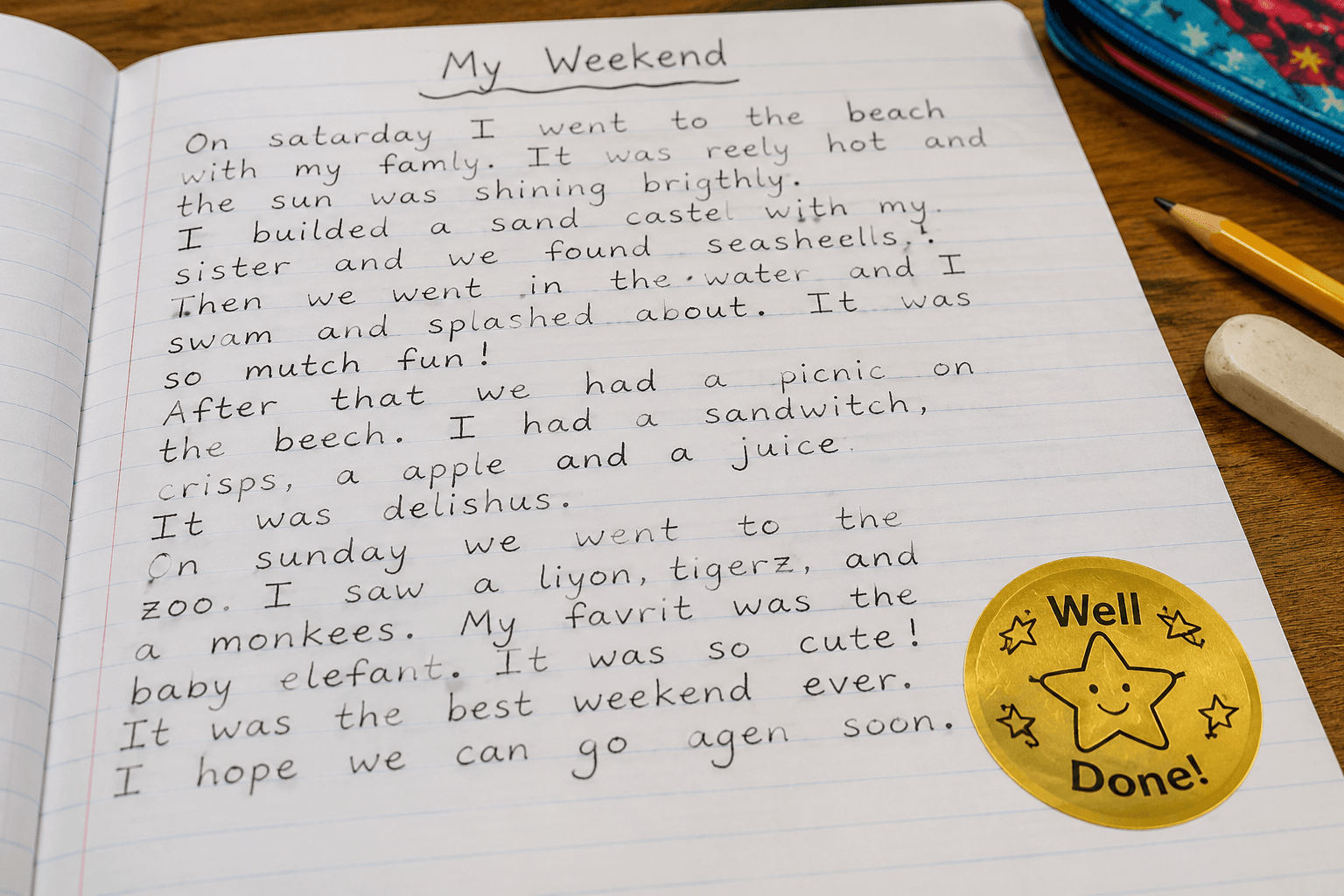
One afternoon she brought home a story she’d written. I could barely read it because the spelling was so poor, yet at the bottom of the page was a big gold star and the words “Well done”.
I made an appointment with her teacher.
I asked where the corrections were.
I asked where the red pen had gone.
His answer completely stunned me.
“We don’t use red pen anymore because it upsets some of the children.”
I asked why none of the spelling mistakes had been corrected.
“Spelling isn’t that important”, he replied.
I couldn’t believe what I was hearing.
Then we moved on to times tables because my daughter had told me they weren’t learning them anymore.
His explanation was that the children were all at different levels, so it was difficult.
Again, I just couldn’t understand it. When I was at school we all stood together every morning and recited our times tables. Some children took longer than others, but we all learned them.
I asked who had decided all of this.
The answer was, “That’s just the way it is”.
He also told me, “You can’t be good at everything”.
Maybe not, but every child should be given the chance to improve at anything if they’re taught properly and encouraged to keep trying.
As I was leaving, he said, “She’s a lovely girl. She’s very confident. You can tell she’s not glued to a phone all day”.
I remember thinking, that’s my job. My job is bringing her up, teaching her confidence, manners and values. Your job is teaching her reading, writing, maths and science. If I have to teach all that in the evenings as well, she’ll have to give up the sports and activities she loves.
I left feeling completely deflated.
Over the following months I spoke to other parents and to teachers, including teachers who have been customers at our garage for years. The conversations were all very similar. Experienced teachers told me they couldn’t wait to retire. Younger teachers said they didn’t feel supported and were frustrated with the system.
It made me wonder how we had gone from having one of the best education systems in the world to where we are today.
It’s about expectations: that children can achieve, that behaviour matters, that hard work matters
By this point I knew I had to do something. As a mum, it’s my responsibility to make sure my children get every opportunity in life, and I believe a good education should be one of the basic expectations in a country like ours.
We heard about a school just over 30 miles away, so we arranged to meet the headteacher. I arrived with a list of questions.
“Is spelling important?”
“Very.”
“Do you use a red pen?”
“Yes.”
“Do you teach times tables?”
“Yes.”
“Are there consequences for poor behaviour?”
“Yes.”
I looked at my husband and we both said, “When can she start?”
She’s never looked back.
Her spelling has improved beyond recognition, she’s thriving and recently came home with an A in her Physics test. Moving schools was one of the best decisions we’ve ever made.
My son followed soon after.
The school my two youngest children now attend could be anywhere in the country. It isn’t about whether it’s independent or state. It’s about expectations. The expectation that children can achieve, that behaviour matters, that hard work matters and that every child deserves the chance to reach their full potential.
I became involved with Reform UK over two years ago because the more I listened, the more I heard something that seemed to have disappeared from so many areas of public life – good old-fashioned common sense. I never had any ambition to go into politics, but I’ve never been someone who sits back and waits for somebody else to fix a problem.
People can criticise me all they like, but they’ll never shame me for putting my children first.
Recently, I was speaking to a very senior person in education and I brought up the subject of spelling. I genuinely wanted to know whether attitudes had changed.
They hadn’t.
She told me spelling wasn’t that important.
I said I thought that was a pretty dangerous attitude.
Her reply was, “We’ve got spellcheck and Google.”
I honestly couldn’t believe that was the answer.
Not long afterwards, I had the opportunity to ask the Education Secretary in the Scottish Parliament a question.
I simply asked, “How do you Google a word you can’t spell?”
I never got an answer.
That, for me, sums up where education is today. We once had one of the best education systems in the world. Somewhere along the line we lost our way. I believe we need to have the courage to admit that standards have slipped, look back at what worked and put high expectations back at the heart of our classrooms. Every child deserves the opportunity to reach their full potential, and that starts with getting the basics right.




Comments: 0
Join the debate
Do you agree with this analysis, or is the author wrong? Have your say below.
No comments yet. Be the first to join the discussion.