

ALL HAIL ANDY BURNHAM. Andy Burnham has spoken. From the People’s Museum no less. More Lennon than Leninist, we are all invited to “Come Together” as we join in Burnham’s Magical Mystery Tour, borrowing ideas from Labour’s archive of 60s and 70s hits that sounded good but were shallow, insincere attempts to make us glad all over.
Titles such as “White heat of technology” (1963) from Harold Wilson and the Red Notes, with his popular follow-ups of “Pound in your pocket” (1967) and “I’m backing Britain” (1968) are just the sort of catchy sounds Hegel’s hit factory was producing for Huddersfield’s northern crooner back in the day.
Not to be outdone was the power ballad “In place of Strife” (1969) from Barbara and the Castanets – or other groovy singles from the Jamaican-inspired beat combo, Lenny James and the Vagabonds, including “Waiting in the church” (1978) and “Crisis, what crisis” (1979).
Oh how we prospered from “good growth”, oh how we were all one community, oh how we had hope in our hearts. Only we didn’t.
Back in the 60s and 70s Britain had divisive problems with immigration, inflation, public service failure, repeated strikes in both the public and private sectors, de-industrialisation, price controls, and regularly disruptive, sometimes violent, protest on the streets including the Grunwick dispute. Then there was the Soviet threat which was mounting and real (sound familiar?) – and many Labour MPs showed distinct support for that Communist oligarchy.
To listen to Andy Burnham (born 1970, with his first vote in a general election cast in 1992) one would think the 60s and 70s were a time without division, a time of comradeship and community, a time of solid working-class values overcoming poverty and hardship. The truth is that Britain was a country in relative decline, its public services appeared broken, the nationalised industries required huge subsidies, law and order was challenging to contain under militant union power and the country required saving. The answer was not more socialism.
My mother and father, both working class Labour voters, abandoned the party and voted for a lady with a cut-glass accent wearing a blue rosette. It was a big move for them but they were not alone in our tenement street.
Subsequently, Labour changed and seemed acceptable to most voters. Inheriting sound public finances and a growing economy, Blair’s party seemed safe, scandal free and sensible. What could go wrong?
The answer to Tory failure was not more socialism
Eleven years of constitutional change, war and boom and bust economics – from the Chancellor who promised he had abolished boom and bust – then followed. We then had fourteen years where the Conservatives in various guises failed to wind back the dial of Blair’s reckless constitutional changes but did manage to increase taxes to post-war record levels, increase legal migration when promising the opposite, introduce and then double down on Net Zero deindustrialisation and establish the unaccountable regulatory state. The public turned once more to a Labour Party promising change.
The answer to Tory failure was not more socialism, but Starmer and Labour were not Sunak and the Tories, and he too seemed safe, trustworthy and scandal free.
No sooner was Keir Starmer in Downing Street when he and his cabinet went back on their promises, delivering even higher taxes, removing some immigration controls such as the Rwanda scheme that other countries have now started using, and increasing public spending and borrowing to eye-watering levels. The answer is not more socialism.
Obviously that is a fast-forward version of the last fifty years of Britain’s political journey. Yet here we are with a speech by the prospective Labour leader and new Prime Minister which is full of warm words and friendly phrases that amount to a coded appeal for more intervention, more spending, more socialism, only now it’s called “Manchesterism”. It’s as if he thinks we have no political memories.
Are we any closer then to knowing what a Burnham premiership will really mean? Or is it just a new vote whisperer’s phrasebook of seductive words designed to attract our support, only for us to find the usual bitter aftertaste of dreams dashed and hopes abandoned?
there is unlikely to be any scrutiny of what Burnham is offering.
If we measure Sir Keir Starmer’s personal ratings, his time as Prime Minister has been considered to be such a disaster for the country that Labour MPs are leading a stampede to put Andy Burnham into Number Ten. There is unlikely to be any Labour challenger that might delay or upset a smooth transfer of power, nor any scrutiny of what Burnham is offering.
Strarmer is not finished yet (he still has a few weeks left to get more things wrong and leave some political boobytraps) but this modern-day Barnum’s travelling circus is already on the road and pitching the ringmaster’s wares to get everyone inside his big tent. He’s not even Labour leader yet but he’s already talking as if he has the master key to Downing Street with everyone’s approval.
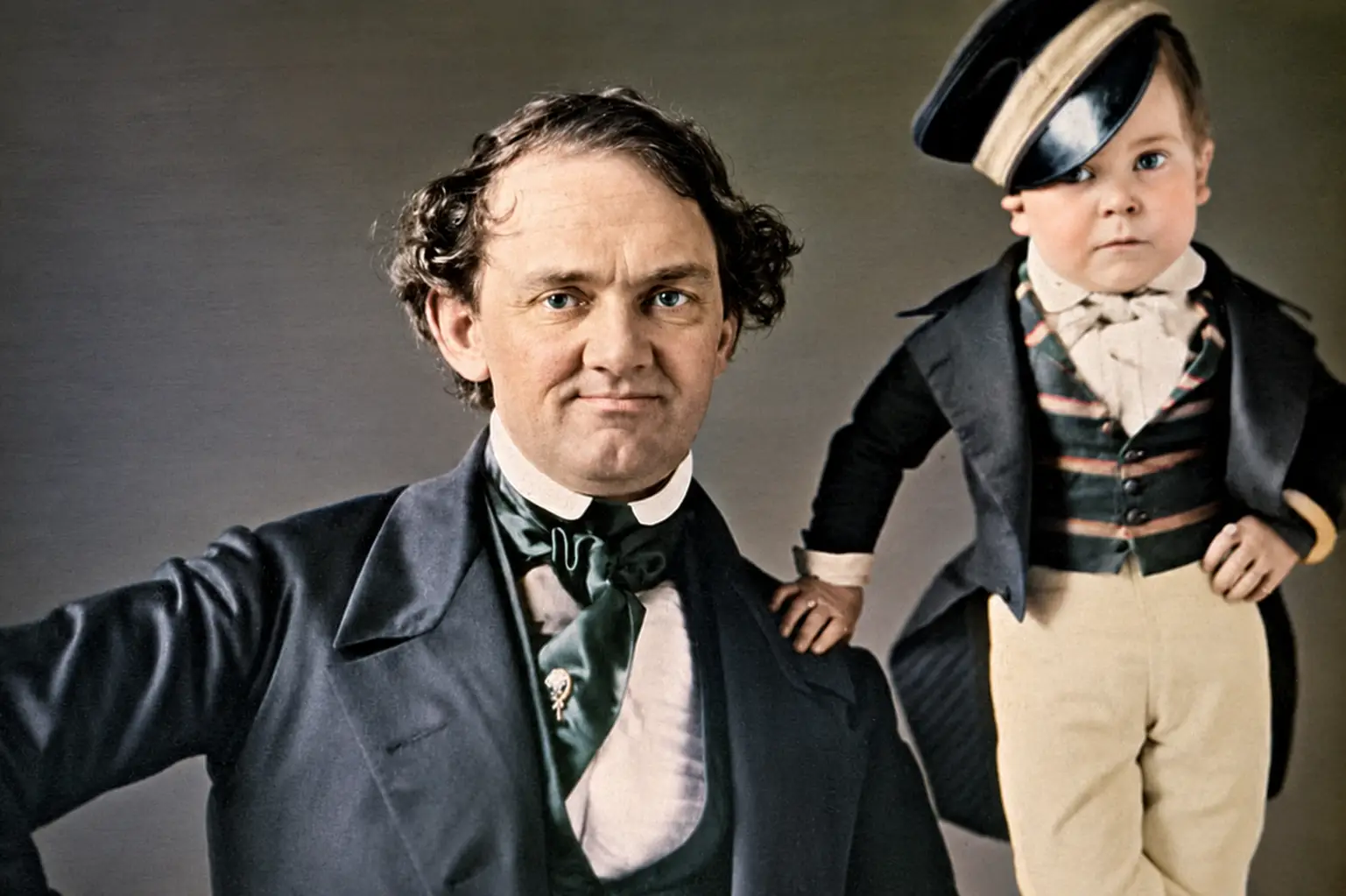
The adage, “there’s a sucker born every minute”, was actually attributed to the showman P.T. Barnum as he peddled his famous hoaxes and museum pieces in Victorian days – and is looking particularly apt as Burnham seeks to repackage some old Blairism of cheesy smiles and casual dress as “Manchesterism”.
“Good growth” is Burnham’s new catchphrase but it will become as common and attractive as P.T. Barnum’s bearded lady. I anticipate milk-and-water socialism that will curdle on first contact with reality.
“People need to be able to look forward to a holiday with the kids,” says caring Burnham – while supporting a new holiday tax that will make family breaks unaffordable for many.
Burnham says we should build lots more council houses, rivalling the five million built in the post-war era. Yet to build that number today would cost about £1.3 trillion. If he borrowed £40bn to finance council house building, as he previously suggested, it would cover building only 150,000 new homes.
Britain’s top economic problems are neither a shortage of council housing nor a shortage of public borrowing. Burnham’s plans are pure fantasy.
It’s not as if Scottish and Welsh devolution has proved cheap, nor have they been an unmitigated success
His devolution plans are just as irrelevant. Transferring power from low-grade centralised politicians to even lower-grade regional or local politicians doesn’t achieve anything, rather the reverse. It’s the quality of decision-making that matters.
What was noticeable was the absence of how the shift to greater devolved power would be afforded, other than the old pony of saying the taxpayer’s pound would be made to work harder. It’s not as if Scottish and Welsh devolution has proved cheap, nor have they been an unmitigated success.
Burnham’s speech was all about how we emote, how we feel – it’s about the visible optics, not the measurable outputs.There should be no doubt that the Labour Government will enjoy a Burnham bounce in the polls, in part, simply because “Andy” is not Keir Starmer, but especially because Burnham’s tone is more favourite woolly jumper than a hairshirt Nehru smock.
Where Burnham is wrong is to argue the UK’s real problem is too much centralised power and the answer must be to devolve more decision-making across the country. It’s the sort of sloganeering that sounds warm and cosy but does not lead to better outcomes because it starts on a false premise.
It was no mistake Burnham mentioned Port Talbot, Scunthorpe and Aberdeen in the same breath as locations that could benefit from decisions being taken locally with support from Number Ten in the North. The steel mills in Wales and England, alongside the oil and gas industry of Scotland, ticked the boxes of geographical coverage – pulling us all together (more warm feelings).
Their fate was not sealed because of centralised Whitehall bureaucracy or Westminster political failure but because of bad decision-making. No amount of devolution will prevent the decline or halt a ”just transition” from industrial success to jobless wasteland if local politicians and officials embrace the same wrongthink and enact their own bad laws.
Such is Burnham’s repeated desire to embrace the political zeitgeist, whichever setting he is operating in, that he has not recognised the irony that all of those industries have been devastated because of the Climate Change Act of 2008. It was delivered by Ed Miliband in the Labour Government that Burnham was a member of.
As explained in great detail by the Great British Business Council paper “Premeditated Industrial Suicide”, the UK’s long journey into industrial darkness began in a tangible sense from that point. It started the growth of restrictions and taxes that ended investment, erected domestic barriers and made overseas competition more attractive.
More devolved power would have made no difference to preventing Aberdeen’s economic demise – indeed the SNP accelerated it by using restrictive planning powers. Having a Number Ten in the North is meaningless – change must first start with abolishing the Climate Change Act.
The enveloping consensus when it was introduced included Conservative and Liberal Democrat opponents saying the Climate Change Act did not go far enough. Everyone joined in, with the Scottish Government and local councils cheering it on, often adding to the burden.
To prove their point, the subsequent governments they formed together, or alone as the Conservatives from 2015, introduced more and more laws that accelerated the decline of businesses making or using hydrocarbons. Take the chemical industry. Last year its trade body reported that 25 sites had closed over the past five years, resulting in a 40 per cent fall in UK chemical production. In the last quarter of 2025 alone, 38 per cent of companies reported a decrease in employee numbers, 37 per cent reported a decrease in sales, and 87 per cent expected weak business in 2026. More chemicals were imported while more jobs were exported.
Since then, Labour and Conservative governments have pushed our industries out of the country or out of business if they stayed here.
In 2021 the Johnson Government introduced an additionalEnergy Profits Levy of 25 per cent on the profits of oil and gas companies, intended to end in 2025, but Rishi Sunak increased it to 35 per cent and extended it to 2028. Rachel Reeves then pushed it to 78 per cent and extended it to 2030. What says Andy Burnham?
Andy Burnham needs to start with getting his energy policy right
What Aberdeen, Scotland and the whole of the UK needed to hear was a commitment to abolish the Energy Profits Levy. What the people of Port Talbot, Scunthorpe and Denby (where Denby pottery closed this month) needed to hear was an end to the Climate Change Act and the reversal of other regulations and taxes driving our costs of manufacturing and cost of living up. Bad laws cannot be overcome simply by transferring power if it does not include the possibility of repealing bad decisions wherever they are made.
What the people of Aberdeen needed to hear was that Burnham would move immediately to authorise the Rosebank and Jackdaw fields to start pumping the hydrocarbons we need to reduce our costs across the UK and give us better energy security than foreign powers allow.
The political con of climate change restrictions is that the UK carbon emissions fell (because we don’t measure the carbon count for foreign imports) but the consumption by our industries remained the same (as they still had to consume energy to make things). Drilling our own oil and gas and mining our own metallurgical coal reduces transport costs, creates jobs, takes people off welfare and raises tax revenue. Importing energy achieves the reverse in every effect.
That’s why Andy Burnham, the new circus red coat, needs to start with getting his energy policy right. If he does that, then the local decision-making of businesses and individuals will be more responsive.
If Burnham wants “good growth” then his adage should be “Drill, Burnham, drill” or he may find his tenure, like that of the greatest showman on earth, is open to ridicule and cries of humbug.



Comments: 0
Join the debate
Do you agree with this analysis, or is the author wrong? Have your say below.
No comments yet. Be the first to join the discussion.