

WRITING A MANIFESTO on Scottish education is not easy. Anecdotally, I hear reports of children vaping and playing on their phones in class. The media is full of stories of violent attacks on teachers, very high levels of absence and a growing number of children with “Additional Support Needs”. I know what I would like to change, but I’m not sure we need a wish list. What we need is a serious national conversation about our schools.
In the next two months, we need to talk about the crisis in education. We won’t all agree on what is wrong, or how to put things right, but we could at least put an end to the current complacency. Teachers need to stop dismissing parents’ concerns and complaints as “interference”. Academics need to stop describing parents’ legitimate concerns as “right wing”. Headteachers need to rebuild trust with parents, and admit that parent councils, and the school inspection system, are holding no-one to account.
Any national conservation must begin with some honest reflection on what has gone wrong in education since devolution in 1999. Scotland’s education system was once a source of great pride. It enabled our offspring to travel anywhere in the world, knowing that they were intellectually and practically prepared.
Our current system is an ongoing source of concern. Families and the authorities now tolerate astoundingly high levels of in-school and out-of-school truancy. The problems seem too big, or too urgent, to be talked about openly.
Meanwhile, our universities are chronically underfunded. Often Chinese parents and sponsors are subsidising our children’s higher education. Yet it is government policy to encourage ever larger and numbers of underqualified students to matriculate and enjoy the “student experience”.
There are very few forums for public debate, but we need to carve out some space to make education a national concern. The Scottish Union for Education (SUE) will be organising some public and online debates in April, but we need to find new ways to put education on the election agenda. Education is devolved to MSPs, and local authorities have responsibilities for delivery, so all candidates should be held to account. Education policy is not one among many, alongside roads, health or energy. Education is the way in which we introduce our children to our world. What could be more important?
There are already some very good suggestions for reform on the table. Enlighten, the independent Scottish think-tank, has produced a manifesto which argues for a transformation of the Curriculum for Excellence (CfE), so that is it grounded in knowledge, rather than skills and learning outcomes. Enlighten is in favour of exams and improvements in discipline, attendance, governance and national performance data. They highlight that the current levels of children reporting with Additional Support Needs (ASN) are unsustainable. All election candidates should be asked where they stand on these issues.
“how to teach” has come to outweigh “what to teach”
However, the problem is more fundamental. There is an ideology – an unspoken set of ideas – which sits behind the CfE and needs to be challenged. These ideas are embedded at all levels of the education system, particularly in teacher training. They are often called “progressive” but the word hardly describes this fundamentally pessimistic outlook which fails to understand the basic distinction between childhood and the adult world.
Today’s attitudes were shaped by radicals in the 1960s. They argued that traditional education involved telling pupils what to think. Traditional or classical education, said the radicals, assumed that children were empty vessels, and that the teachers, in their privileged position, would fill children’s empty heads with the ideas and values of the elite. This “didactic” approach, they argued, was an act of oppression. It must be replaced by a “child-centred” approach.
There was some genuine progress in the 1960s: teachers began to consider “how to teach” and share their teaching methods with others. However, over time, “how to teach” has come to outweigh “what to teach” and the foundational principle – that education is the transfer of knowledge – has been lost.
Half a century on, child-centred ideas merged with a new therapeutic culture, in which adults and children are seen as vulnerable and many everyday life experiences are reframed as traumatic. The mix of progressive and therapeutic approaches has been a disaster for children, and teachers’ authority has been undermined. Teachers are increasingly trained to see themselves as facilitators and classroom managers, rather than subject specialists.
today teachers are encouraged to be activists
The CfE has reframed the purpose of education as creating successful learners, confident individuals, responsible citizens and effective contributors. Like so much of education policy, the meaning here is unclear. Reading between the lines, the ambition is not to share knowledge, but to mould a model citizen. In this new “learning environment” we have nothing to learn from the past, and the future is scary. Much of the joy of learning has been stripped from the system. Children are treated like a self-governing peer group; learning is collaborative, and the teacher is a facilitator rather than a source of authority. It is no wonder that discipline is an issue.
For over a decade, secondary schools have been providing pupils with a very narrow curriculum and an educational culture in which even “good” schools play safe and “teach-to-the-test”.
Parents are rightly concerned that some activist teachers are indoctrinating their children with Critical Race Theory, trans-ideology and their personal prejudices about the war in Israel. These are political questions that are highly contested and should not be “taught to children” without first creating a framework in which all opinions can be heard.
We have a national history, it is not uncontested, but it should still be taught. Teachers were once trained to teach with a degree of impartiality; today, they are encouraged to be activists. Our common history is often retold as one of shame and guilt, rather than pride and wonder.
Perhaps it is time to reject the child-centred ethos and look back to see what we might learn from the past. There are some great examples of new schools being formed that use the classical education system from Antiquity as a starting point. My grandpa was educated in that system; he became a teacher in the late 1920s. He started his training at age fourteen and he taught his entire life. It was a vocation, and his whole personality was focused on developing his own knowledge, and sharing it with others. In his schools, there were clearer boundaries, better discipline, and a stronger sense of tradition. Through the study of ancient and modern literature and a survey of history, his generation – and his pupils – learnt to appreciate a wide range of human qualities: courage, ingenuity, creativity, loyalty, pride, ambition, open-mindedness and tolerance. This humanistic aspect of education helped them negotiate their way into adulthood. Without it, it becomes increasingly difficult for young people to find their place in the world.
Election questions that need asking:
READING: Most Scottish parents don’t know their child’s reading age. Government has failed to establish clear reading standards, properly train teachers, and measure performance and progress. Many pupils are going to secondary school without the required reading ability. Will schools be required to report reading age to parents? Will there be a national strategy to improve reading?
LITERATURE: When children read classic novels and poetry, they are not just learning how to read (literacy), they are learning the incredible world of human imagination that allows us to travel, to love, and think without leaving the classroom. Can we stop taking classic texts off the English curriculum because they are “too demanding”? Can we stop closing school libraries and sacking librarians?
MATHS AND SCIENCE: Scotland was once the most inventive country in the world, but today our children’s performance in maths and science is declining. This must reflect the shortage in maths and science teachers, particularly outside of the central belt. What is government going to do to solve the problem of teacher recruitment and retention?
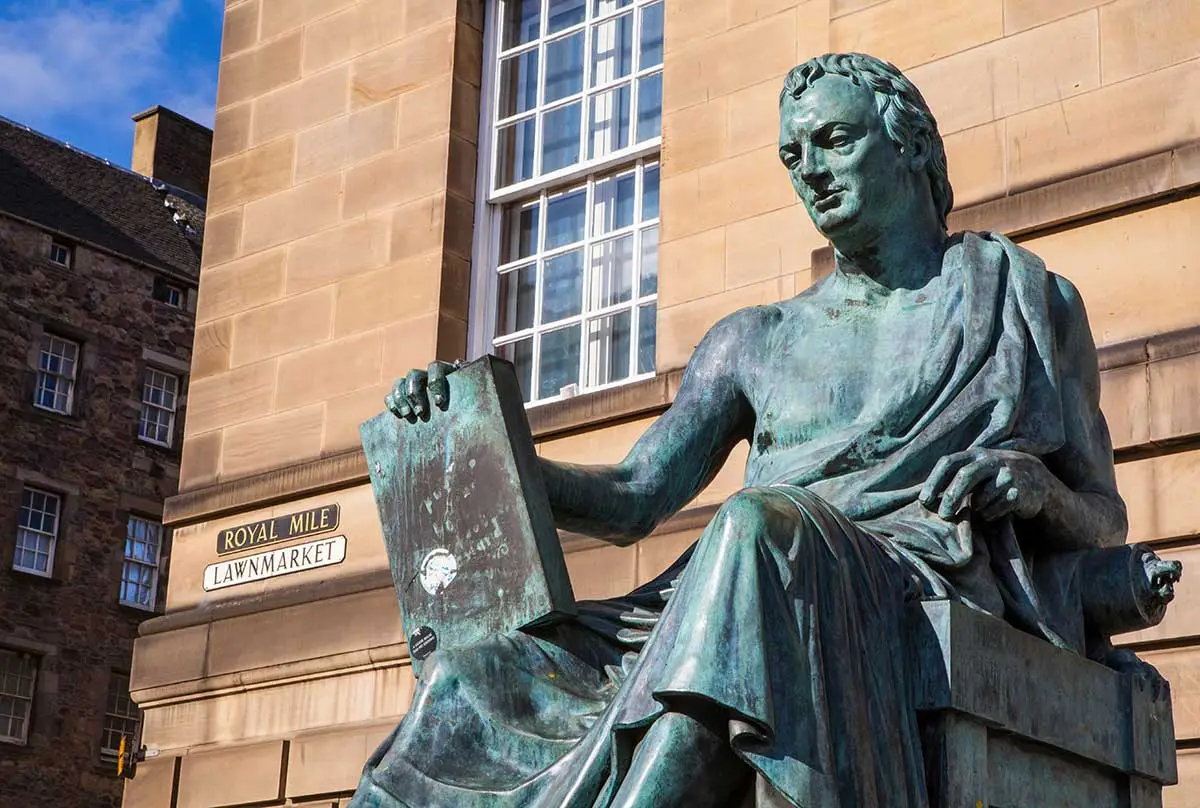
HISTORY: Our curriculum should give children a clear sense of their local and national history. Our children seem to know a lot about the slave trade but very little about the intellectual and scientific gains of the Scottish Enlightenment. Can we have a set national curriculum for the years S1-3? Can we stop cancelling some of our greatest thinkers because they said things that we would not say today?

Comments: 0
Join the debate
Do you agree with this analysis, or is the author wrong? Have your say below.
No comments yet. Be the first to join the discussion.