

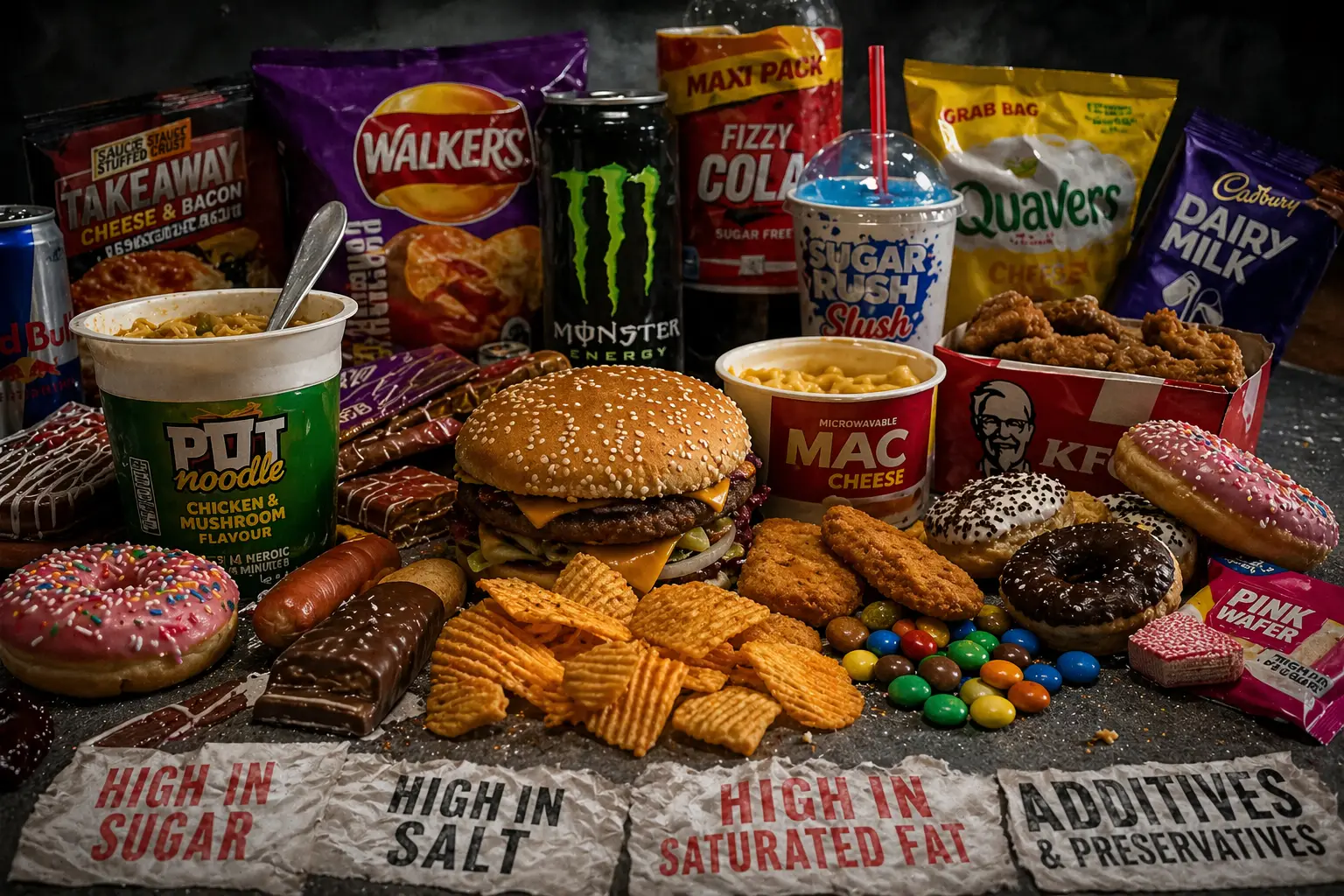
IN THE REFORM UK HAMILTON CONSTITUENCY OFFICE in May 2025, one person was lunching on a Pot Noodle and another on chips with curry sauce. On a bus to Runcorn, Ross Lambie was asked to hand out the food provided for the trip. He smiled as he saw the crisps, chocolate bars, sweets and fizzy drinks on offer and said, “Anyone for carcinogens?”
NHS Scotland treats too many people. Much of its workload stems from what we put in our mouths. Billions would be saved if we ate healthily. Better physical and mental health would allow us to be more fulfilled. More than ninety per cent of serotonin, the “happy hormone”, is produced in the gut, so we should take care of it.
While breaking a sugar and carbohydrate dependency is not easy – especially with the advertising and social environment around us – feeling healthy provides its own high. I used to be unable to resist deals on two giant chocolate bars when I paid for petrol, but such sugar hits no longer interest me.
There has been an increase in the consumption of what is called “ultra-processed food” (UPF), or “junk food”, which is highly refined (little roughage), lacks natural vitamins and contains additives that affect our metabolism and exacerbate weight gain. It is inconvenient that convenience foods are largely toxic. I recommend the book Ultra-Processed People by Chris van Tullekin, although it should be issued with an X-rating for those of a nervous disposition.
It was once assumed that fat made people fat. Meat was wrongly castigated, because it contains beneficial saturated and polyunsaturated fats. Farm animals have already extracted vitamins and trace minerals from plants and pass them to us in meat.
Moving from meat to carbohydrates has caused an obesity epidemic. Whole milk is not the problem previously thought, because it contains vitamins that are lost when skimmed. Dairy products make nutritious, inexpensive and quick meals. Butter may be better than margarines, which contain seed oils – highly processed substances. It is probably better to fry with animal fats (butter or lard) or olive oil, or just grill. Highly processed palm oil is a cheap substitute for natural fats in products like ice cream. Rainforests are also cut down to grow palm trees.
The pancreas produces insulin to combat excess sugar in the bloodstream. The metabolic rate drops, causing fatigue. Insulin tells fat cells to grow (it is an inflammatory hormone) until they cannot do so anymore and insulin resistance (IR) kicks in. Fat flows into internal organs (visceral fat) and the pancreas eventually fails.
IR syndrome contributes to heart disease (the biggest killer), high blood pressure, strokes, Type 2 diabetes, some cancers, sleep apnoea, dementia and reproductive dysfunctions like poor ovulation in women and erectile dysfunction in men. Medicines for diabetes only treat the symptoms and have nasty side effects. Many Type 2 diabetics inject insulin, but this is effectively a death sentence.
We have an everyday killer on our hands that makes COVID look like a minor ailment. Possible public health policy merits an article on its own, so here are suggestions on what might be a sensible eating regime.
A diet based on meat, fish, dairy, fruit and vegetables is sensible
Each of us has a different metabolism, but there are general principles. For young people, snacking is natural, but adults should stick to set mealtimes. There should be at least twelve hours between the last food consumed one day and breaking the fast the next, so that food has time to digest and the body can repair itself. Physical activity during the day (regular and not necessarily high intensity) and good-quality sleep at night are essential.
Breakfast is important to see you through the morning so – as well as a wholemeal cereal (with whole milk) and fruit – going to work on an egg is good. While bacon, sausages, haggis and black pudding are (lightly) processed foods, a cooked breakfast provides lots of fibre and protein. Just miss out the fried potato scone and the toast.
A diet based on meat, fish, dairy, fruit and vegetables is sensible. Eat as much as your body tells you, freshly cooked. They contain the protein, fats, vitamins and trace elements we need. We could survive without carbs. If there are several ingredients on the contents list of ready meals that are not in your kitchen, avoid them.
Ready meals need not be UPF. For example, own-brand beef lasagna in most supermarkets contains the ingredients one would have at home. An Italian pasta dish contains all the natural flavours that humans enjoy: tomato and vinegar acids, sugar from the tomatoes, and salt and glutamate from the parmesan.
Carbohydrates – potatoes, bread, pasta and rice – are good if you are soon to exercise as they break down into sugar over a period of hours but, if you remain sedentary, blood sugar will increase. Try going without carbs for a few days to see how unnecessary they are. When you have them, be careful about portion size.
Fruit juices are high in sugar, without the fibre gained from eating the whole fruit. If it says ‘no added sugar’ there is probably lots there already. Artificial sweeteners confuse the brain by promising sugar but not delivering, so we crave more – in an addictive way that makes low-calorie drinks just as harmful as full-sugar ones. We should drink lots of water.
If you must snack, do so sensibly. Fruit is best. Nuts are nutritious and filling, although avoid greasy peanuts. Popcorn is good because it is basically the whole food without additives. Have a hunk of cheese without an accompanying biscuit. Keep some chicken or cold meat in the fridge for nibbling.
If you want chocolate, buy a bar which is at least 70% cocoa – a very nutritious substance. Popular brands are largely sugar. Try to avoid crisps. I no longer keep biscuits and cake in the house but enjoy them occasionally when I am out and about. We should have at least three alcohol-free days each week to let our livers rest, and we should be aware of the sugar content of alcoholic drinks.
We needn’t obsess with roughage because it is in fatty meats and vegetables, but bread should be wholemeal. Baked beans have a sugary sauce but have lots of protein. Some convenience food can be part of a generally healthy diet. If you eat sensibly most of the time, you don’t need to deny yourself when socialising.
A right-wing party eschews a dependency culture which is bad for a person’s esteem and mental health. It is therefore best to help people help themselves when we consider public health policy. I will do this next.



Comments: 1
Join the debate
Do you agree with this analysis, or is the author wrong? Have your say below.
No comments yet. Be the first to join the discussion.