

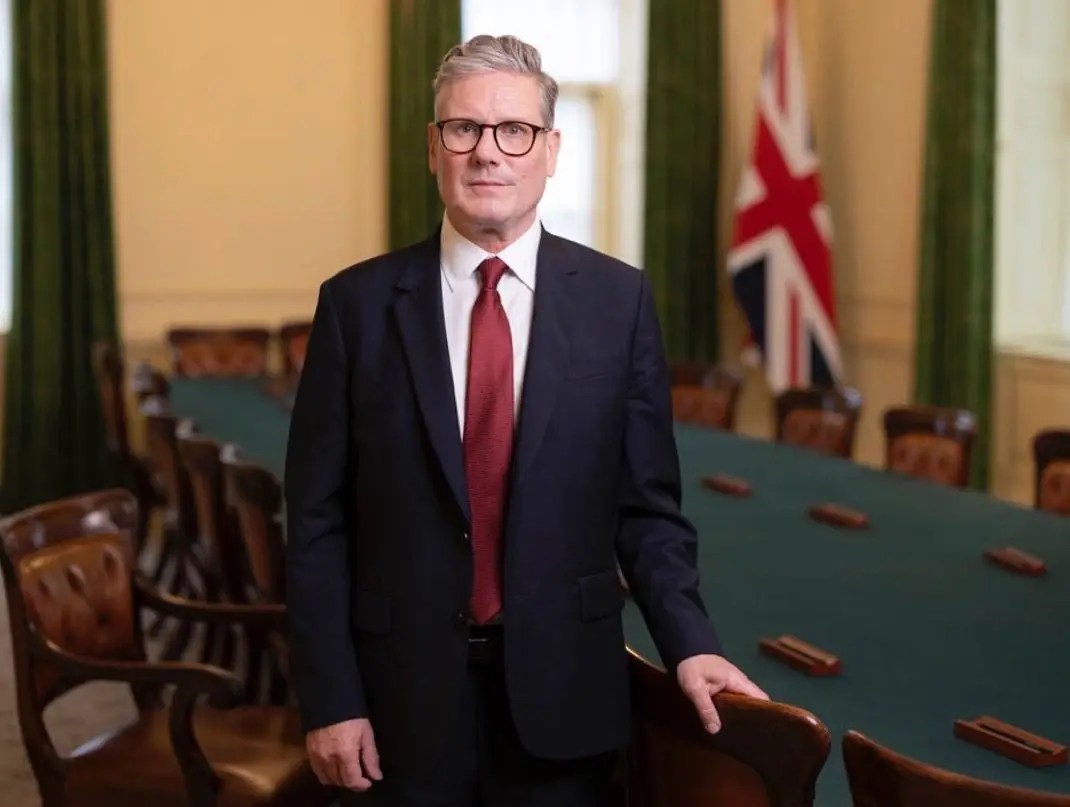
THE UNITED KINGDOM is the biggest loser in the Israeli/American attack on Iran, entirely due to our Prime Minister, Sir Keir Starmer. His decisions mean that Jo Public in the UK might face a worse outcome than many Iranians.
Iran may be a basket case, but it has oil and a powerful friend, China. The UK has wind farms and is no longer a close partner of the United States. Sir Keir has gone from being an unlikely friend of President Trump to a disappointing loser. There’s no way back from that. We should anticipate no mercy in the tariff negotiations and no help with military procurement, which of course includes the much heralded AUKUS programme. We’re all going to pay for Starmer’s lunacy.
Prime Ministers make the big decisions for the nation and they make them alone. There are few easy decisions for a prime minister, at least there aren’t in a well-run government (something we haven’t seen for decades), as easy decisions are made by the appropriate minister or their minions. A wise prime minister (also a rarity in recent British history) surrounds themselves with trustworthy, impartial advisers. Some come from the Civil Service, some will be political colleagues and, like any CEO, a prime minister can appoint anyone else he wants as a special adviser, a peer or simply a retainer. They exist to advise. Good advisers challenge decisions to verify the thinking. Bad ones collude, laying the foundations for groupthink.
This is Starmer’s problem: he is surrounded by people who are also committed socialists and who believe in the rules-based system of international law and its supremacy. His approach to decisions seems more suited to building consensus among left-wing London lawyers about what’s best for their clients than to selecting the best option for the country.
The question was simple. Do we let our closest ally, our largest trading partner, and the most powerful country on the planet use British airbases to support Israel’s existential war with Iran? The facilities at RAF Fairford and Diego Garcia are forward operating bases for the B-2 stealth bomber that is fundamental to the early stages of any air war in the Middle East.
Refusing the Americans permission to use them meant that the B-2s had to fly direct from Ohio. That’s a much longer round trip, tiring for crews and more wearing for the aircraft. Increased crew fatigue and maintenance time reduces the availability of the B2. Getting them across the Atlantic and back also requires more work from the air-to-air refuelling tankers.
Be under no illusion: denying the Americans the airfields complicated the plan and compromised its flexibility.
Starmer’s problem is that he can’t make a decision alone
Lord Hermer advised that pre-emptive strikes were not allowable under international law and that was the end of it. It appears from the leaks that Starmer received the advice and then tried to persuade his cabinet to support him in ignoring it, with Yvette Cooper (Home Secretary) and Ed Miliband (the government’s most ardent eco-campaigner) opposing him. So what? Starmer is the Prime Minister; he makes the decisions. If that provokes the resignation of Cooper and Miliband, so be it. Cabinet ministers are easy to replace, particularly for this low-quality government.
Starmer received very strong protests from the Americans, who must have been astonished that a key lynchpin of all their planning – the cooperation of the UK – had failed. Even President Trump in some “scratchy” phone calls could not persuade Starmer. Staff officers in the Pentagon will have been working flat out to replan the vital opening phases of the operation. Other staff officers are probably reviewing all their other contingency plans to check whether they depend on British cooperation. That’s a vast amount of work and will include NATO war plans.
Within 24–48 hours Starmer had U-turned, and allowed the US to use the two bases. The Prime Minister indulged in sophistry, seeking to distinguish between offensive and defensive operations. One of the principles of defence is offensive action and the concept of pre-emptive self-defence is well established in English law, which goes back to “time immemorial”, the time before 1189 when Richard the First (better known as Richard the Lionheart) came to the throne.
Starmer’s problem is that he can’t make a decision alone. Everything in his career to date has been about persuasion and compromise, about collective responsibility and protracted discussions. Rather than making hard choices he delays, as is happening to the Defence Infrastructure Plan that is apparently vital to the rebuilding of our military capability – now more than six months overdue. And, as we know, having made a decision, he then changes his mind. This is not the approach of a leader; it’s simple moral cowardice.
Making decisions under pressure is a hallmark of the armed forces, particularly for officers. When I taught at Sandhurst, teaching cadets how to make sound, timely decisions on the available information was core to the syllabus. It still is. Officer cadets are selected for this ability, which training enhances. Officers have to be able to make unpopular decisions; if they’re correct they will earn the respect of their soldiers. If they dither or make bad ones, the soldiers will hold them in contempt – entirely reasonable, as bad decisions get people killed.
There is no training course for a prime minister, although the road to number 10 is long, ill-defined and difficult. Many rise to the top not because of outstanding thinking, oratory, charisma and decision-making but through intrigue, charm and backstabbing. Such people can’t cope when things get tricky and they belatedly realise that the buck stops with them. Starmer hasn’t got the guts to be unpopular, which explains why his approval rating is so low.
Starmer is in thrall to the ideas of the progressives, as British Marxists now style themselves, and the Labour Party, who find themselves outflanked by the Greens and Plaid Cymru. They seek to shore up their power by chasing the militant Muslim vote. (Muslims are about 6% of the population, so the electoral maths won’t work for them, but then socialists can’t count, as Rachel Reeves demonstrates daily). Thus, the PM has recognised the Palestinian state (widely seen by critics as an Iranian proxy) and condemned Israel while bemoaning anti-Semitism.
His government is overly fond of China, who seems to have penetrated parts of the Labour party. China buys 80% of Iran’s oil and has huge influence and interests there. Regime destruction or change doesn’t suit them. Whether Chinese considerations influenced Starmer’s extraordinary decision to obstruct an American operation is one for the conspiracy theorists, for the moment.
Throughout the Cold War there was a distinct possibility that a prime minister would have to authorise the use of nuclear weapons. During general elections people would discuss whether a party leader would have the guts to “press the button”. That perceived willingness underpinned the entire edifice of deterrence. If a president or prime minister is not thought to be able to launch nuclear weapons, the threat of retaliation diminishes with a concomitant increase in the likelihood of war.
If Presidents Putin, Xi and Fat Boy Kim have yet stopped laughing at Starmer’s idiocy, do they really think that he would launch? International law is unclear (unsurprisingly), so it’s hard to believe Starmer would. Such doubts weren’t harboured about Thatcher or Major (who threatened Iraq with a nuclear response should they use their chemical weapons in what became the Gulf War). Then the Cold War ended, and it seemed less important. It’s not unreasonable to conclude that Starmer is a direct threat to national security.
It’s not just Keir Starmer who is utterly unsuited to office, although he is certainly the nadir of prime ministerial ability, despite some very tough competition from his recent predecessors. Far too many MPs of all parties lack the experience and character to earn the public’s respect by making the right decisions, not the popular ones. That’s the real result of the rise of the career politician.
The Welsh Senedd elections will be fascinating. The Senedd is packed with progressive careerists, who are second-rate at best. The consequences of 26 years of Labour and Plaid rule are only too apparent; with more spent per head than anywhere else in the UK, they deliver the worst health, education and other outcomes. They now face a strong challenge from the Greens on the left and, more deadly, Reform on the right. Reform’s candidates have very few professional politicians among them; most come from commerce and can read a balance sheet. Many are armed forces veterans.
Should Reform win power in Wales, the entire United Kingdom will see what proper government looks like. The progressives and their poster boy, Starmer, will be toast. The long, hard task of rebuilding the UK can start. The sooner the better.



Comments: 0
Join the debate
Do you agree with this analysis, or is the author wrong? Have your say below.
No comments yet. Be the first to join the discussion.