

THE ROSYTH SHIPYARD, tipped for major defence contracts, must import 300 Filipino welders to fill a critical skills gap. As The Herald’s Alan Simpson put it, this isn’t just an economic failure: it’s a national embarrassment.
Scotland has young people desperately seeking meaningful work and record numbers of university graduates. What we don’t have are welders, electricians, plumbers, joiners – the skilled tradespeople who keep the lights on, the ships afloat, and the buildings standing.
This didn’t happen by accident. It’s the entirely predictable result of an education system that systematically devalues skilled manual work and funnels young people toward abstract credentials that often lead nowhere.
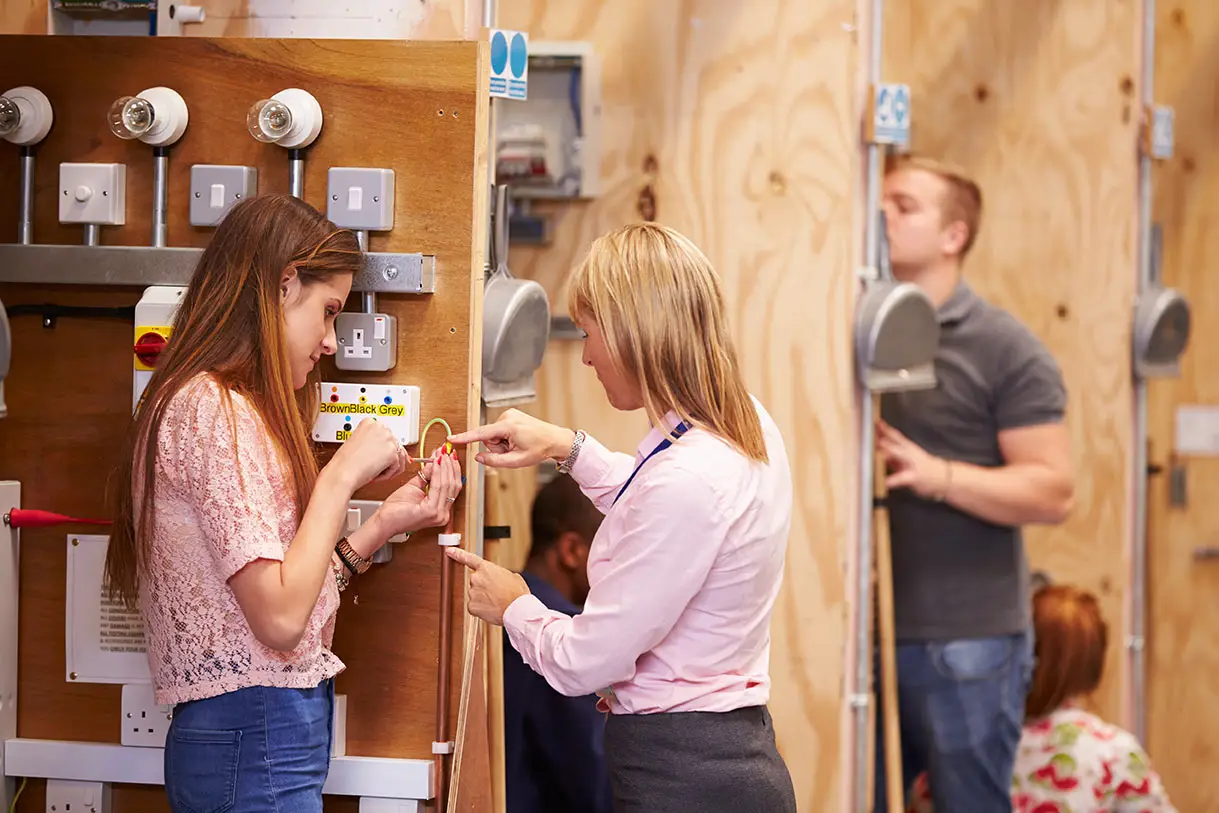
I’m an electrician working in Scotland’s vocational education system. I’ve watched this failure unfold firsthand.
Over three decades, Scotland has pursued mass university expansion as the measure of educational success. University attendance went from something for the academic minority to the expected path for the majority. But someone had to pay the price. While universities received political attention, Further Education colleges were systematically starved of resources.
the trades are treated as the path for those who “fail” academically
Since 2018, there’s been a real-terms cut of around thirty per cent in funding for electrician apprenticeships alone.
Progressive politicians and educationalists have created a two-tier system where university is seen as aspirational, while the trades are treated as the path for those who “fail” academically. The result? We have graduates with degrees but no clear career path alongside a critical shortage of the tradespeople Scotland desperately needs.
Learning a trade is different from university. It’s not easier and in some ways it’s more demanding.
When I trained as an electrician, I mastered complex technical knowledge: electrical theory and physics, alongside hundreds of pages of detailed regulations in BS 7671. I developed manual skills requiring years of practice. But more than this, I developed judgement. An electrician constantly makes decisions with real-world consequences: Is this installation safe? Can it handle additional load? Get it wrong, and someone could die.
This is what vocational education at its best provides: not just technical knowledge but the formation of character. You learn to submit your work to objective standards: the connection is either safe or it isn’t. You learn humility before reality: electricity will kill you if you’re careless. You learn responsibility: your signature goes on the certificate.
C.S. Lewis warned in 1943 that modern education was producing “men without chests”—people with intellectual capacity but no moral formation, able to critique systems but not build or maintain them. Scotland’s progressivist education system has proved him right.
The consequences are both economic and human. Economically, we export opportunities and import skills for work that Scots should be doing. But the human cost is worse: young people have been told university is the only respectable path, leaving many with no employment prospects and feeling they’ve failed if they consider a trade.
A qualified electrician can earn £40,000–50,000 or more, with varied, intellectually challenging work carrying genuine responsibility. Compare that with graduates working in call centres or living with their parents because entry-level jobs don’t cover the rent.
Meanwhile, young people who chose trades often bear the shame of being labelled “failures”, even as they build successful careers in essential work with excellent wages and job security.
Scotland must massively reinvest in FE colleges and vocational training. We must properly fund colleges and support training bodies like SECTT, SNIPEF and the CITB. We must – and can – create apprenticeship places to meet demand.
But money alone won’t solve this. We need a fundamental cultural shift. University should be one option among several, chosen because it fits individual abilities and genuine career goals – not because it’s the only respectable choice. Schools must present trades as prestigious careers. Politicians and educators must afford tradespeople the same respect they give graduates.
a functioning society needs people who can actually build and maintain things
What they must stop doing is what Alan Wilson, the Chairman of SELECT, has described as a table magician’s trick: saying what the industry wants to hear with one hand while doing the complete opposite with the other.
Scotland can continue producing unwanted graduates while importing skills, or recognise that a functioning society needs people who can actually build and maintain things. We once built ships that sailed the world. We can be that nation again – but first we must value the people who do the building.
The welders at Rosyth come from the Philippines instead of Paisley. The question is whether the next generation will be Scottish, or whether we’ll continue importing skills we have failed to develop at home.
Scotland doesn’t need more graduates. It needs more welders.




Comments: 0
Join the debate
Do you agree with this analysis, or is the author wrong? Have your say below.
No comments yet. Be the first to join the discussion.