

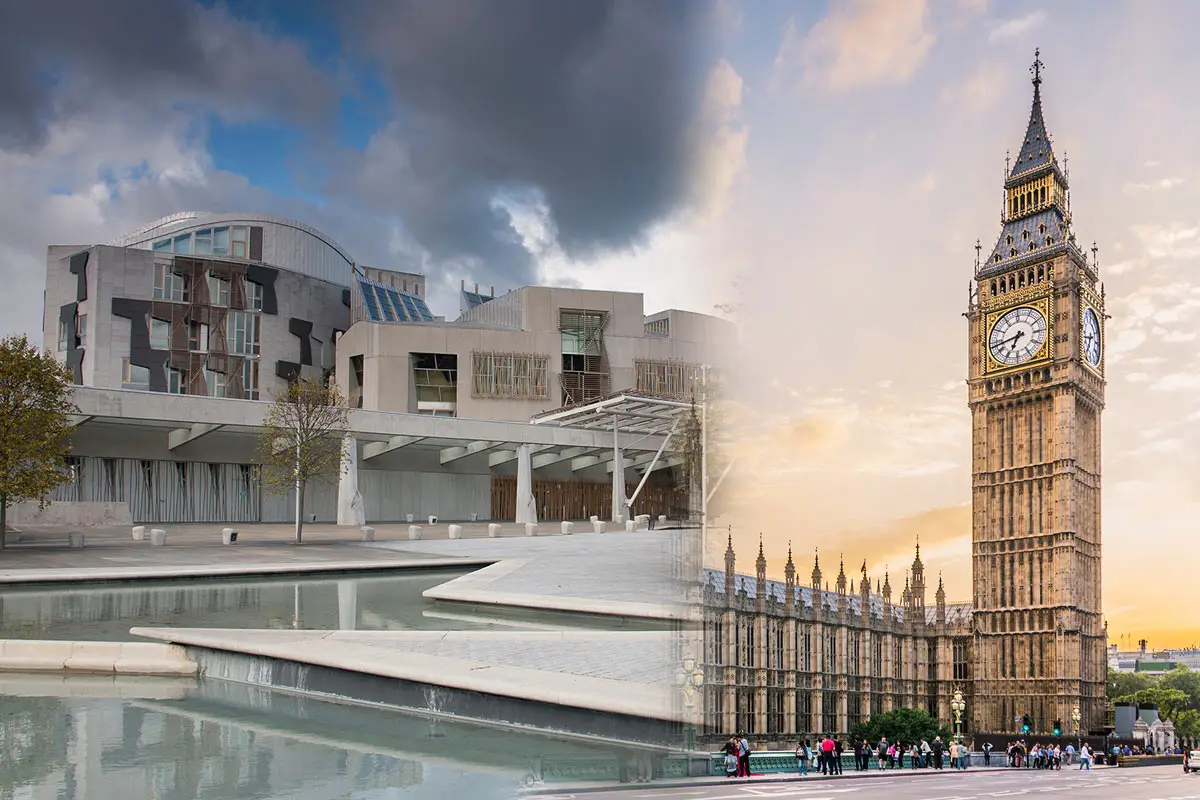
The United Kingdom Parliament at Westminster remains responsible for a range of matters that have not been devolved to the Scottish Parliament. These are known as reserved powers and are set out in the Scotland Act 1998.
The Scottish Parliament cannot normally legislate in these areas unless powers have been transferred by the UK Parliament.
Constitution
Westminster is responsible for constitutional matters affecting the United Kingdom. These include:
- The Union between Scotland and England
- The UK Parliament
- The Crown
- General elections to the UK Parliament
- The constitution of the United Kingdom
Foreign Affairs
The UK Government conducts international relations on behalf of the United Kingdom.
This includes:
- Diplomatic relations
- Embassies and consulates
- Treaties
- International organisations such as the United Nations and NATO
- International sanctions
Defence and National Security
Westminster has responsibility for:
- The Armed Forces
- National security
- Intelligence agencies including MI5, MI6 and GCHQ
- Nuclear weapons
- Military procurement
Immigration and Nationality
Immigration policy applies across the UK.
Westminster controls:
- Visas
- Border security
- Asylum policy
- Citizenship
- Passports
- Deportation and immigration enforcement
Economic and Fiscal Policy
The UK Government retains responsibility for most taxation and the overall management of the UK economy.
Reserved matters include:
- Corporation Tax
- Value Added Tax (VAT)
- National Insurance
- Capital Gains Tax
- Inheritance Tax
- Customs and Excise
- Government borrowing
- Public debt
- Monetary policy
- The Bank of England
- The Pound Sterling
The Scottish Parliament has limited powers over Scottish Income Tax and certain devolved taxes.
Employment Law
Employment legislation remains largely reserved.
This includes:
- Minimum wage
- Unfair dismissal
- Trade unions
- Employment tribunals
- Working time regulations
- Redundancy rights
- Maternity and paternity rights
Social Security
Most welfare policy remains under the control of Westminster.
This includes:
- Universal Credit
- The State Pension
- Pension Credit
- Jobseeker’s Allowance
- Employment and Support Allowance
- Child Benefit
Several disability and family benefits have been devolved to Scotland and are administered by Social Security Scotland.
Energy
Many aspects of energy policy remain reserved.
These include:
- Electricity markets
- Gas markets
- Oil and gas licensing
- Nuclear energy
- Energy regulation
Some areas, such as planning decisions for energy developments in Scotland, fall within devolved responsibilities.
Broadcasting and Communications
Westminster legislates for:
- The BBC Charter
- Broadcasting regulation
- Ofcom
- Telecommunications
- Radio spectrum
- Postal services
Company and Consumer Law
Reserved matters include:
- Company law
- Competition law
- Insolvency
- Consumer protection
- Intellectual property
Transport
Some transport responsibilities remain reserved, including:
- Aviation
- Airports regulation
- Driving licences
- Vehicle registration
- Road vehicle standards
- Rail safety
- Maritime safety
The Scottish Government is responsible for Scotland’s trunk roads, many rail services and domestic ferry services.
Can Holyrood Legislate on Reserved Matters?
Acts of the Scottish Parliament must relate to devolved matters. Legislation that concerns a reserved matter may be challenged in the courts.
The UK Supreme Court has the final authority to determine whether an Act of the Scottish Parliament falls within its legal powers.
Can Westminster Legislate on Devolved Matters?
Yes.
The UK Parliament remains legally sovereign and can legislate for any part of the United Kingdom, including Scotland.
By convention, Westminster normally seeks the consent of the Scottish Parliament before legislating in devolved areas through a Legislative Consent Motion. This is known as the Sewel Convention. The convention is recognised in legislation but is not legally enforceable.
Summary
Reserved powers are the areas of law and public policy that remain under the control of the UK Parliament. They include the constitution, defence, foreign affairs, immigration, most taxation, employment law, most social security, monetary policy, broadcasting and many aspects of transport and energy. Devolved powers are exercised by the Scottish Parliament within the framework established by the Scotland Act 1998.
Comments: 0
Join the debate
Do you agree with this analysis, or is the author wrong? Have your say below.
No comments yet. Be the first to join the discussion.